Disaster preparedness in Nyeri County has taken a strategic turn as leaders from both national and county levels of government called for a united and coordinated approach in managing disasters.
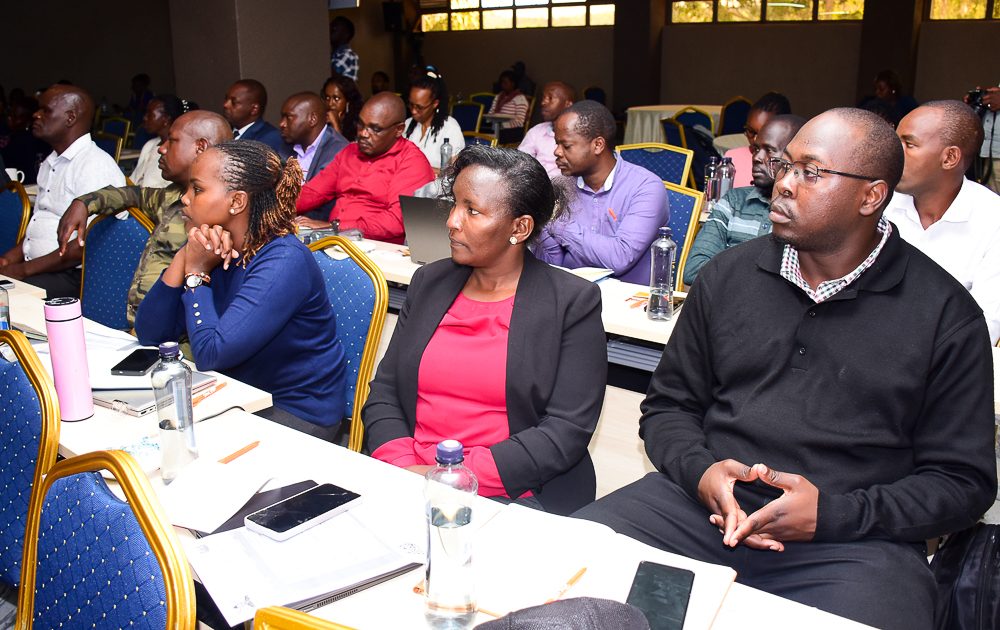
The call came during a consultative meeting held at FK Resort, where officials discussed a proposed Disaster Risk Management (DRM) Policy aimed at streamlining the county’s preparedness and response mechanisms.
The meeting was attended by Governor Dr. Mutahi Kahiga, County Commissioner Josephat Biwott, and other key stakeholders, including representatives from corporate, health, and administrative sectors. The participants agreed to form a joint committee tasked with coordinating emergency service providers during disasters, emphasizing the importance of collaboration across all levels of government.
Dr. Kahiga highlighted that Nyeri County continues to experience a growing and complex range of disasters, including structural and bush fires, floods, droughts, disease outbreaks, livestock and wildlife epidemics, road traffic accidents, and other emergencies. Last year alone, the county reported a total of 386 disasters, including 277 fires and 46 road accidents. He also reflected on the tragic Hillside Endarasha Academy fire of September 5, 2024, which claimed the lives of 21 boys in a dormitory, noting that the incident tested the county’s disaster preparedness.
“This conclave brings together stakeholders from the national, county, corporate, health, and administration sectors, marking the second stage of an eight-stage process leading to the launch and dissemination of this dynamic policy,” said Dr. Kahiga. “In Nyeri, we do not distinguish between county and national government when it comes to offering services to mwananchi.”
Dr. Kahiga emphasized that the policy would strengthen existing disaster management structures by establishing a robust risk management system aimed at protecting lives, livelihoods, property, and the environment, while reducing risks and vulnerability in the county. He urged stakeholders to provide input into the policy, describing it as a game changer for both present and future disaster management.
The Governor also outlined milestones achieved in enhancing disaster response, including the procurement of modern fire engines and the establishment of mechanisms for intelligence sharing and prompt communication among stakeholders and the public. “The only way we can mitigate disasters is through collaboration, coordination, and real-time communication,” he added.
County Commissioner Josephat Biwott reinforced the need for proactive disaster prevention rather than reactive responses. Drawing from his experience in Kilifi during the Shakahola macabre ritual killings, Biwott noted that human error is often the weakest link in disaster management. He cited frequent fires, the consumption of illicit brews, and rising cases of suicide in the county as examples requiring multisectoral attention.
“In Nyeri, we receive a fire incident almost every day. What is causing these fires? The Department of Fire should establish the root causes. The Hillside Endarasha Academy fire should serve as a reference point for improving our responses,” Biwott said.
He also proposed the creation of a counselling and trauma management unit to support personnel involved in rescue operations. Biwott emphasized that volunteers and emergency responders often do not receive adequate psychosocial support after disaster interventions, leaving them vulnerable to long-term psychological challenges. He shared his personal experience from Shakahola, where police officers and responders faced trauma and lasting emotional distress, often unable to attend funerals or view bodies without significant emotional difficulty.
“Most of the police officers at Shakahola left in a very bad state. I personally never went for counselling, and to date, some of us cannot go near an open casket because of what we witnessed,” he narrated.
Nyeri County CECM for Gender and Social Services, Esther Ndung’u, echoed the need for stronger coordination among stakeholders during disaster responses. She noted that the Hillside Endarasha Academy rescue efforts exposed weaknesses in coordination and underscored the importance of a comprehensive framework for disaster prevention, mitigation, and recovery.
“From what transpired at Hillside Endarasha Academy, I learned the need for a policy with a comprehensive framework for disaster prevention, recovery, and mitigation, as well as strengthened coordination,” Ndung’u said. “We need multisectoral coordination and mechanisms to strengthen community resilience in the face of disasters.”
To enhance disaster response, Nyeri County has introduced several initiatives. A toll-free number, 1549, allows residents to report emergencies promptly. Additionally, the county is in the process of establishing a County Disaster Operations Center (CDOC) in collaboration with national, county, and private sector agencies.
Key stakeholders involved in finalizing the DRM policy include the National Disaster Operation Center, Directorate of Occupational Safety and Health Services, National Council of Persons with Disabilities, Amref Health Africa, Kenya Red Cross, St. John Ambulance, National Transport and Safety Authority, and the National Drought Management Authority.
The consultative meeting focused on drafting a policy that ensures clear coordination, communication, and collaboration across all sectors in disaster management. Participants emphasized that the policy should provide a framework for both preparedness and response, integrating community-level strategies to enhance resilience.
Dr. Kahiga stressed that disaster preparedness requires ongoing evaluation and updating of strategies to address emerging threats. “The policy now endeavors to strengthen the already established structures by founding a robust risk management system that contributes to the protection of lives, livelihoods, property, and the environment,” he said.
Commissioner Biwott added that disaster response should incorporate prevention measures, awareness campaigns, and intelligence sharing to reduce incidents caused by human error. He advocated for continuous training for responders and integration of psychosocial support services to address trauma experienced during disaster interventions.
“The most effective response to disasters is prevention through seamless communication and coordination among all stakeholders,” Biwott said. “We must ensure that responders and volunteers are supported psychologically to continue their critical work without long-term harm.”
The meeting concluded with a consensus to form a joint committee that will oversee the implementation of the DRM policy, coordinate emergency service providers, and ensure stakeholder input is integrated into the final document. This committee will also monitor milestones in disaster preparedness and review incidents to continually improve response mechanisms.
Dr. Kahiga emphasized that disasters are a shared challenge requiring a collaborative approach. “By pooling resources, expertise, and strategies, we can create a resilient Nyeri County that safeguards its citizens and environment,” he said.
The proposed DRM policy is expected to strengthen institutional capacities, improve coordination across sectors, and provide clear guidelines for prevention, mitigation, and recovery. It aims to address gaps identified in previous disaster responses, including human error, communication challenges, and lack of psychosocial support for responders.
by Samuel Maina