Nyeri residents have called for a review of the proposed 2025 Finance Bill to reflect the pressing needs of the ordinary citizen.
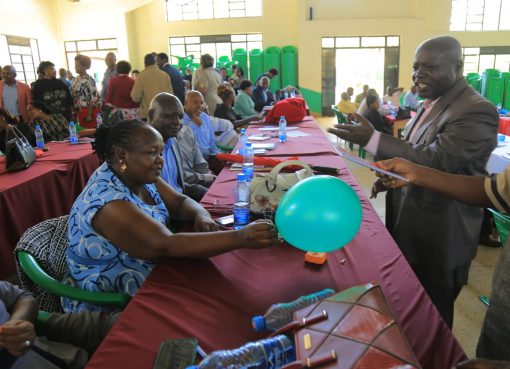
Speaking during a public hearing on the 2025/2026 Budget estimates at the Anglican Church Kenya, St Peter’s Cathedral in Nyeri town, the residents have criticized the executive for presenting an imbalanced budget proposal that has failed to prioritize critical sectors such as health and education.
The Executive has proposed a Sh 4.2 trillion budget for the 2025/26 fiscal year. It includes a Sh 1.7 trillion allocation for recurrent expenditures and Sh 707.8 billion for funding various development projects and programs. According to the estimates some Sh1.3 trillion has been earmarked for Consolidated Fund Services (CFS), which primarily includes Sh1 trillionfor interest payments on public debts andSh239.6 billion for pensions and salaries of constitutional commissions and independent offices. The estimates also include a Sh 405.1 billion allocations as County equitable share for the devolved units.
The government expects to collect Sh3.3 trillion of which Sh2.7 trillion will be ordinary revenue and Sh559.9 billion is Appropriations in Aid. The government also expects to receive grants from development partners amounting to Sh 46.9 billion. The resulting balance of Sh 876.1 billion will be financed through domestic and external borrowing.
Some of the biggest beneficiaries in the proposed budget estimates include the Teachers Service Commission (Sh 387 billion), Ministry of Defence (Sh 200 billion), and State Department for Roads (Sh 195 billion).
Others state departments with considerable budgetary allocations include State Department for Higher Education (Sh 144 billion), State Department for Basic Education (Sh 126 billion), National Police Service (Sh 125 billion), State Department for Housing and Urban Development (Sh 119 billion) and National Treasury (Sh 118 billion)
“This budget is not cost-effective. We are seeing a lot of misplaced priorities in the allocation of resources. For instance, why do we fund the annual renovation of the State House yet we are seeing in the news that universities are shutting down and there is no money for national examinations? Why can’t that money be reallocated to the education, health and agriculture sectors or used in creating employment opportunities?” Posed John Kiambati.
His sentiments were echoed by Nelson Maina who questioned the rationale behind the proposed budget cuts to the health sector by Sh 67 billion. Maina said that it was shocking to see that while on one hand the government had set healthcare provision as a priority agenda, this year’s budget proposal would result in massive underfunding of key primary healthcare components, raising questions on the government’s commitment to deliver quality healthcare services to Kenyans.
“This proposed reduction in funding will reverse all the gains that the country has made so far in terms of Universal Health Coverage. The digitization of the health infrastructure targeting 6,000 facilities by 2028 is now at risk and of course, counties will continue facing medicine stock-outs, inadequate equipment and human resource gaps due to these resource gaps,” stated Maina.
Mary Wairimu, another resident called for an upward revision of the education budget to remedy the overreliance of Kenyans on Constituency Development Fund bursaries to educate their children. She also asked the government to consider drilling boreholes in schools to relieve parents of the burden of footing water bills for schools.
The session also saw participation of primary and secondary school children who urged the government to allocate additional resources for the school feeding programme. They also want the government to set aside funds for the construction of laboratories especially for Junior Secondary schools.
Additionally, the students also asked the government to increase budgetary allocation for the free sanitary towels for schoolgirls, noting that a significant number of girls cannot access affordable sanitary pads.
Mukurwe-ini Member of Parliament John Kaguchia called for reorganization of the budget to prioritize health, agriculture and education sectors. Citing the combined Sh 17 billion allocation for the Executive office of the President, the Deputy and State House; the Sh 51 billion allocation for the National Intelligence Service and the Sh 200 billion for Ministry of Defense examples of fiscal excesses, Kaguchia also cautioned the government against reneging on its promise to cut down on unnecessary spending.
“You remember last year the president did say that we will not have allocations done in repairs and maintenance of statehouse and executive facilities. When you look at these budget estimates, what has happened this year is that the executive has become craftier in allocating the money to some of these departments. For instance, the office of the president and that of the deputy president were combined but now they are receiving separate budgetary allocations,” he said.
“Some of the money that has been allocated to some of these departments as recurrent expenditure is too much in my opinion and the budget committee needs to help us so that this money can be reallocated to more productive sectors which have a positive impact on the taxpayer,” added Kaguchia.
Imenti South MP, John Paul Mwirigi who was leading the delegation during the public hearing reassured the residents that their proposal and feedback will be consolidated and presented during the tabling of the budget proposal before the National Assembly. Mwirigi who is also a member of the Budget and Appropriations Committee also reaffirmed the public that public resources would be utilized in a manner that benefits the taxpayer.
“We have heard you clearly. All your views will be taken into account when we compile our report. We also want to assure you that we will ensure that the budget reflects the voice and the needs of Kenyans,” he stated.
By Wangari Mwangi