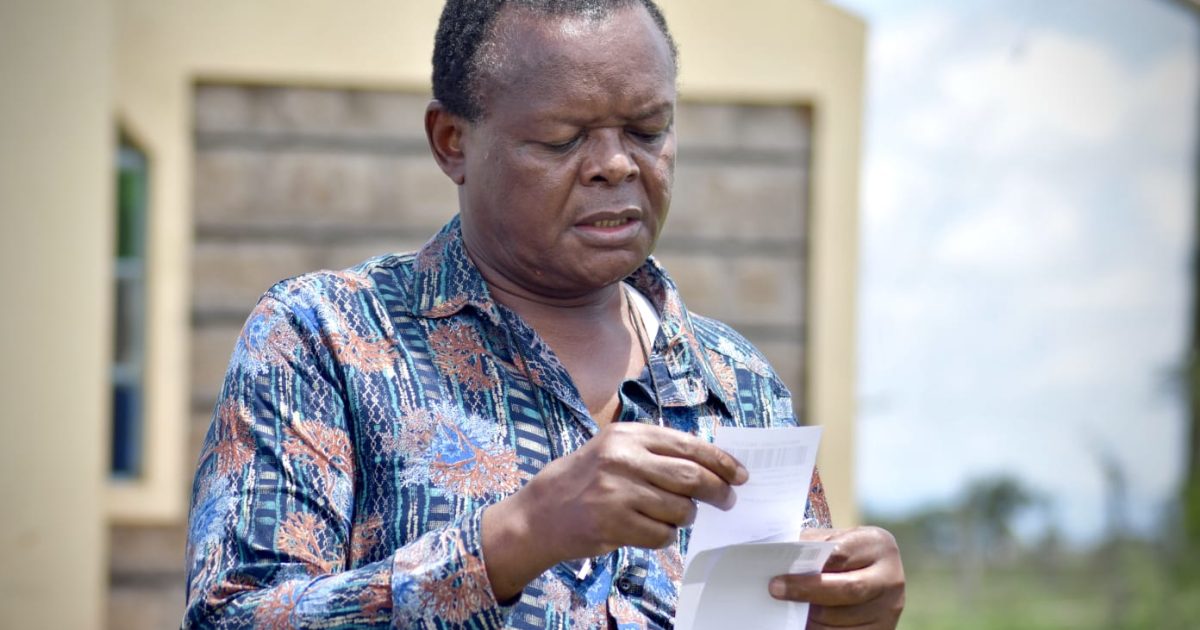
More than 30,000 residents in Narok and Baringo counties have applied for national identity cards during a 10-day mobile registration exercise conducted under the government’s Usajili Mashinani initiative.
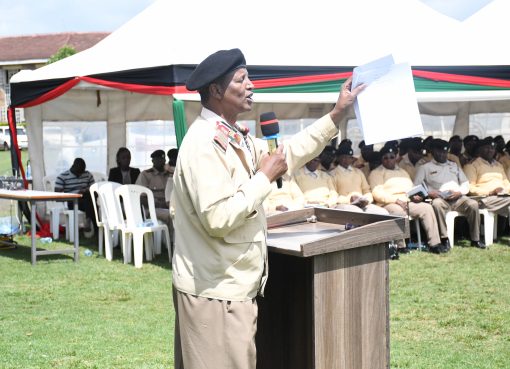
Director of the National Registration Bureau (NRB) Aggrey Masai said the exercise is part of the government’s broader effort to streamline national identification registration and bring services closer to communities that have historically faced challenges accessing registration centres.
Masai assured Kenyans that the bureau remains committed to improving the efficiency of national identity card registration and issuance by transitioning from manual systems to digital processes using live capture machines.
He noted that the new system will help guarantee timely and efficient processing of national identification documents.
“The initiative brings registration services closer to communities by establishing registration points at the ward level so that citizens who have faced barriers such as long distances, difficult terrain and limited access to registration offices can easily obtain national identity documents,” Masai said.
Speaking at Katakala in Narok North Sub-County, the director said the campaign dubbed Usajili Mashinani also aims to facilitate the issuance of birth certificates.
He observed that lack of birth certificates has long been a barrier for many children, preventing them from accessing important services such as primary school enrolment, vaccination and healthcare.
Masai said the National Registration Bureau has made significant progress in clearing application backlogs while expanding printing capacity to accelerate the issuance of identification cards.
He revealed that the bureau is now capable of printing up to 32,000 identity cards per day, with a target processing period of between seven and ten days for new applications.
The director added that the mobile registration exercise conducted in Turkana, West Pokot and Elgeyo Marakwet counties also recorded significant success, with a total of 100,195 Kenyans applying for identity cards during the exercise.
The government rolled out the Usajili Mashinani mobile registration campaign as a 10-day Rapid Results Initiative aimed at expanding access to national identification services, particularly for residents living in remote and underserved regions.
The programme, launched by the Ministry of Interior in October 2025, seeks to ensure that all citizens obtain the legal documentation required to access essential government services.
Initially, the campaign targeted 15 counties with historically low identity card registration rates, including Narok, Baringo, Turkana, West Pokot and Elgeyo Marakwet.
“This milestone reflects the government’s commitment to inclusive service delivery and ensuring that every eligible Kenyan has access to official identification,” Masai said.
To support the initiative, the State Department has strengthened operational capacity by procuring 400 Live Capture Units used in the digital registration process.
Masai said an additional 200 machines are expected to be acquired before the end of the current financial year to further expand the programme’s reach.
The government has also enhanced mobility for registration teams by acquiring 56 vehicles to facilitate movement of officers to remote areas and ensure that each ward has a designated registration point during the exercise.
Masai further encouraged parents to apply for birth certificates for their children, noting that the documents are crucial in facilitating government planning and enabling accurate capitation allocation to schools.
He said the Usajili Mashinani programme aims to ensure that no Kenyan is left behind in accessing government services and rights, including the right to vote.
In Narok North Sub-County, the mobile outreach team was led by Registration Officer Carolyne Juma and supported by a team of field officers, chiefs, teachers and community volunteers.
Juma said the use of modern technology in the registration exercise allows citizens’ data to be captured and verified within minutes, significantly reducing processing time.
“With the digital system, applicants can have their details captured and verified quickly, and their identity cards will be ready for collection within seven days,” she said.
The government has set a target of registering at least one million new identity card holders within the next year to facilitate enrolment in key services such as the Social Health Authority (SHA).
Juma noted that once individuals obtain national identity cards, they will also be able to register as voters and participate in the 2027 general election.
She said the Usajili Mashinani initiative demonstrates the government’s commitment to strengthening access to identification services across the country.
The Department of Immigration and Citizen Services has earmarked at least 15 pastoralist and marginalized counties for the programme, targeting about 100,000 new ID applicants in each county.
If the target is achieved, the initiative will enable approximately 1.5 million Kenyans in these regions to obtain crucial identification documents.
“Huduma za Usajili Mashinani is not just another outreach campaign; it represents a promise to bring equal access and official recognition to every Kenyan,” Juma said.
Rift Valley Regional Director for Civil Registration Services Ken Nyamweya said the success of the programme has largely been attributed to effective community mobilization.
Nyamweya explained that the registration teams began sensitization efforts early through village barazas, church announcements and radio broadcasts in local languages to ensure residents were aware of the exercise.
The teams also partnered with county officials, chiefs, teachers, health workers and community leaders to ensure that residents were adequately prepared to participate in the registration process.
He noted that combining service delivery with public education enabled many residents to leave the exercise feeling more informed and confident about accessing government services.
The government has also announced plans to procure up to 300 additional live capture machines in 2026 to further enhance mobile registration of national identity cards across the country.
The machines are expected to help decentralize registration services and accelerate issuance of identity cards ahead of the 2027 general elections.
Under the plan, the government aims to equip all the 1,450 wards in Kenya with live capture machines by 2026 to ensure services are accessible at the grassroots level.
This initiative comes against the backdrop of an estimated six million Kenyans who require new national identity cards this year.
To encourage mass registration, the government has waived processing charges for first-time applicants and individuals seeking to replace lost identity cards.
However, the move has attracted criticism from some opposition leaders who claim the waiver could influence the political environment ahead of the 2027 elections.
Principal Secretary in the State Department for Immigration and Citizen Services Dr. Belio Kipsang has urged departmental heads to sustain the momentum, improve efficiency and prioritize timely issuance of national identity cards as the government intensifies efforts to bring services closer to citizens.
He emphasized that efficient identification systems remain critical in enabling citizens to access government programmes and exercise their constitutional rights.
By Emily Kadzo