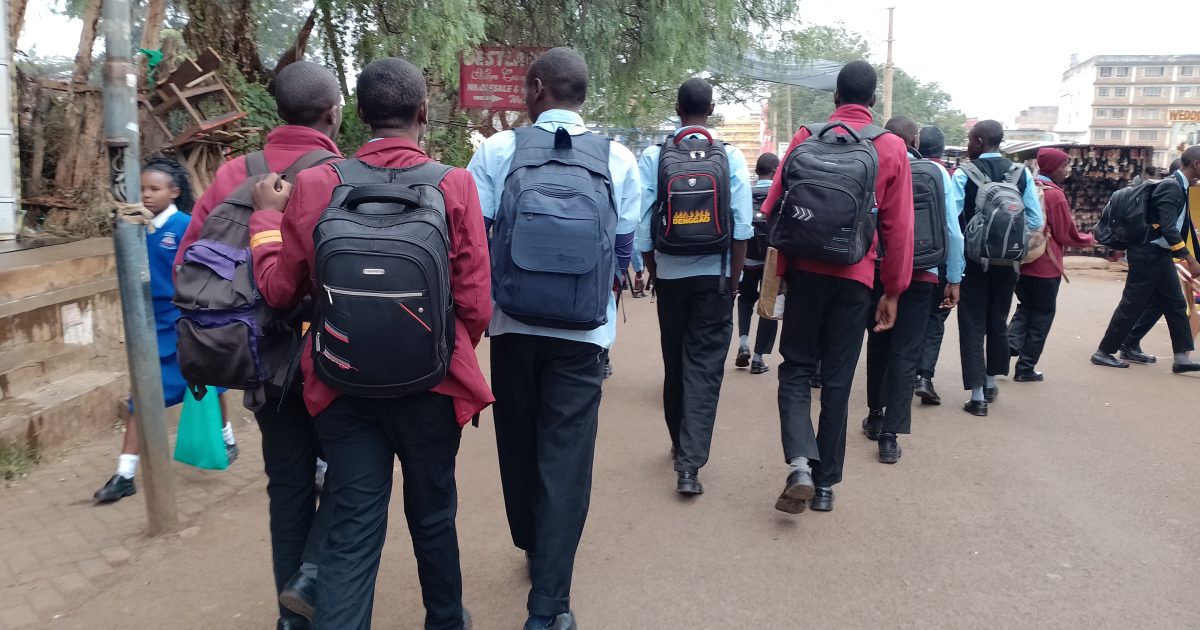
For most parents, the December holiday break comes with a bag of mixed balls; happiness that one will spend more time with their children and apprehension on how to manage their restlessness.
This apprehension is pegged on the premise that with schools closed, children will be spending more time indoors, eating more, and in need of constant attention and supervision.
With the commencement of the long vacation, a section of parents in Nyeri have shared their views on how they are coping with their children.
Jerald Wambugu, a father of three, avers that having all his children at home has only made the cost of living more expensive.
Wambugu says with expectations high and extra mouths to feed amid the tough economic situation in the country, skipping meals is no longer an exception in the family.
For him, while having the young ones around is a welcome joy, the flip side is that he has to dig deeper into his pockets to make sure they are fed.
“When my children were in school, the cost of their meals were taken care of. But now the amount of food we use daily has doubled since they are supposed to take all their three meals here. Prices of maize flour, sugar and cooking oil have also gone up and it’s not easy for us especially with the prevailing financial strain,” Wambugu explains
Grace Wanjiru who has two children who are both in high school says the school break has weighed heavily on her.
She relates that her two teenage children who are ‘good eaters’ and have a penchant for snacking.
When not occupied at home, she says, they always beg to go out and join their peers in outdoor activities, which in most cases costs her money.
“My children love snacks, entertainment, and going out to hang out with friends. But everything costs money. I try to involve them in house chores and small activities like helping me in the shop so that they stay busy and responsible. Otherwise maintaining this lifestyle is unsustainable,” she says.
Wairimu has some advice for fellow parents; be creative by keeping your child occupied, especially in the current society awash with social media craze.
She warns that the young ones are left to themselves, the chances of slipping into wayward companies is no longer a possibility, but a reality.
To avert this, she has taken upon herself to be talking with her children and correct them any time they start going astray.
For Peter Kagenya, a boda boda rider and a father of four, the challenge of handling children during vacation is not necessarily in feeding them but also in ensuring sobriety prevails at home.
This is because anarchy could erupt from even the most unlikely sources including fighting for the control of a TV remote device.
“When children remain at home for long, it sometimes becomes a herculean task controlling them. Sometimes I wish schools could open sooner because it’s hard to control them at all times. I used to work till late evening but I have now reduced my working hours to spend more time with my children since my wife works and is often away. However, this sacrifice translates to reduced earnings for me at the end of the day,” he said.
Despite this delicate balancing between parental responsibility and work life, the trio agree that family unity should be the overriding bond during school holidays.
They say that with proper understanding, planning and open communication with their children, parents could transform their homes into little havens of tranquility, the prevailing economic hardships notwithstanding.
Wanjiru advises parents not only to plan their shopping well but also ensure they cut out on unnecessary spending.
“Buy food in bulk if you can, it’s cheaper that way, and teach your children the value of what is brought into the house,” she points out.
“At the end of the day, these are our children. We may not have much to offer them in terms of a lavish lifestyle, but we must find a way to give them a memorable holiday,” she notes.
By Samuel Maina and Diana Odipo