Urban nutrition in Nakuru County is receiving a significant boost following the successful implementation of the Food Fiti project, an ambitious five-year initiative aimed at promoting safer and healthier vegetable consumption among low-income households.
Now in its third year, the project has taken root in the sub-counties of Nakuru North, Nakuru West, Nakuru East, Gilgil, and Naivasha.
It targets households earning up to Sh45,000 per month, where access to clean, nutritious food remains a pressing concern.
Launched with the support of the Nakuru County Government, Food Fiti collaborates with sub-county nutrition officers and the departments of agriculture and trade.
The initiative focuses on training informal vegetable vendors, commonly known as Mama Mboga on hygiene, proper handling, food branding, and safety practices.
One such vendor, Mary Moraa from Karagita Market in Naivasha, says the training has transformed her business.
“Before, I didn’t know the importance of clean water, proper display, or why mixing too many greens could be harmful,” she shared.
She said that through the training, her customers have entrusted her to do more sales and profits while lauding the noble project.
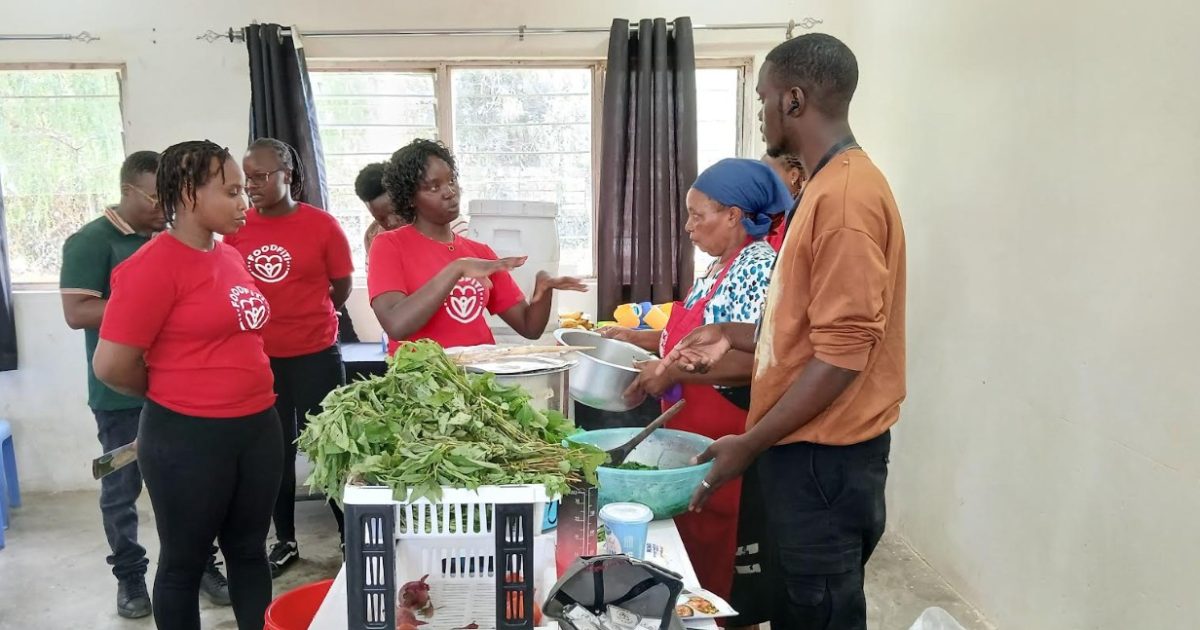
A recent outreach event held at the YMCA grounds in the Naivasha Kabati estate brought together community members, health officials, and traders to witness the project’s tangible impact.
During the event, Food Fiti conducted live cooking demonstrations, teaching participants how to prepare indigenous vegetables in ways that preserve their nutritional value.
Attendees were advised on appropriate cooking times, avoiding overcooking, and reducing nutrient loss, a common issue in many urban households.
“The journey started humbly, but it has now become a mission of the possible while transforming livelihoods,” said Food Fiti Project Coordinator Kevin Wafula.
Despite its successes, the project faces ongoing challenges, with Wafula noting that a recent laboratory test showed that vegetables sourced from local markets were contaminated with heavy metals and nicotine.
The contamination, he said was believed to originate from chemical runoff linked to nearby flower farms and untreated wastewater from sewer-connected plots.
In response, the county government has intensified surveillance and launched sensitisation campaigns targeting farmers, brokers, and suppliers.
To safeguard the supply chain, Wafula said Food Fiti began training and certifying vegetable brokers and suppliers as official market facilitators.
Wafula said the intermediaries are now responsible for ensuring that produce is safely handled and transported before reaching increasing urban consumers.
According to Naivasha Sub-county Nutrition Officer Rose Chiraa, cabbage remains the most widely consumed vegetable in urban areas despite its relatively low nutritional profile.
She, however, advocated for a shift toward indigenous vegetables such as managu (African nightshade), sagaa (spider plant), terere (amaranth), and sukuma wiki (collard greens), which are rich in iron, calcium, folate, vitamin A, and dietary fibre.
The officer said that a study by the Kenya Agricultural and Livestock Research Organisation (KALRO) showed that indigenous vegetables contain two to ten times more micronutrients than exotic ones like cabbage.
She further cautioned against overcooking and indiscriminate mixing of vegetables, noting that such practices can destroy essential water-soluble nutrients.
“Mixing too many vegetables without understanding their nutritional properties can lead to ion imbalance and digestive issues,” she warned.
Chiraa dismissed the widespread belief that eating healthily is expensive, arguing that with proper planning, nutritious meals are within reach.
She noted that nutrition is very cheap and most barriers to healthy eating stem from poor access and limited consumer education rather than cost.
Ministry of Health data indicates that over 60 per cent of low-income urban households struggle to access nutrient-dense foods due to poor market availability and lack of awareness.
To mitigate this, Food Fiti promotes home gardening using containers, balconies, and vertical farming methods, which are particularly vital in areas where contamination risks are high.
This push for self-sufficiency comes amid a worrying 35 per cent increase in lifestyle-related illnesses such as diabetes, cancer, and digestive disorders over the past five years.
As the project enters its fourth year, Food Fiti remains committed to its mission, empowering vendors, educating consumers, and ensuring safe, diverse, and nutritious vegetables.
The project’s agenda seeks to foster a culture where every household not only has access to vegetables but also consumes produce that is safe, nutritious, and sustainably sourced.
By Erastus Gichohi and Makanda Sein