The Public Service Commission (PSC) has blamed ageing technology for its inability to decisively curb the proliferation of fake academic certificates in the civil service.
This emerged as lawmakers piled pressure on the agency over staffing gaps and governance concerns.
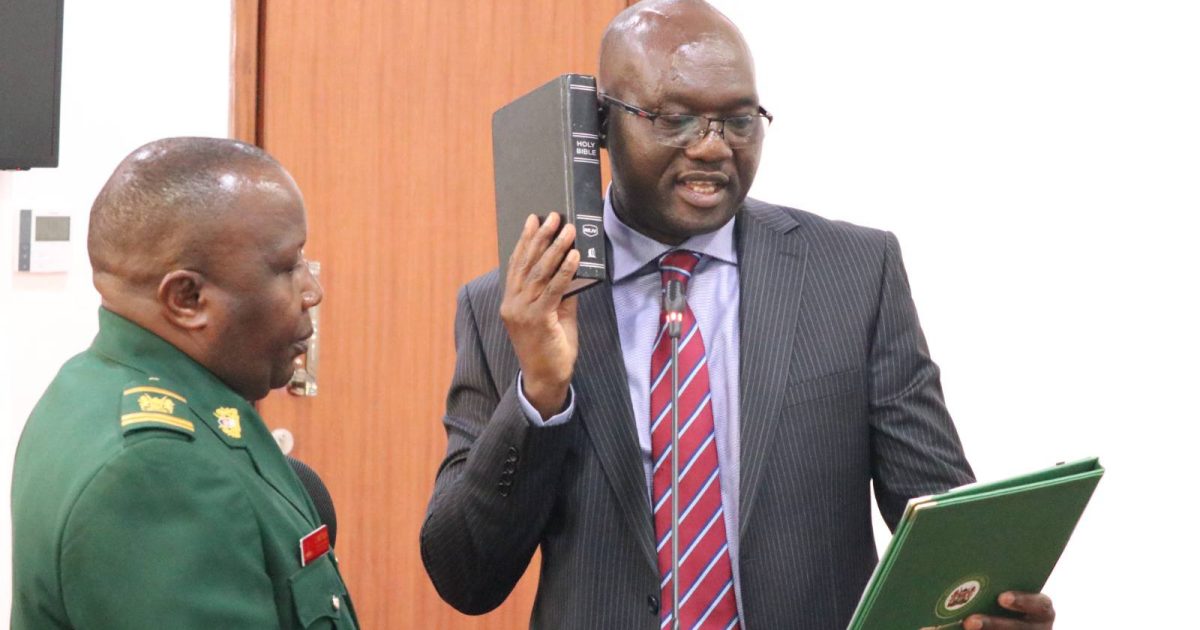
Appearing before the National Assembly Committee on Cohesion and Equal Opportunities, PSC Chairman Francis Meja said the Commission’s verification systems are outdated, slow, and costly.
This, he said, is creating loopholes that have been exploited by jobseekers using forged credentials.
“The Commission is relying on old technology to verify and weed out fake papers. As a result, the process takes too long and is expensive,” Mr Meja told the committee during a session at Bunge Tower.
He, however, signaled a shift, revealing that the PSC is working with the Commission for University Education (CUE) and the Kenya National Examinations Council (KNEC) to roll out a modern, integrated system capable of instantly authenticating academic documents.
“We are carrying out reforms with the two institutions that will enable us to detect a fake academic document at the press of a button,” he said.
Mr. Meja was responding to concerns raised by Ndhiwa MP Martin Owino, who questioned the Commission’s failure to stem the rising use of forged certificates to secure public jobs and promotions.
The session also exposed internal capacity challenges at the PSC with Chief Executive Officer Paul Famba disclosing a significant staffing shortfall that is hampering operations.
“The approved staff establishment is 518, but we currently have only 273 employees leaving a gap of 245,” said Mr. Famba.
Lawmakers termed the situation ironic, noting that a body mandated to recruit public servants is itself understaffed.
Led by Luanda MP Dick Maungu, members urged the Commission to lead by example by filling vacant positions.
“If PSC, whose core mandate is to hire public servants, is complaining about staff shortages, what about other State agencies?” posed Mr Maungu.
The committee further pushed back on the Commission’s proposal to decentralize services to the county level.
It termed the plan overly ambitious given current budgetary constraints.
Kisumu Central MP Joshua Oron advised a phased approach.
“Your plan to move services to the county level is very ambitious. Due to lack of resources, you should start by decentralizing to regional levels first,” he said.
Concerns over governance also emerged with Committee Chair Adan Yussuf Haji questioning why six officers above the mandatory retirement age of 60 remain on the PSC payroll.
“What justification do you have for keeping retirees in your system while many young people remain unemployed?” he asked.
Mr Haji also faulted the Commission for operating without a comprehensive policy framework to guide recruitment and other key functions.
Malava MP Athman Ndakwa echoed the concern and attributed it to persistent challenges in the public service to the absence of a clear employment policy.
Kamukunji MP Yussuf Hassan accused the Commission of failing to guarantee a fair and transparent recruitment process.
“Chairman Meja, I hope you are the new broom that will clean up corruption, nepotism and other bad practices in the Commission,” he said.
On youth employment, Mr. Famba told the committee that the PSC has recruited 8,200 interns since 2019 supported by an annual budget of Sh2 billion for stipends.
He however noted that additional funding is required to sustain and expand the programme.
“We need more resources to support recruitment, training, monitoring and evaluation of interns,” he said.
Mr. Meja maintained that the Commission is undergoing far-reaching reforms aimed at modernizing its operations and restoring integrity in public service hiring.
“The system we are using is 15 years old. We are making major changes that will have a positive impact. I urge the Committee to support an increase in our budget so we can fund our programmes effectively,” he said.
By Joseph Ng’ang’a