A new continental report has raised concerns over the growing pressures faced by Africa’s health journalists, highlighting the risks to public awareness and health outcomes as the continent grapples with rising disease burdens, climate-related health challenges, and shifting global funding priorities.
The Africa Health Media Trends Report 2026, launched in Nairobi by FINN Partners, describes the situation as a “perfect storm”—a convergence of declining donor funding, surging non-communicable diseases, and an information environment increasingly flooded with misinformation.
For Kenya, where health journalism plays a critical role in informing public policy and awareness, the warning carries particular urgency. The report emphasizes that the crisis is not merely a media issue but a public health concern in its own right.
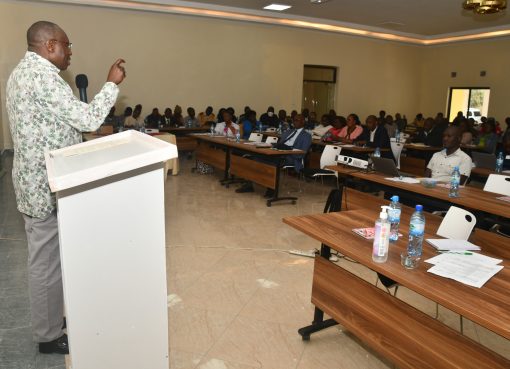
“When journalism is under-resourced, public health suffers,” said Peter Finn, CEO of FINN Partners, during the launch in Nairobi. He cautioned that fragile media ecosystems could undermine already stretched health systems across the continent.
The practical consequences include fewer investigative reports into failing health services, reduced scrutiny of policy decisions, and limited public access to accurate, timely information. In a digital age where misinformation spreads rapidly, the absence of strong, credible journalism can have life-threatening consequences.
In Kenya, health journalists face mounting challenges in newsrooms. They are expected to cover complex issues, from pandemics and vaccine rollouts to mental health and chronic diseases, often without specialized training or sufficient resources. Dedicated health desks are shrinking, and reporters frequently cover multiple beats simultaneously.
Those pursuing in-depth investigations face significant risks. Queenter Mbori, Executive Director of the Association of Media Women in Kenya, highlighted threats to personal safety, digital surveillance, and mental health pressures, with little psychosocial support available. Gender-based harassment and underrepresentation of women in health reporting further shape whose stories are told and how.
Yet, Mbori remains resolute about the critical role of journalism. “In Kenya, our president’s term is limited, but journalism reigns forever,” she said, underscoring the enduring responsibility of the media to hold power accountable.
The report notes a positive shift in the way African health stories are told. Journalists increasingly focus on solutions, local innovations, community-led responses, and African expertise rather than portraying the continent solely as a site of crisis. By prioritizing local data and firsthand experiences, reporting becomes more relevant and impactful.
Experts at the Africa Health Media Summit emphasized two guiding principles for future reporting: grounding stories in credible evidence and humanizing them through lived experiences.
Digital media presents both opportunity and risk. Social platforms allow journalists and health professionals to reach broader audiences and engage communities directly. However, these platforms are also breeding grounds for misinformation, which often spreads faster than traditional media can respond.
Artificial intelligence introduces another dimension. While AI offers tools for data analysis and efficiency, experts caution against overreliance, warning that errors in health communication could have serious consequences.
The report concludes with a call to action for governments, donors, media organizations, and the private sector: invest in health journalism or risk weakening public health outcomes. Recommendations include funding newsroom capacity, improving access to reliable data, supporting specialized training, and fostering stronger partnerships between journalists and health experts.
For Mbori, collaboration is key. “Breaking silos between funders, journalists, policymakers, and communicators is essential. Only through collaboration can we ensure accurate, impactful health reporting,” she said.
As Kenya and Africa face rapidly evolving health challenges, journalism has never been more critical. The Africa Health Media Trends Report 2026 serves both as a warning and an opportunity—to reimagine health journalism as a stronger, more resilient pillar of public life.
The future of health on the continent may depend not only on hospitals, funding, or policy but also on the strength of the stories that inform, educate, and empower its people.
by Grace Naishoo