Residents of Homa Bay County have been urged to register for the Social Health Authority (SHA) to enhance access to healthcare services and reduce financial strain during medical emergencies.
Principal Secretary for Medical Services, Ouma Oluga, said SHA registration in the region currently stands at 50 per cent, calling on more residents to enroll in the programme.
He noted that the initiative is key to sustaining healthcare services, as many citizens are unable to meet hospital costs when illness strikes.
“Diseases do not warn when they are coming. You need to be prepared. We must come together to build a basket of funds that can help us pay for healthcare when the need arises,” he said.
Oluga was speaking during a church fundraising event in Kagan Ward, where he compared SHA contributions to community fundraising efforts, explaining that the programme collects contributions based on individuals’ income levels, ensuring equitable access to healthcare.
He credited President William Ruto for introducing reforms in healthcare financing, noting that the government has rolled out various programmes aimed at improving service delivery.
However, he emphasized that healthcare systems can only function effectively when citizens also contribute towards them, adding, “Economic development starts with health, and in health it begins with protecting our finances. By registering with SHA and making contributions, you avoid the burden of fundraising during medical emergencies.”
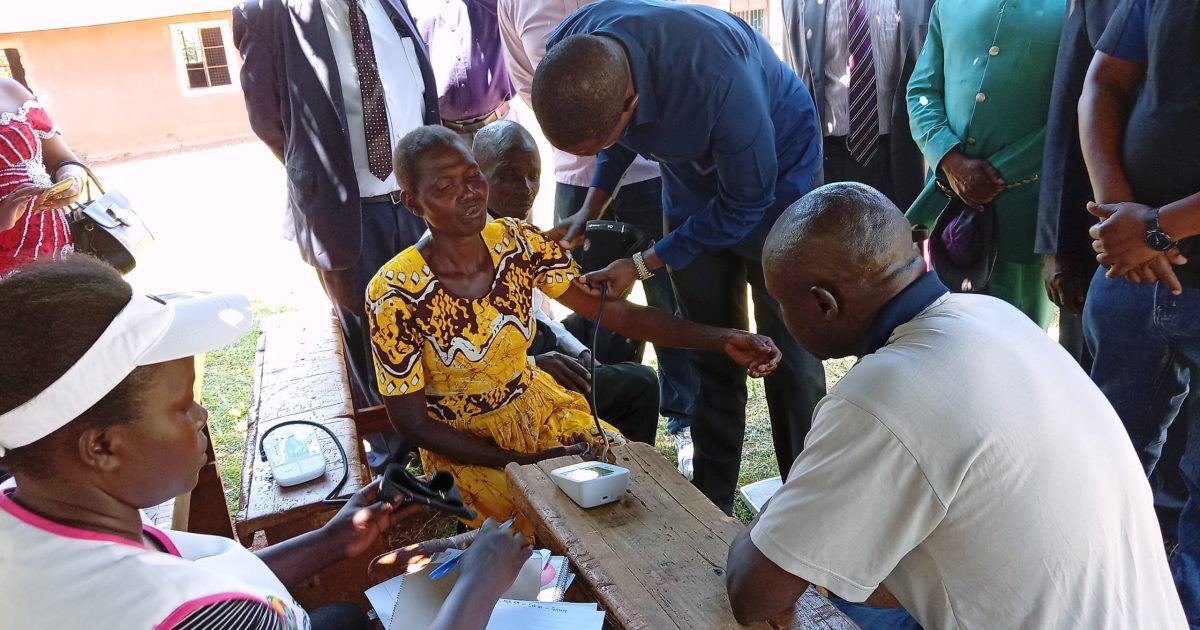
During the event, residents benefited from free medical services, including cervical and prostate cancer screenings as well as tests for non-communicable diseases such as hypertension.
Oluga raised concern over the high prevalence of cervical cancer in the region, revealing that out of 7,000 cases reported nationally, 4,000 are from the Western Nyanza region. He termed the situation alarming and called for urgent intervention.
“This is a very serious issue that must be tackled. Through HPV vaccination for our young girls, we aim to change this narrative and eliminate cervical cancer within the next 15 years,” he said.
He underscored the need for collaboration between the national and county governments to improve healthcare delivery.
While the national government is responsible for policy, he noted that county governments must ensure hospitals are well-staffed, equipped, and stocked with essential medicines.
“Our role is to support counties so that the standard of care is equal everywhere. Healthcare should not be divided between national and county governments. Leadership must focus on responsibility to ensure seamless service delivery,” Oluga said.
He urged residents to take advantage of government health programmes, including screenings and SHA enrolment, while cautioning against misinformation that could discourage them from registering with the health authority and seeking proper healthcare.
“Health is a personal responsibility. Protect your health by safeguarding your finances and utilizing available government services,” he urged.
by Sitna Omar