Scholars are calling for increased global collaboration to combat hunger and land degradation caused by climate change, emphasising the need for partnerships between African governments, the private sector and international communities.
The scholars have highlighted the urgency of unified climate-responsive solutions by African governments in transforming food systems, safeguarding the environment and building resilience to climate shocks, recognising that no single country in the continent could address the challenges alone.
Chairperson of Egerton University’s Department of Geography Dr Humphrey Were Obulinji said it was time for environmental, energy and food systems experts from the continent to resolutely come together to help the continent fight hunger and land degradation for economic prosperity.
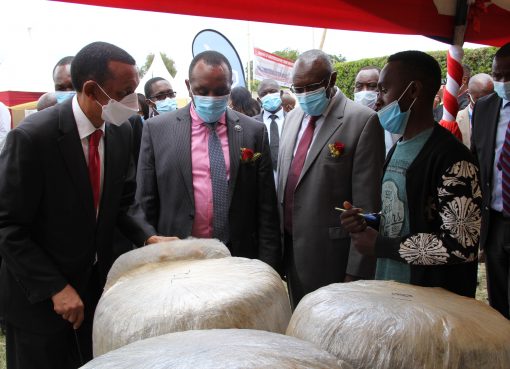
While officially inaugurating the Alliance for African Partnership (AAP) partner’s engagement forum to address pressing environmental issues and the role of research in policy formulation, Dr Obulinji indicated that climate change had become the greatest threat to the future of humankind and the main environmental, ecological and social challenge in the 21st century.
He observed that collaborative efforts would enable countries to pool resources, exchange best practices, scientific research and adaptation strategies, share knowledge, and implement joint initiatives to tackle shared challenges like extreme weather events, resource scarcity and ecosystem degradation fostering a more informed and coordinated approach.
The event that was hosted at Egerton University’s Njoro Main Campus, brought together experts from various African and international institutions and called for creation of uniform standards for climate action in Africa to enable states streamline efforts, share best practices, and amplify their impact, forge a sustainable path forward, protect the environment and secure the well-being of its people.
Dr Obulinji who represented Egerton University’s Dean of the Faculty of Environment and Resources Development (FERD), Professor Wilkister Moturi, who had been slated as the chief guest, pointed out that urgency of climate action could not be overstated as climate change was not just an environmental issue but also a human, economic and social issue.
He underscored the significance of partnerships in addressing the continent’s environmental and policy challenges, emphasizing that cross-border collaboration was essential in combating the multifaceted effects of climate change.
“The impacts of climate change, from extreme weather events to sea-level rise, pose real threats to our livelihoods, our economies, and our very way of life. Climate policy is not an option; it’s an imperative,” stated the don.
He added that a common position would help bridge policy gaps, attract much needed climate finance and enhance collective decision-making processes in matters of climate and security.
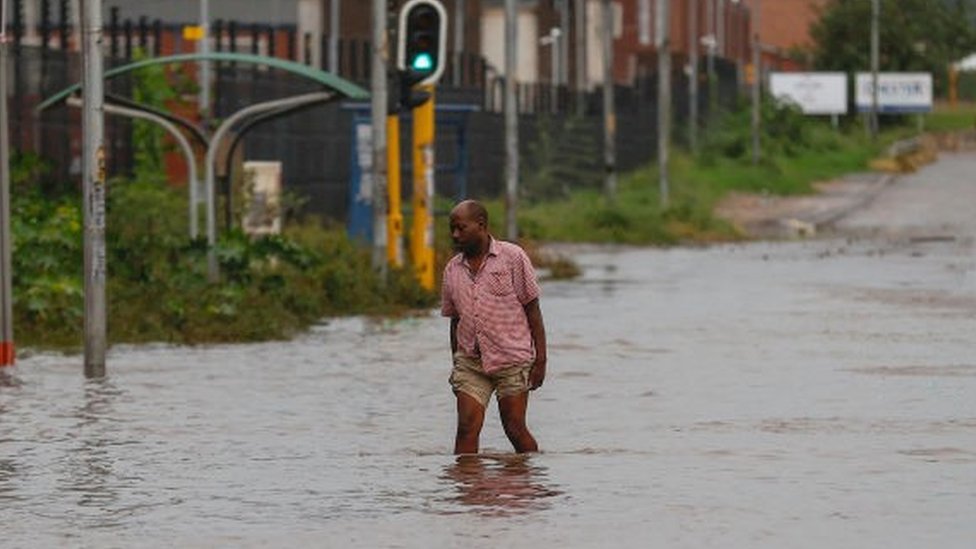
Experts at the forum were unanimous that extreme weather, erratic rainfall patterns, prolonged drought and severe flooding were no longer distant threats but ever-present realities ravaging livelihoods. They noted that the continent’s agricultural sector, a vital component of Africa’s economies, faces increased unpredictability due to shifting weather patterns.
This, they pointed out ultimately undermines food and nutrition security, the key facets of human security, and results in economic instability, loss of income and rising poverty rates.
It was noted that the nexus between climate change, peace and security was self-evident as prolonged drought, devastating floods and storms had wreaked havoc, inflicted massive displacement, induced migration, caused deaths and lost livelihoods, triggered pandemics and other diseases, and created untold economic shocks.
Dr Obulinji however, said that through robust climate policy, there was an opportunity to mitigate the effects of climate change, reduce greenhouse gas emissions and create a more resilient and sustainable future for the continent’s people.
“Climate policy is about envisioning a world where our children and grandchildren can thrive, free from the shackles of a changing climate,” he added.
He added that there was need to ensure that existing climate policies and actions aligned with development priorities and aspirations, as articulated in Agenda 2063 and the Sustainable Development Goals, adding that we should pursue low-carbon development pathways that enhance energy, food, water, and health security while protecting natural resources and biodiversity.
The Don said research on the impact of climate change on food security could help policymakers develop strategies to mitigate risks and enhance resilience, pointing out that the research should inform policy to ensure decisions are evidence-based, effective, and promote positive societal outcomes.
By relying on research findings, he added, policymakers could make more informed choices, avoid potential pitfalls and address complex issues with greater understanding.
He lamented that there were unacceptably wide gaps between research, policy and action, and said to bridge the gaps, there must be a real commitment from government officials, researchers, and teachers to build and sustain effective forums for exchange of ideas.
He stressed that research should inform policy to ensure decisions are evidence-based, effective, and promote positive societal outcomes. By relying on research findings, the don affirmed policymakers can make more informed choices, avoid potential pitfalls, and address complex issues with greater understanding.
In his presentation Professor Serge Zebaze from the University of Yaoundé, Cameroon said often viewed merely as a local sanitation challenge, wastewater actually plays a significant, yet underappreciated, role in exacerbating climate change.
Professor Zebaze highlighted the importance of urban wastewater management, pointing out that while urban populations are projected to increase by 2030, water coverage remains limited.
To make a real difference, the don stated that governments, industries, and communities must invest in innovative wastewater treatment solutions and policies that prioritize sustainability.
“We must harness wastewater management as one of the solutions to climate change,” he advised.
According to experts at the forum water and wastewater utilities account for 5 percent of global greenhouse gas (GHG) emissions, of which 70 percent is caused by wastewater treatment. And this doesn’t even consider the 80 percent of wastewater that is released to the environment without treatment.
Professor Zebaze noted that when not treated properly, wastewater which consists of effluent from homes, industries, and agricultural activities releases powerful greenhouse gases like methane and nitrous oxide, both of which significantly contribute to global warming.
On a more optimistic note, he added that wastewater also holds the potential to be a valuable resource in the fight against climate change through technologies that can be harnessed as green energy sources for electricity or heating.
“Furthermore, wastewater can be a source of valuable nutrients like phosphorus and nitrogen. Instead of treating these nutrients as waste, some innovative methods involve recovering them for use as fertilisers, reducing the reliance on chemical fertilisers—products that are energy-intensive to produce and environmentally harmful,” he elaborated.
Various green technologies, such as algae-based treatments and natural filtration systems like constructed wetlands, have also shown promise in mitigating wastewater’s environmental impact while maintaining effective waste management.
Dr Dowtin Asia from Michigan State University said evidence-based research has become instrumental in justifying increased funding for sectors like environmental justice, climate change adaptation, and health.
Dr Asia indicated that it was also important to leverage these research findings to develop strong business cases to stimulate investments in climate adaptation projects.
He argued that without cost estimates, strong investment proposals with clear revenue models could not be developed for the private sector to analyse and engage in.
By Esther Mwangi