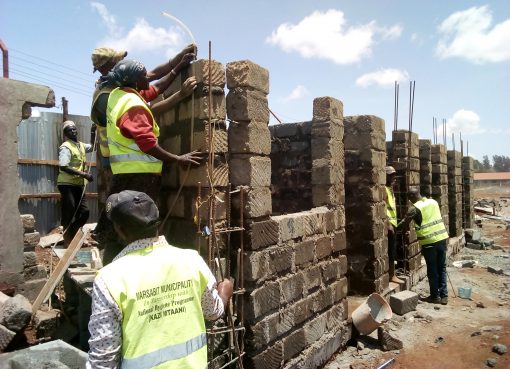
It is a reprieve for cancer patients in South and Central Rift Regions as construction of a Sh 32 million worth second ultra-modern radiotherapy bunker at the Nakuru County Teaching and Referral Hospital’s (NCTRH) Regional Cancer Centre nears completion.
The multi-million specialised bunker which will house a Linear Accelerator (LINAC) machine and other high-tech equipment for diagnosis and treatment of cancer is said to be at 65 per cent completion and is scheduled to be operational within two months’ time.
County Director for Medical Services, Dr Daniel Wainaina, confirmed that the project brings to two the number of radiotherapy bunkers at the Nakuru Region Cancer Centre, which he said was a significant step in expanding cancer treatment facilities in the country.
Dr Wainaina said the project was part of a broader initiative by the National government in collaboration with the devolved unit aimed at enhancing cancer care, including the establishment of regional cancer centres and the training of healthcare professionals in radiotherapy and nuclear medicine.
The County Director indicated that the radiotherapy facility under construction will supplement the already operational specialised bunker that was commissioned last year and which also houses a LINAC machine and other specialised cancer treatment equipment.
The new radiotherapy bunker will increase access to radiotherapy services for patients in Nakuru and 21 neighbouring counties, thus reducing the need to travel long distances for treatment, added Dr Wainaina.
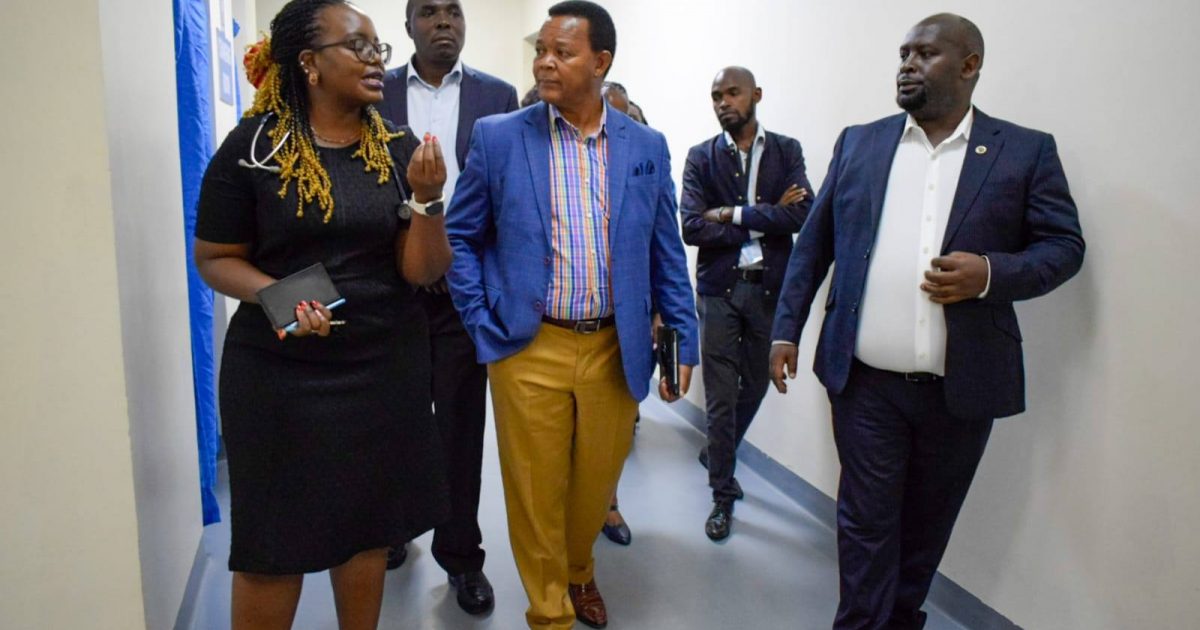
The County Director made the remarks after conducting members of the Nakuru County Teaching and Referral Hospital (NCTRH) Board led by the Chairman, Bishop Philip Nderitu, on a tour of the Regional Cancer Centre to inspect progress on construction works of the radiotherapy bunker.
He confirmed that the National government through the Ministry of Health, had delivered the second Linear Accelerator (LINAC) machine, which was awaiting a few final accessories, installation into the radiotherapy bunker and later commissioning.
This second LINAC machine, Dr Wainana explained, was delivered as part of the government’s strategic plan to move into high-precision cancer treatment and to decrease outbound medical tourism while increasing inbound medical tourism.
He said LINAC machines not only increase efficiency but also reduce side effects from powerful rays.
The Director expressed optimism that the two Linear Accelerator (LINAC) radiotherapy machines that he said were designed to treat a broad spectrum of cancers and significantly enhance patient care would reduce the cases of patients travelling out of the country for cancer medical attention.
“The expansion of facilities is crucial in addressing the high demand for radiotherapy services, which has led to overcrowding and long waiting times at existing centres,” noted the Director.
Dr Wainaina disclosed that following the commissioning of the first radiotherapy bunker, the Regional Cancer Centre was now attending to over 50 cancer patients daily.
He said with the commissioning of the second LINAC machine, the number of patients was expected to double reducing waiting times and improving overall patient outcomes, adding that the centre also hosts a brachytherapy unit for the treatment of cervical, prostate, and other types of cancer.
Dr Wainaina stated that the new equipment will offer high-energy X-rays through linear accelerators that help burn cancerous cells much faster compared to cobalt units, which have previously been in use.
“When normal cells are burnt together with harmful ones, longer healing periods, nausea and unnecessary weight loss result,” said the Director.
Dr Wainaina explained that since its energy levels are higher, the LINAC machine is better suited for treating deep-seated cancerous tumours than the Cobalt one. It also has electron beams which enable doctors to adequately treat superficial tumours without harming organs such as the liver, lungs and kidneys.
He said the two LINAC equipment will enable better accuracy in tumour targeting by oncologists with the protection of the critical surrounding structures, hence improving the treatment outcomes for patients and reducing radiotherapy treatment side effects.
Aside from cancer treatment, the LINAC machines have other medical uses. Their radiation is said to reverse the rejection of an organ transplant, suppress the immune system of patients undergoing blood and marrow transplants, and correct certain neurological and cardiovascular disorders.
The new LINAC technique also employs VMAT (Volumetric Modulated Arc Therapy) and IGRT (Image Guided Radiotherapy), which cannot allow a radiologist to do any radiation before an image is taken to determine the patient’s progress. In such cases errors are minimised as much as possible.
Most oncology units in private and public facilities have solely been relying on Cobalt-60 radiotherapy machines before gradually embracing digital Linear Accelerator Machines (LINAC), which have gained popularity worldwide due to their advanced features.
With a cobalt machine, the radioactive element (cobalt) releases gamma rays which are used to destroy cancer cells. Since the rays are emitted as the cobalt gradually decays, the amount of radiation released decreases over time.
Thus, if the machine initially offered radiotherapy treatment to patients for 20 minutes, doctors would gradually increase the duration so as to attain the required dose. Dr Wainaina noted that this contributes to the long queues at oncology facilities.
According to Dr Wainaina, the devolved unit’s capacity to fight cancer was further expected to be bolstered after the Ministry of Health pledged last week to deliver a third LINAC machine sourced from the International Atomic Energy Agency (IAEA), a move that will enhance oncology services for patients across the region.
Dr Wainana voiced Governor Susan Kihika’s commitment to actively engaging with the National Government to secure sustained support for the Cancer Centre, which he said serves not only Nakuru County but also neighbouring counties, adding that efforts were underway to ensure optimal staffing for the efficient operation of LINAC machines, further strengthening service delivery.
Current MOH data shows that there are over 44,000 new cases of cancer and 28,500 deaths annually in Kenya, with numbers expected to double by 2040.
Kenya’s National Cancer Control Strategy 2023–2028 and the National Cancer Institute (NCI-K) are central to the fight against cancer.
Cancer is the third leading cause of death in Kenya after infectious diseases and cardiovascular diseases, accounting for 8 per cent of overall mortality with 42,000 cases and 27,000 deaths annually, according to MOH statistics.
Majority of cancer patients are said to be diagnosed at late stages when treatment outcomes are poor and, therefore, thousands of people succumb to cancers that would often be treatable.
By Esther Mwangi and Mary Ochieng