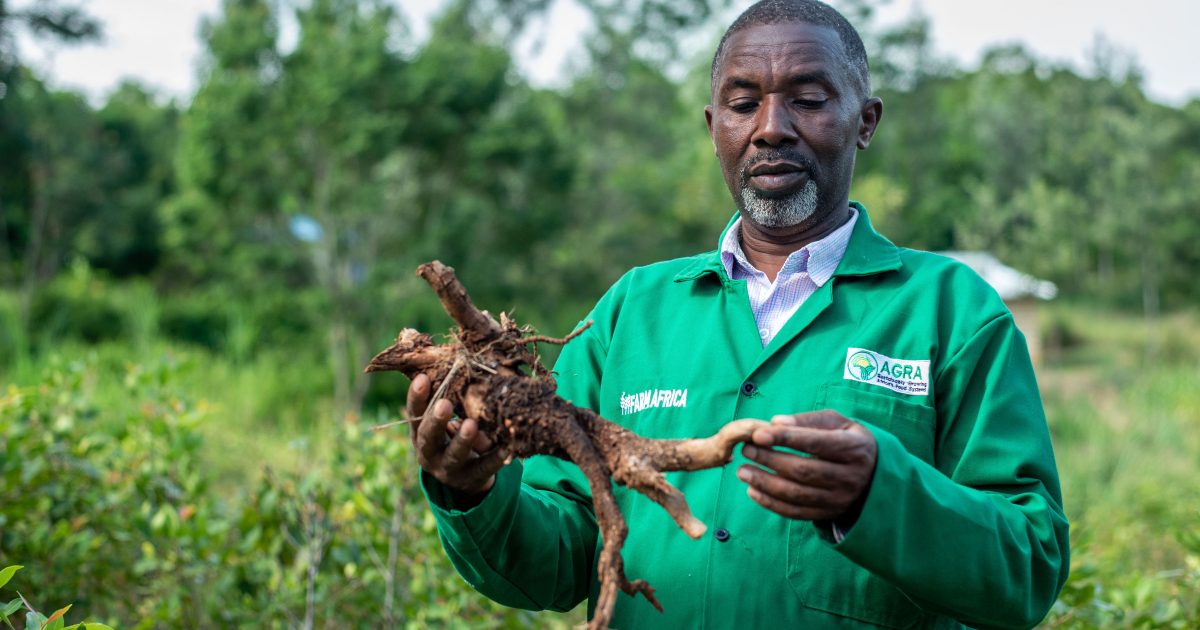
Agricultural experts have called for the accelerated adoption of regenerative agriculture and data-driven land management practices to restore soil health, strengthen food security, and build resilience among smallholder farmers.
During Farm Africa’s 40th Anniversary forum in Nairobi, stakeholders emphasised that sustainable land use and climate-smart farming practices were critical in reversing soil degradation and improving productivity in Kenya and across Eastern Africa.
Speaking at the Forum, Farm Africa Kenya Chairperson, Jane Ngige, noted that the Organisation’s four-decade journey had been defined by strong partnerships and innovation that empowered smallholder farmers to move from subsistence to sustainable agribusiness.
“Farm Africa’s success has been built on collaboration with communities, governments, and partners such as AGRA, the IKEA Foundation, the Mastercard Foundation, and the European Union,” stated Ngige.
“Through these partnerships, we have supported thousands of farmers to adopt regenerative farming that protects the environment while improving income,” added the Chairperson.
Further, Ngige narrated that the Organisation, founded in 1985 by Dr. Michael Wood, had evolved into a regional leader in promoting sustainable agriculture in Kenya, Uganda, Tanzania, Ethiopia, and the Democratic Republic of Congo.
She said the focus going forward is to expand regenerative agriculture and climate adaptation programmes that support farmers to withstand the effects of climate change.
Country Director, Farm Africa Kenya, Mary Nyale underscored the importance of empowering women and youth as key drivers of climate-smart farming and rural transformation.
Ms Nyale observed that inclusive approaches were crucial in ensuring that agricultural innovation benefits entire communities.
“Women produce most of the food in rural areas, yet they face barriers in accessing credit, training, and markets. At Farm Africa, we are ensuring that women and young people are part of the green transformation by integrating gender inclusion in all our projects,” she asserted.
Nyale pointed out that sustainable agriculture was not only about improving yields but also about protecting ecosystems and enabling farmers to adapt to changing weather patterns.
“We are seeing that when farmers are equipped with the right knowledge, especially women and youth, they become champions of change within their communities,” she added.
In his contribution, Farm Africa Country Programme Manager George Ochuodho highlighted the success of ongoing regenerative agriculture projects in Embu and Meru counties, supported by AGRA and the IKEA Foundation.
Mr Ochuodho said the initiatives have enabled more than 20,000 farmers to adopt practices such as agroforestry, composting, and crop rotation to improve soil fertility.
“Scientific evidence shows that regenerative agriculture increases soil organic matter, enhances structure, and improves yields. By investing in soil health, we are strengthening the foundation of Kenya’s food systems and increasing farmers’ resilience to climate shocks,” he affirmed.
Professor Jacqueline McGlade, Chief Scientific Officer at Downforce Technologies and lecturer at Strathmore University, stressed the role of data in guiding land restoration and soil management.
“We have mapped millions of hectares across ten counties in Kenya, using a digital twin model to track soil health and land changes,” she announced, adding that this information helps farmers and County governments to understand where degradation is occurring and how regenerative practices could reverse it.
Prof McGlade explained that the True Value Accounting framework, developed with UN support, allowed policymakers to assess the real environmental and social costs of food production.
“When soil health, water, and biodiversity are properly valued, decisions about land use become more sustainable; therefore, science and technology are powerful tools for scaling regenerative agriculture,” she advised.
Meanwhile, Moses Mbogo, a smallholder farmer and village-based advisor from Embu County, insisted that regenerative agriculture has been a game changer.
Through Farm Africa’s training, he said he adopted agroforestry and crop diversification to improve soil fertility and boost yields. “Before joining the programme, my yields were low, and the soil was poor. Now, I have a mixed system that gives me food, fruit, and timber incomes while improving the land. The next step is to have more trained village advisors to reach every farmer,” Mbogo expounded.
In addition, Mbogo urged County governments to integrate the village-based advisor model into their agricultural extension systems to sustain knowledge sharing at the grassroots level.
In view of the foregoing, Ngige reiterated the programme’s significance and success, stating, “When we take care of the soil, it takes care of us; the future of farming depends on how quickly we embrace regenerative solutions that make agriculture productive, profitable, and sustainable.”
By Naif Rashid