The government has stepped up implementation of a nationwide programme to transition children from institutional care to family-based care.
State Department for Children Services Principal Secretary (PS) Carren Ageng’o said the reforms are anchored in the Children’s Act 2022, which introduced sweeping changes to child protection laws and formally outlawed long-term institutionalisation.
The 10-year care reform strategy (2022–2032), she said, outlines a phased approach to reintegration, prioritising family tracing and reunification.
Children’s officers are collaborating with institutions, community leaders, and relatives to locate biological parents or extended family members, aiming to reintegrate children into safe home environments.
“Evidence shows that children who grow up in institutions face developmental challenges, identity gaps and confidence issues because they lack a stable family structure,” the PS said.
The Department of Children Services, she said, was in the process of mapping out all children living in institutions across the country to determine the scale of the transition.
“We have already concluded the exercise in the Rift Valley region where we have identified 13,000 children who are currently in institutional care,” she said.
The PS said the government, together with development partners has costed the programme and determined what is required to reintegrate all the children back into the family setup.
“Some children have already been successfully reunited with their families under the phased rollout. We shall continue with the exercise to ensure that by the year 2032 all the children are reintegrated back to their families,” she said.
Children who are abandoned or rescued, she said, will only be allowed to stay in charitable children’s institutions for a maximum of six months.
Within that period, she said, authorities must either trace their families or secure alternative family-based care.
The PS added that for children whose biological relatives cannot be traced, the State Department was promoting foster care and adoption under alternative family care arrangements.
Prospective foster parents, she said, will undergo mandatory training and vetting before placement, while adoption procedures will be managed under the department’s supervision to safeguard children’s rights.
“Our goal is to ensure children grow up in stable family environments where they can develop fully and confidently,” she said, expressing optimism that by 2032 only minimal cases will require institutional placement.
Ageng’o said collaboration with county governments was central to the success of the reform agenda, particularly in strengthening grassroots child protection systems and improving coordination between national and devolved units.
She encouraged counties to develop comprehensive child protection policies to align with the national framework.
“Kisumu County has committed to finalising its child protection policy within three months. I am appealing to the other county governments to do the same so that collectively we can safeguard our children,” she said.
The PS spoke in Kisumu on Friday during a visit to Mama Ngina Children’s Home following a fire that destroyed part of a dormitory last week.
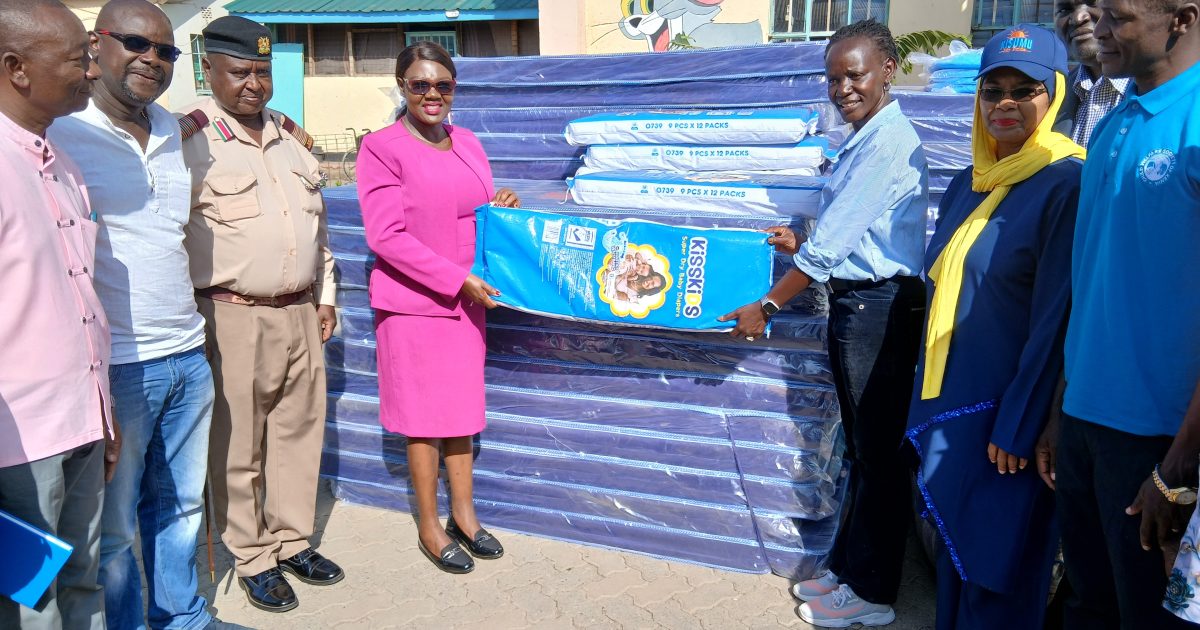
During the visit, she delivered mattresses, blankets, bedding and food supplies to support affected children and assessed safety measures within the facility.
The children, she said, have since been relocated to a safe section of the compound as reconstruction of the damaged dormitory continues.
She thanked well-wishers supporting the rebuilding efforts but emphasised that emergency interventions in institutions must complement the broader reform agenda.
By Chris Mahandara