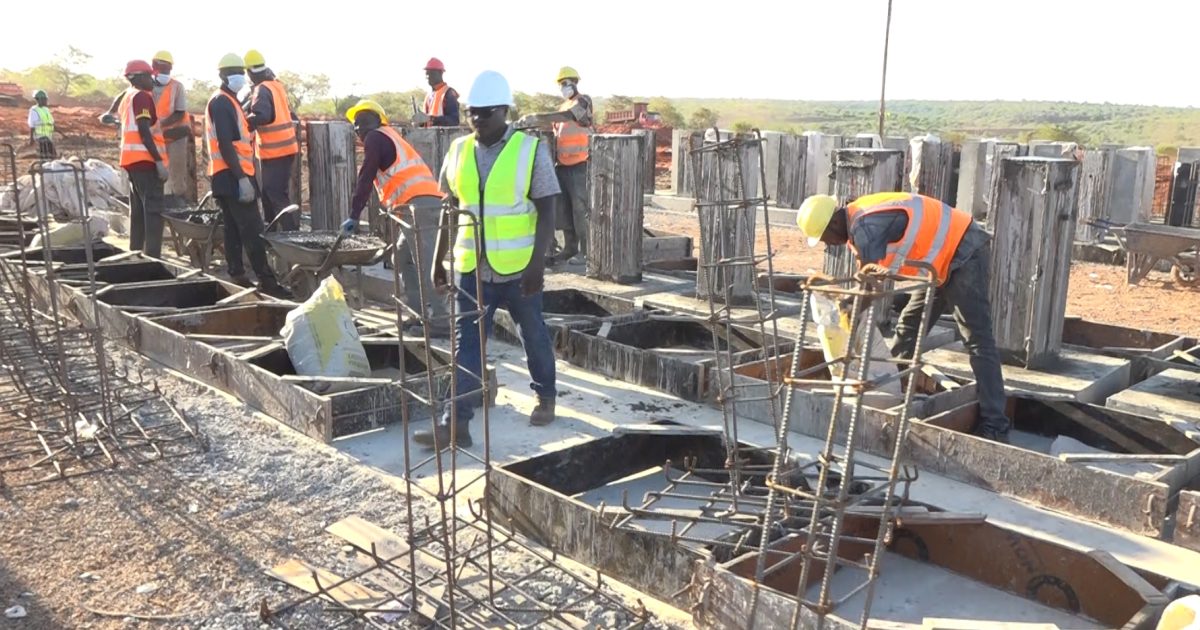
The government is constructing a Sh600 million solar power plant at the Baricho Water Works in Kilifi County to reduce the high cost of pumping water, currently standing at between Sh60 million and Sh70 million per month.
Water and Irrigation Cabinet Secretary, Eng. Eric Mugaa, confirmed that the contractor had commenced work at the site and that once the project is completed, it will subsidise the cost of electricity and end the frequent power cuts from the Kenya Power and Lighting Company (KP).
“We have a contract worth over Sh600 million and the contractor is currently on site. Our aim is to complete the project as quickly as possible so that we can reduce the high KP electricity bills amounting to between Sh60 million and Sh70 million monthly,” he said.
He noted that the high electricity bills incurred by the Coast Water Works Development Agency were being borne by the Kilifi and Mombasa County Governments through their respective water companies, which, he noted, were struggling to collect debts from water consumers.
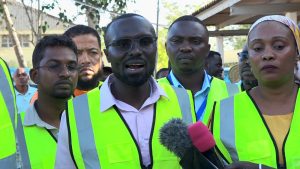
Eng. Mugaa, who toured the Baricho Water Works in Malindi Sub County Wednesday following a severe water shortage that has hit Kilifi County in the past three weeks, attributed the crisis to the breaking down of two of the ten wells at the Baricho wellfield.
“The wellfield has the capacity of producing 90 million litres of water daily but currently it is producing 80 million litres per day because one borehole and a standby one are out of commission and require cleaning, which is a normal occurrence in maintenance and operations. Each of the boreholes produces 10 million litres per day,” he told journalists.
He explained that when it rained in the area, the boreholes had to be raised, making it difficult for conventional equipment to clean them. He however said that specialised cleaning equipment is being fabricated in Nairobi and is expected to be operational by the end of November.
The CS noted that even at the full capacity of 90 million litres per day, the Baricho Water Supply cannot effectively meet the demand for water in Kilifi County alone, which now stands at 110 million litres per day.
To manage the shortfall, the Cabinet Secretary said the Coast Water Works Development Agency and the Kilifi and Mombasa County Governments had agreed to develop a proper and predictable water rationing schedule within the next one week and inform consumers of the same.
Eng. Mugaa expressed optimism that the proposed Mwache Dam project in Kwale County, which he said was currently 55 per cent complete, would solve the water problem in Kilifi, Kwale and Mombasa Counties.
“Once the Mwache Dam is complete, it will be able to supply water to Kwale and most of Mombasa County and allow Baricho’s water output to be dedicated solely to Kilifi County,” he said.
He urged water consumers to pay for the commodity to allow water companies to meet their financial obligations.
The CS said the government, through the County Government of Kilifi, had received a World Bank grant under the Water and Sanitation Services Improvement Project (WSTP) to undertake water reticulation projects as the county prepares for the anticipated increase of water supply.
“We are preparing ourselves because one day all the water from Baricho will be supplied within Kilifi alone. Our systems downstream have to be ready, and the game plan is Mwache Dam,” he said.
Kilifi Governor Gideon Mung’aro lauded the National Government for the proposed solar power project at Baricho, which he said, he had advocated for since the time he was Malindi Member of Parliament in 2007.
He hoped that Coast Water company would increase the number of boreholes to increase the amount of water produced in order to meet the county’s demand for the commodity.
Mr. Mung’aro acknowledged public frustrations over recent water shortages and assured residents that his administration was doing everything possible to ease the pain through a proper water rationing programme in the short term as it works with other agencies for a long-term solution.
He said his administration was laying down the water reticulation infrastructure through the WSTP, which includes the construction of pipelines and water tanks in various parts of the county.
“My plea is that we should not politicise the water supply problem, because it has been there even before we came to power. I however assure the public that we are doing everything to ease the situation,” he said.
By Emmanuel Masha