The Catholic Archdiocese of Mombasa, through its Stella Maris organisation, has renewed calls for stronger protection, training, and welfare support for Kenya’s fisherfolk as the country marks World Fisheries Day.
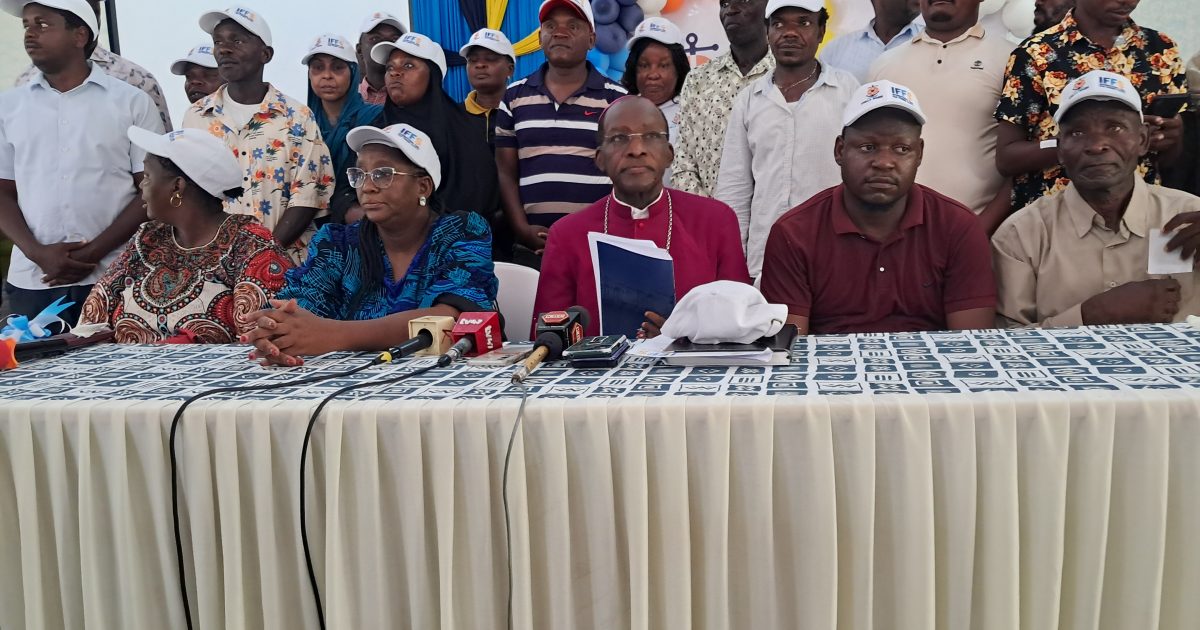
The organisation launched its 2026–2030 Strategic Plan and a new Safety Training Curriculum during a briefing held at the Our Lady Mother of Africa Tudor Pastoral Centre in Mombasa.
Archbishop Martin Kivuva Musonde, who also chairs the Kenya Conference of Catholic Bishops (KCCB), said that the gathering brought together multiple stakeholders to address the urgent needs facing the fishing community.
“We saw it was important to come together and collaborate on matters regarding fishing and fishermen. Mombasa is a major port on a vast ocean, and the blue economy provides opportunities for youth, fishermen, and mothers who depend on the sea. Today we have a responsibility to push this agenda forward,” he said.
Dr Roselyn Sidi Randu, Chief Officer of Mombasa County Government for Blue Economy, Cooperatives, Agriculture, and Livestock, underscored the risk-filled environment fishermen operate in, noting that safety has historically been overlooked.
“Many times, the security of fishermen has not been prioritized. Some spend up to two weeks in the sea, and their health and safety must be guaranteed. Research shows that about one per cent of fisherfolk lose their lives due to rough seas, sickness, or lack of medical support,” she said.
She praised Stella Maris for introducing the safety curriculum, describing it as among the first of its kind in the county outside of Bandari Maritime Academy BMA.
“We usually focus on fish production. How many kilogrammes were brought in? Yet the fishermen’s safety is even more important. As county government, we continue to work with Beach Management Units (BMUs), Coast Guard, the Navy, and other agencies to ensure fishermen are secure beyond 30 nautical miles,” she added.
Local fishermen and representatives of BMUs welcomed the training, saying it would significantly reduce accidents and fatalities at sea.
Brian Mwakudza Mwaojo, chairman of the Mombasa BMU, stated that many fishermen have disregarded safety measures for years. “That is why many lives are lost at sea. This opportunity from Stella Maris under the Catholic Church will help us. It is essential for our safety,” he said.
From the inland waters, Raphael Akuku Achiando of the Ugenya BMU in Kisumu noted that Lake Victoria faces unique challenges such as water hyacinth, hippos, and crocodiles.
“I thank the bishop for uplifting Kenya’s economy by safeguarding fishermen. Stella Maris does not discriminate, just as Jesus recognised fishermen, Bishop Martin recognised fishermen. We need more life jackets and rescue boats, and we welcome you to Kisumu to help us deal with the dangers we face,” he said.
Stella Maris Kenya Director Margaret Masimbo said the new strategic plan lays out clear milestones for strengthening service delivery and ensuring that every fisherman returns home safely.
“The dignity of the human person is key for us. We want to ensure every fisher who leaves home returns safely to their family. We have reviewed our challenges and can now see the milestones ahead. Our work must be vibrant and visible, and advocacy for the security and safety of our fishermen must be amplified,” she said.
Masimbo acknowledged challenges such as limited resources and the vast regions covered by the mission, but affirmed that training across BMUs will continue.
The event brought together Church leaders, county representatives, national maritime agencies, and fisherfolk from coastal and inland regions, all united in their call for safer and more sustainable fishing practices in Kenya.
By Shamim Musa and Hassan Bahati