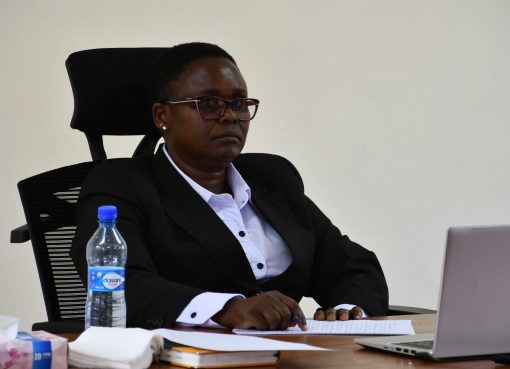
Cabinet Secretary for Energy and Petroleum Opiyo Wandayi on Wednesday called on lagging counties to expedite the development of their energy plans, stating that the country cannot wait indefinitely, as Taita Taveta County became the seventh out of 47 counties to officially launch its comprehensive energy blueprint.
Speaking during the launch of the Taita Taveta County Energy Plan at Voi Wildlife Lodge, CS Wandayi said that a number of counties are still dragging their feet in energy planning, emphasising that the nation’s development cannot be held hostage by slow movers.
“This is a wake-up call to those counties that are still lagging behind. I don’t want to mention your name here, but there are a number of counties that are still dragging their feet in terms of coming up with county energy plans,” Wandayi declared, adding that, “This is a wake-up call that the country cannot continue to wait for you forever. The country wants to move forward, and Taita Taveta has shown the way.”
The CS emphasised that energy plays a central and strategic role in Kenya’s development aspirations, describing it as the driver for social, economic and transformation.
He explained that Kenya’s journey towards sustainable and inclusive development requires reliable, competitive, affordable, and sustainable energy to support national development goals.
Wandayi outlined Kenya’s impressive energy transformation, revealing that national electricity access levels have risen dramatically from approximately 29 percent in 2013 to over 95 percent currently.
He highlighted Kenya’s leadership position in renewable energy development, stating that renewable sources now account for approximately 82 percent of the country’s total installed electricity generation capacity and 93 percent of actual energy consumption.
“Kenya leads the African continent in installed geothermal capacity and ranks sixth globally,” Wandayi stated, adding that the country also boasts an extensive transmission network spanning 9,484 kilometres, including regional interconnectors that support cross-border electricity trade.
However, the CS acknowledged significant challenges remain. He pointed out that approximately 25 percent of Kenyans still lack access to electricity, with the majority found in rural areas.
More concerning, he noted that over 65.5 percent of households still rely on traditional biomass for cooking, contributing to deforestation, health risks, and environmental degradation.
Addressing these challenges, Wandayi outlined key strategies, including expanding and modernising energy infrastructure, promoting productive use of energy, and ensuring energy access for social and public facilities.
He emphasised the need for fair regulatory frameworks to ensure grid stability and reliability, transforming the electricity sector into a competitive force in local and regional power markets.
The CS stressed the critical importance of county energy plans in achieving national objectives, explaining that the recently gazetted Integrated National Energy Plan (INEP) regulations provide the framework for comprehensive planning.
“We will not be able to develop the Integrated National Energy Plan without bringing on board the respective county energy plans,” he stated.
He commended the county’s commitment to inclusive planning, noting that the plan incorporates input from all four sub-counties of Voi, Mwatate, Wundanyi, and Taveta, ensuring local relevance and community participation.
The CS revealed that his ministry is currently assisting 17 other counties that are following closely in developing their energy plans, expressing confidence that all 47 counties will eventually complete the process.
“Everybody is going to be on board eventually. Our opinion is that we hasten this process,” he urged.
Acknowledging development partners’ support, Wandayi specifically mentioned the European Union under the Sustainable Technical Assistance Project and the Green Climate Fund project ‘Climate Friendly Cooking’, funded by Germany’s Federal Ministry for Economic Cooperation and Development. He appreciated the partnership and technical assistance provided to counties in developing their energy plans.
The CS emphasised that the sector’s commitment to providing reliable, competitive, and sustainable energy would create jobs, foster higher incomes, and support strong economic growth.
He outlined plans for sustainable and innovative financing mechanisms and risk mitigation strategies to encourage investment and stimulate competitive private sector participation.
Wandayi called for enhanced collaboration between government, the private sector, NGOs, and communities while encouraging inclusivity and partnerships in energy development to address barriers to clean energy adoption.
By Arnold Linga Masila