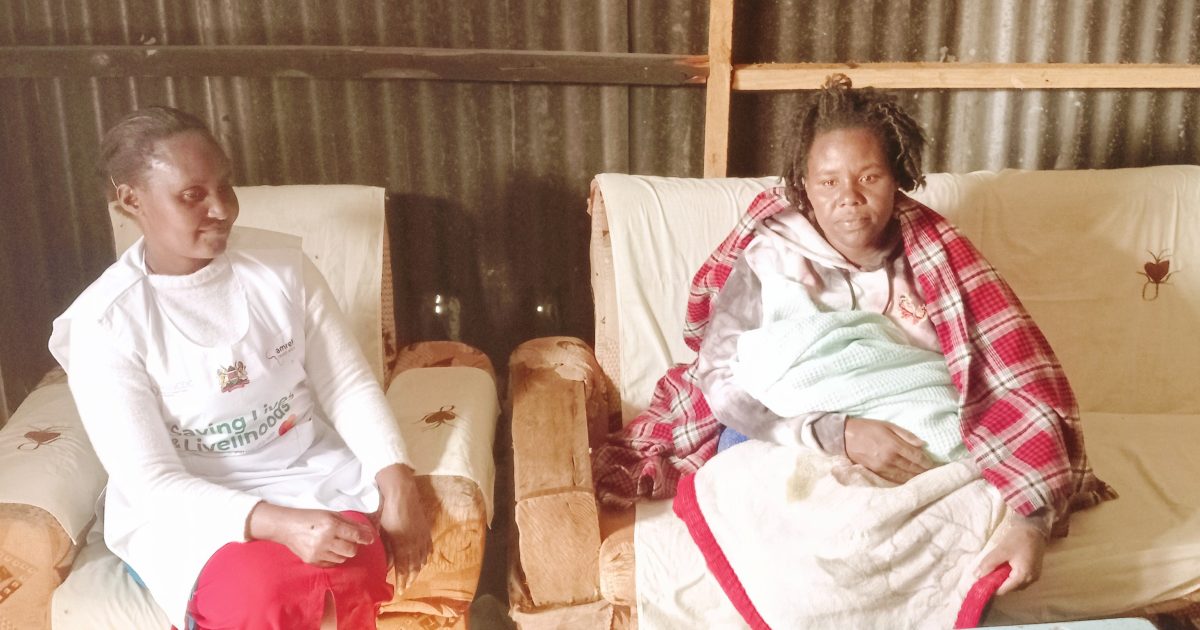
In the sleepy Intinyika village in Kajiado Central constituency, we find Lilian Sision, a mother of four humming lullabies to her one-month-old, soothing her for an afternoon nap.
Sision, though a mother of three other children, sees her fourth child as a miracle due to what she underwent when she was pregnant.
When she was barely four months pregnant, Sision started experiencing dizziness, difficulty breathing and swelling in her hands, legs and face making her spend most of her time sleeping.
She had started her antenatal clinics at a private facility which diagnosed her with high blood pressure and offered her medication. However, her symptoms persisted even after finishing the dose.
Veronicah Lankoi, a community health promoter visited her home during one of her routine household visits and noticed that Sision’s blood pressure was really high and referred her to the Kajiado County Referral Hospital.
Unfortunately, nurses at the hospital had downed their tools, paralysing services at the hospital and forcing Sision to return home with no help in sight.
Luckily for her, Lankoi visited again and informed her of an upcoming health outreach near their local church.
“The outreach had specialised doctors and they diagnosed me with preeclampsia. They gave me medication and referred me to the Kajiado County Referral Hospital for specialised care. Fortunately, the nurses had returned to work and I was admitted for two weeks as the doctors worked to stabilise my blood pressure,” she narrates.
Though she was put on high blood pressure medication, her blood pressure did not stabilise and she was referred to the Kenyatta National Hospital when she was eight months pregnant.
Due to the risks involved, she underwent an emergency caesarean section, and her baby was placed in the neonatal intensive care unit (NICU).
Though she had a two-month stay at KNH, her blood pressure stabilised after delivering her baby and she can now tend to her children and carry out her household chores with ease.
“With my other children, I had no complications and delivered all of them through normal delivery and that is why I see my last baby as a miracle due to what I went through. I am really thankful for the medical outreach programme as the specialised doctors I found there were the start of my miracle,” said an elated Sision.
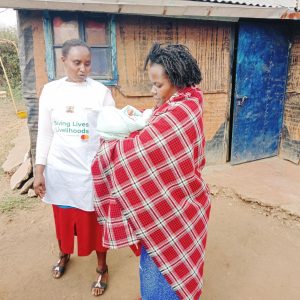
The outreach programmes are organised by Kajiado County under the Saving Lives and Livelihoods initiative, a programme funded by Mastercard Foundation and implemented by Africa Centre for Disease Control and Prevention (ACDC) and its partners including Amref Health Kenya, UNICEF, Kenya Red Cross and Akros.
The programme focuses on strengthening health systems, improving vaccination coverage and life course immunisation.
According to Kajiado County Executive Member for Health, Alex Kilowua, due to the vastness of the county, monitoring health indicators like immunisation, skilled delivery, nutrition and poor health-seeking behaviour among Kajiado’s rural residents are some of the challenges they face in ensuring that Kajiado has better health outcomes but the Saving Lives and Livelihoods programme has alleviated this.
“Through health systems like community health promoters put in place by the county and the national government with support from the Saving Lives and Livelihoods initiative, we have been able to conduct household visits even in the rural areas where they check blood pressure, screen for diabetes and do referral mechanisms to health facilities for specialised care,” he said.
He revealed that ever since the programme started, 9,607 people have been reached in the outreaches through curative, hypertension and diabetes screening services among others while 3,319 people have been reached through one health talk at the community level.
Kilowua notes that there also has been an increase in health-seeking behaviour especially among the residents living in rural areas of the county.
“Cases of maternal deaths for example have greatly reduced as there is an increase in the uptake of antenatal services at the health facilities unlike before,” said Kilowua.
Margaret Silapei, 25, is also a beneficiary of the targeted medical outreaches.
Though she lost two babies under the age of one in the years 2020 and 2023, she is currently five months pregnant and she is hopeful for a positive outcome with the help she is getting from the specialised doctors she met at one of the medical outreaches.
“I am currently under close monitoring at the Kajiado County Referral Hospital where I get antenatal services twice a month. Reproductive health specialists have put me under medication for anaemia and they do routine scans to ensure my baby is developing well. I am grateful for the medical outreaches as that is where I got to know the reproductive health specialist who is monitoring me now,” she said.
Dr Daniel Sankaire, a reproductive health specialist at the Kajiado County Referral Hospital says that the targeted outreaches have provided them with an opportunity to meet with the rural women who mostly depended on traditional midwives while expectant leading to maternal deaths from childbirth complications which cannot be fully addressed by the midwives.
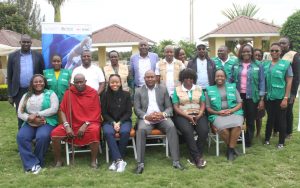
He noted that through the health education forums they carry out during the target outreaches, the rural women are now informed on when to start antenatal clinics and through screening their problems are identified early in pregnancy leading to positive outcomes.
Mary Mathenge, Amref Health Kenya personnel and the team lead for Africa CDC in Kenya underscored the importance of the outreach programmes saying that they have also been effective in dealing with the recent measles and cholera outbreaks in Kajiado.
“We have also embraced the one health approach where we bring together the human, animal and environmental health to address public health challenges facing Kajiado residents. This is a very critical programme in Kajiado as we have realised that 75 per cent of the diseases and outbreaks in the county are zoonotic-related. Due to that, we felt that it was important to tackle them together as they are all interconnected,” she said
Mathenge revealed that the Savings Lives and Livelihoods programme has so far successfully supported 82 One Health outreaches and 111 integrated medical outreaches through 78 health facilities reaching last-mile communities.
“This has been made possible through the holistic approach whereby since now this is a pastoralist community and their biggest priority is animals, we ensure that we also show them that we are also concerned with the animals and we get closer and educate them on health and the importance of why they should look after their own health and prevent the spread of diseases,” said Mathenge.
By Diana Meneto