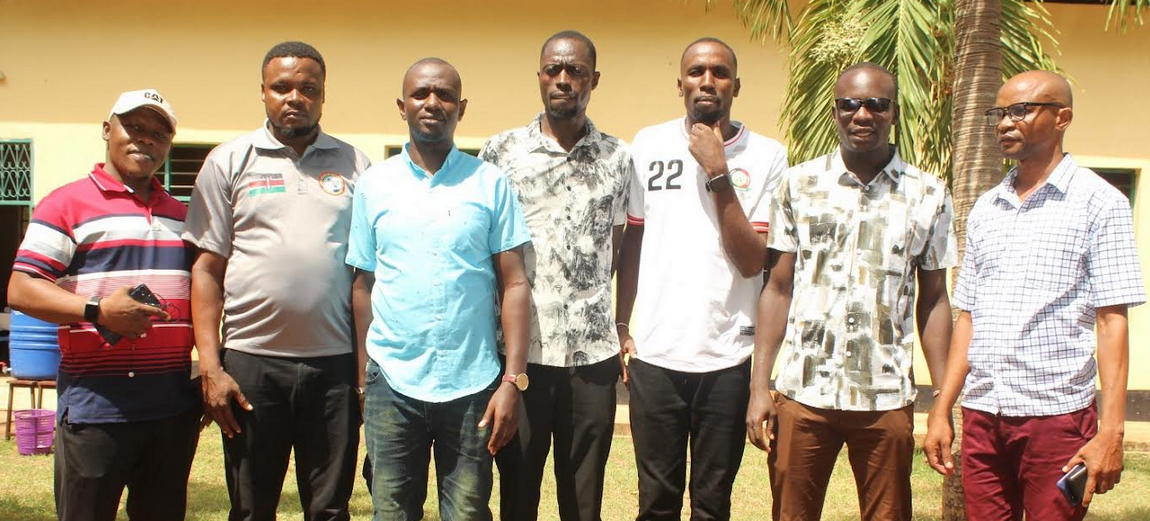
Teachers who on Saturday completed a week-long training on the Competency-Based Curriculum (CBC) at Matuga Girls High School in Kwale County said they are working towards integrating artificial intelligence (AI) in teaching and learning following the training.
Facilitators said the training exposed educators to the potential of AI in lesson preparation, assessment and classroom delivery, even in schools with limited digital infrastructure.
“I handled ICT integration, especially Artificial Intelligence, and we discovered that even without projectors or laptops, AI can still support teachers. It is not just for the classroom as teachers can also use it at home to prepare lessons,” said Sharon Kituu, one of the facilitators.
Kituu noted that AI is rapidly evolving and is expected to play a key role in the future of education, urging teachers to gradually adopt the technology.
The training, organised by the Ministry of Education in collaboration with the Quality Assurance department and Centre for Mathematics, Science and Technology Education in Africa (CEMASTEA), brought together secondary school teachers to equip them with skills to handle Grade 10 learners under the CBC system.
Participants said the transition from the 8-4-4 system to CBC had initially posed challenges, particularly in assessment and delivery methods, but the training had improved their preparedness.
“When we started this training, many of us had challenges handling Grade 10 learners because it is a new system. But now we are about 80 percent prepared, especially on assessment, and we have learned a lot,” said training president Rogers Omweno.
Teachers also cited innovation as key in addressing technological gaps, with smartphones emerging as an accessible tool for teaching and research.
“Previously, we were not allowed to use phones with students, but now we have been shown how smartphones can support learning, especially in CBC classes,” Omweno added.
Eric Kea, a teacher at Matumbi Secondary School in Samburu sub-county, Kwale County said the training introduced new teaching approaches aligned with CBC.
“In the 8-4-4 system we used topics and subtopics, but now we are dealing with strands, sub-strands and learning outcomes. These are new approaches that will help us deliver the curriculum effectively,” he said.
However, teachers raised concerns over inadequate resources in schools, calling on the government to increase funding for learning materials and improve training allowances.
“In our schools we lack enough books and teaching resources. We also request for an increase in the allowances given to teachers during such trainings to boost motivation,” Kea said.
Trainers acknowledged initial resistance, particularly in new technical subjects, but noted a shift in attitude as the sessions progressed.
“Some teachers initially thought that to teach subjects like aviation, one must know how to fly a plane. But we managed to guide them, and now they are ready to implement what they have learned,” said trainer Abbas Zema.
Another trainer, Suleiman Mohamed Mwakwina, expressed optimism that the new curriculum will enhance education standards, especially in the field of science and technology.
“There has been a significant mindset change among teachers, and there is hope that the expectations of this new system will be achieved,” he said.
By Chari Suche