Teen pregnancies are soaring in Kericho County, with a shocking 5,752 cases reported last year.
Over 2,000 of these cases were from Bureti Sub-County alone, raising alarm among stakeholders, who now link the crisis to a troubling rise in child labour across the region.
Speaking during this year’s World Day Against Child Labour commemoration held at Saint Kizito School for the Deaf in Litein, Bureti Sub-County, Kericho County, Director of Gender Ms. Beatrice Chebet underscored the deep concern correlating teenage pregnancy and child labour.
She emphasised that teenage pregnancy not only disrupts education but also significantly increases the vulnerability of young girls to exploitative labour practices, thereby perpetuating cycles of poverty and inequality.
“Teenage pregnancy is not solely a health or education issue; it is also a significant driver of child labour. When a young girl becomes pregnant, she is frequently compelled by circumstances to enter the workforce prematurely. To effectively combat this challenge, we must address its root causes,” said Chebet.
The event brought together government officials, community leaders, and civil society representatives in a unified call to end child exploitation and protect the rights and future of children in Kericho.

To add vibrancy to the occasion, schoolchildren showcased their rich cultural heritage and talents through choral verses and traditional dances, captivating the audience and reinforcing the importance of nurturing and safeguarding every child’s potential.
Also present during the event was Kericho County Director of Labour Wilson Luvavo, who emphasised the need for both legal and moral action to protect children.
“Children are a blessing from God and deserve our love, protection, and investment,” said Wilson Luvavo.
Luvavo also spoke about the laws governing child labour, including the Employment Act 2007 (Sections 52–65) and ILO Convention 138, which sets the minimum age for employment.
He reaffirmed the government’s commitment to labour inspections, awareness campaigns, and collaborative enforcement.
“We don’t walk this path alone; our allies include the Ministries of Education, Health, and Agriculture; the National Police Service; the Department of Children Services; faith-based organisations; NGOs; and the Judiciary. Together, we build a wall of defense around our children,” emphasised Luvavo.
Meanwhile, Secretary of the Plantation Workers Union – Kericho Branch Dickson Sang issued an impassioned denunciation of child labour, particularly in the plantation sector, where the problem remains persistent.
“A child’s job is to write, read, and dream and not to toil in the fields under the sun. The law is clear: children are only permitted to work a maximum of two hours per day, and even that must not be under exploitative or hazardous conditions. As a union, we are committed to protecting workers’ rights and that includes ensuring that no child is put in harm’s way or forced to become a breadwinner at the cost of their education and well-being,” said Sang.
The officer in charge of the Children’s Department in Bureti Sub-County, Mr Ian Kiprono, emphasised the critical role of community involvement in identifying and reporting cases of child exploitation.
“We must all be vigilant. The public is the first line of defense. If you witness or suspect a child is being exploited for labour, report it. But beyond that, we must support vulnerable families, because poverty often pushes children into the workforce. Education must remain the priority. Every child belongs in school, not in the labour force,” Kiprono stated.
County Probation Officer Wycliffe Wathome highlighted the importance of legal enforcement and institutional accountability, adding that child labour is not just a moral failure but a legal offence.
“My office ensures that offenders whether individuals or companies, must face the full force of the law, but legal action alone is not enough. This is a societal issue. We must act collectively – parents, employers, government officers, and the community – to protect the rights of every child,” said Wathome.
Adding an economic perspective, Michelle Aburili, who is the County Coordinator for Micro, Small, and Medium Enterprises (MSMEs), pointed to financial insecurity as a driving force behind child labour.
“When families lack sufficient income, the temptation or necessity to send children to work increases. That’s why our approach includes economic empowerment. We are focusing on job creation, support for small businesses, and expanding access to credit for parents, all aimed at reducing the economic pressure that leads to child labour,’’ Aburili reiterated
At the same time, Kericho County Director for Technical and Vocational Education and Training (TVET), Irene Ngeno echoed this sentiment and tied the issue of child labour to broader socio-economic challenges, including teenage pregnancy and youth unemployment.
“Poverty is at the heart of many of these issues. We are tackling it head-on through free technical training programmes, distribution of agricultural inputs, and employment linkages including overseas job placements. Our goal is to give young people real opportunities and alternatives so they are not trapped in cycles of poverty and early responsibility. This is how we break the cycle and secure a better future,” said Ms. Ngeno.
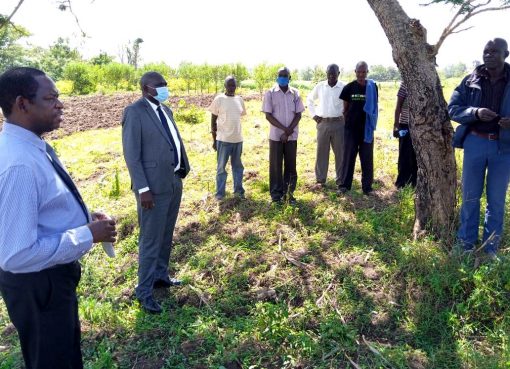
The commemoration concluded with a symbolic tree planting ceremony, an emblem of renewal, growth, and the community’s shared commitment to safeguarding childhood.
As soil met roots, the assembled leaders echoed a resounding truth: child labour is not merely a policy failure but a betrayal of potential.
In a nation striving for progress, no child should be forced to trade education for survival. The future of Kenya, they declared, is not sown in plantation fields but nurtured in classrooms, rooted in knowledge, cultivated through opportunity, and blossoming in freedom.
By Gilbert Mutai