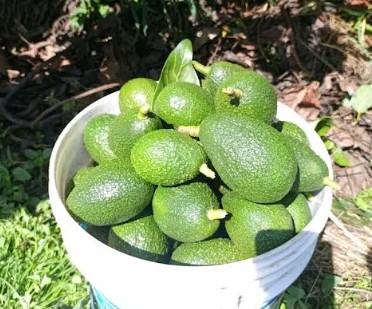
A quiet agricultural revolution is unfolding in Tindiret Sub-County, where avocado farming has gradually grown from a side activity to one of the region’s most profitable and transformative ventures.
Long reliant on maize and tea—crops increasingly threatened by erratic rainfall and fluctuating markets—farmers are turning to avocados as a reliable path to steady income and economic revival.
The high-altitude climate of the area has proved ideal for the crop, and with access to both local and export markets, farmers are earning more than ever before.
One such farmer is Paul Kiprotich of Chemelil, who shifted from maize after watching his yields diminish year after year.
He planted about 60 avocado trees on three-quarter-acre land, uncertain if the effort would pay off. But when the trees reached maturity, he was stunned by the returns.
With each tree producing an average of 180 fruits and local buyers offering Sh15 per fruit, Kiprotich now earns about Sh216,000 annually—far more than the Sh40,000–Sh60,000 he once made from maize.
The income has allowed him to renovate his home, clear school fees and maintain a level of financial stability he never thought possible.
In Kapkerer, Mary Chelangat’s journey mirrors that transformation. After attending a county agricultural training, she dedicated less than half an acre to avocado trees.
Today, her 30-tree orchard earns her between Sh108,000 and Sh120,000 per year, thanks in part to cooperative-linked buyers who offer better prices.
The earnings have enabled her to support her household confidently, join a women’s savings group and even set aside money for emergencies.
Chelangat describes avocados as “a small crop with a big voice”, one that has given her independence she never achieved from subsistence farming.
For David Kemei of Tindiret Centre, climate uncertainty pushed him toward avocado farming. His one-acre orchard of nearly 90 trees is now one of his greatest assets.
Selling to buyers who supply Eldoret and Nairobi wholesale markets at about Sh20 per fruit, David makes around Sh450,000 a year.
This dependable income has allowed him to transition from survival farming to structured agribusiness.
He now refers to his orchard as his retirement plan, a long-term investment that performs even during dry seasons.
In the Maraba location, Thomas Bett has benefited immensely from joining the local avocado growers’ cooperative.
His 120-tree orchard sits on just over an acre, and through cooperative marketing channels, he fetches between Sh15 and Sh20 per fruit.
As a result, Bett earns roughly Sh720,000 annually—a dramatic improvement from what he once made selling to middlemen.
With the surplus income, he has expanded his orchard and invested in livestock trading, stabilising his household and diversifying his income streams.
These success stories are supported by a strong and growing market catchment area. Locally, the farmers supply towns such as Nandi Hills, Kapsabet and Chemelil.
Regional buyers from Eldoret and Kisumu purchase large volumes for supermarkets, hotels and retail chains.
Nationally, wholesalers in Nakuru and in Nairobi’s Wakulima and Gikomba markets offer stable demand and competitive prices.
The strong market has made avocado farming one of the most promising ventures.
The trees require relatively low maintenance once established and produce for decades, giving farmers long-term income security that traditional crops cannot match.
Cooperative networks, training programmes and improved seedling distribution have further strengthened the value chain, ensuring farmers have reliable buyers and practical support.
By Sammy Mwibanda