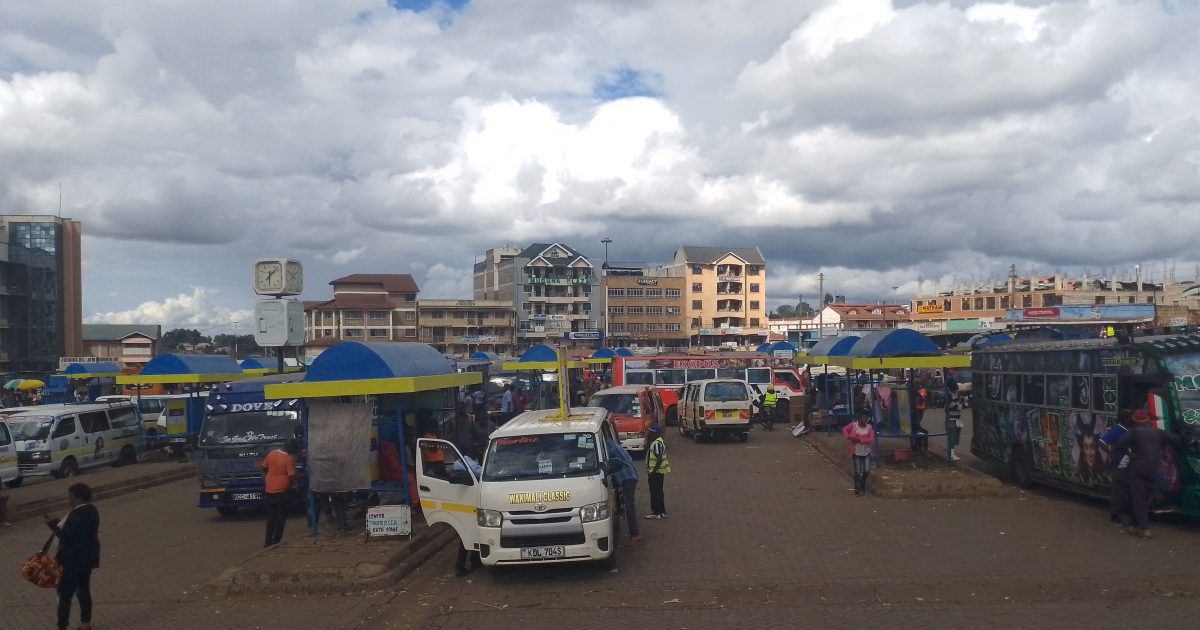
The Nairobi Metropolitan Area Transport Authority (NaMATA), in collaboration with the Japan International Cooperation Agency (JAICA), April launched the Route 111 pilot project.
The project is meant to enhance public transportation along the Ngong Road corridor which connects Nairobi Central Business District (CBD) to Ngong town.
The move was aimed at expanding the connection and ease of transportation of goods, services and people in both towns, especially Ngong town, which has undergone a significant transformation in its transport sector.
The town, at the outskirts of Nairobi city, has experienced rapid growth in recent years for a town that was once characterized by congestion and limited infrastructure but now has become a center of transformation and economic landscape.
Speaking to the Kenya News Agency (KNA), K-Trans conductor Simon Kanyiri acknowledged that the project would be of benefit to the people in the sector and would go a long way to improve the efficiency of the transport business.
With the Route 111 project, we as conductors in the Matatu sector will have smooth operation in our job because fares will be standardized and so everyone will be able to know the prices that are to remain stable and this avoids conflicts with our clients,” he said.
Cases of clients complaining about fare hikes, he added, were very rampant, with some of the drivers and conductors finding themselves in conflict with their passengers over the last six months.
The project is a government initiative aimed at ensuring that there is a scheduled bus service for timely and reliable commutes.
It will also ensure collaboration among other bus operators, including Super Metro, Metro Trans, Nangkis, K-Trans and other saccos enhance better performance and maintain inclusivity.
In an effort to enhance commuter experience, the government is geared towards introducing upgraded buses and trained staff to facilitate easier movement in Ngong and its surroundings.
The buses are expected to be electric, hence ensuring sustainability, reliability, and efficiency in the transport sector.
The Clean Bus Rapid Transit is a project by the government that is aimed at connecting Ngong to towns like Tala in order to enhance mobility.
This is foreseen to pave the way for green mobility, which is meant to conserve the environment by avoiding gas emissions caused by matatus in the area.
Through this initiative, electric-powered vehicles will be introduced to ply the route, ensuring transportation of a significant amount of people and goods in the coming years.
The project will also ensure the introduction of cashless fare collection. The cashless format will be a significant move into the digital space where operations seem to be faster and more reliable.
An experienced driver from Enabled Sacco, John Waweru, acknowledged that with the introduction of the electric buses, a lot of changes would be experienced in the sector, such as reduced fuel dependency, improved vehicle performance, and zero emissions, some of the many benefits that the people in the sector are set to enjoy.
“The introduction of electric buses will be a benefit to the transport sector because, in the first place, environmental pollution will be addressed, which has been one of the biggest challenges because of gas emissions by petrol and diesel vehicles. Noise pollution will also be addressed because electric vehicles operate quietly. It will also help drivers avoid fluctuating fuel prices and reduce dependency on fossil fuels,” he said.
Electric-powered vehicles entirely depend on electricity stored in batteries to power one or more electric motors for movement, instead of relying on internal combustion engines that burn petrol or diesel.
Through the implementation of these projects, the impact of the transport sector will be evident in Ngong’s evolving landscape. “According to the transport sector in the area, the town will witness a surge in commercial establishments, increased investments, and improved public amenities, which will make Ngong an important town in the Nairobi metropolitan area,” a trader from Ngong who uses public transport in the area to carry his merchandise told KNA.
Ngong’s transport sector has significantly reshaped its connectivity and laid the groundwork for further economic and infrastructural transformation.
By Edwin Gathii