Vihiga County Referral Hospital Management has rolled out a series of reforms aimed at improving service delivery, enhancing efficiency, and positioning the facility for an upgrade to a Level Five hospital.
Chief Executive Officer Titus Mumia, speaking during an interview at Vihiga FM, outlined the progress made and the strategies being implemented to address key challenges affecting the hospital.
Mumia revealed that the hospital has already met the necessary requirements for elevation to a Level Five facility, expressing optimism that the upgrade will soon be approved. He noted that such a move would significantly boost the hospital’s capacity to offer specialized services and handle more referrals from across the region.
On human resource management, the CEO said he has adopted an open-door leadership policy to foster better communication and collaboration among staff. He explained that regular departmental meetings have been instrumental in aligning workers with the hospital’s vision and improving teamwork.
According to Mumia, most staff members have embraced the reforms and systems introduced under his leadership, although a small fraction has been resistant to change.
“About 90 percent of our staff have aligned with the new systems. They only needed proper direction and support to deliver effectively. However, there remains a small percentage that has been resistant,” he said.
He disclosed that disciplinary action had been taken against some employees, including termination of contracts, particularly for those who repeatedly issued threats of industrial action over issues beyond the hospital’s control, such as statutory deductions.
Mumia further noted that the hospital has been engaging casual workers on three-month renewable contracts as a temporary measure due to financial constraints that limit permanent employment.
To improve efficiency in non-clinical services, the hospital is also considering outsourcing cleaning services to a private company. He said the move is intended to streamline operations, reduce the burden of supervision, and enhance service quality.
“We are exploring the option of contracting a cleaning services company to manage sanitation within the hospital. This will help us improve hygiene standards and allow management to focus on core medical services,” he explained.
Addressing concerns about drug availability, Mumia assured the public that the hospital has maintained adequate stocks of essential medicines, particularly those frequently used by patients. He said the facility relies on data-driven stocking systems based on patient needs to ensure consistency in supply.
However, he acknowledged challenges in the oncology department, citing the high cost of cancer drugs as a major obstacle. He added that efforts are underway to secure the necessary medication for patients requiring specialized treatment.
“We have adequate stocks for most commonly used medicines. The challenge we face is mainly in oncology, where drugs are extremely expensive, but we are working to address this,” he said.
Mumia urged patients to report any instances where they are referred outside the hospital to purchase drugs, emphasizing that such practices are not allowed.
“If any patient is sent out to buy medicine, they should report directly to my office. We have made it clear to staff that this is unacceptable,” he stated.
On the management of pharmaceutical supplies, the CEO said the hospital has adopted a redistribution strategy, whereby excess drugs are shared with other health facilities to minimize wastage due to expiry. He added that the hospital strictly adheres to provisions of the Public Health Act in disposing of expired medicines safely.
Mumia also dismissed claims that patients have been subjected to fake diagnoses to exploit funds from the Social Health Authority (SHA), terming the allegations as baseless propaganda.
He maintained that the SHA system is functioning effectively at the hospital and continues to support access to healthcare services for patients.
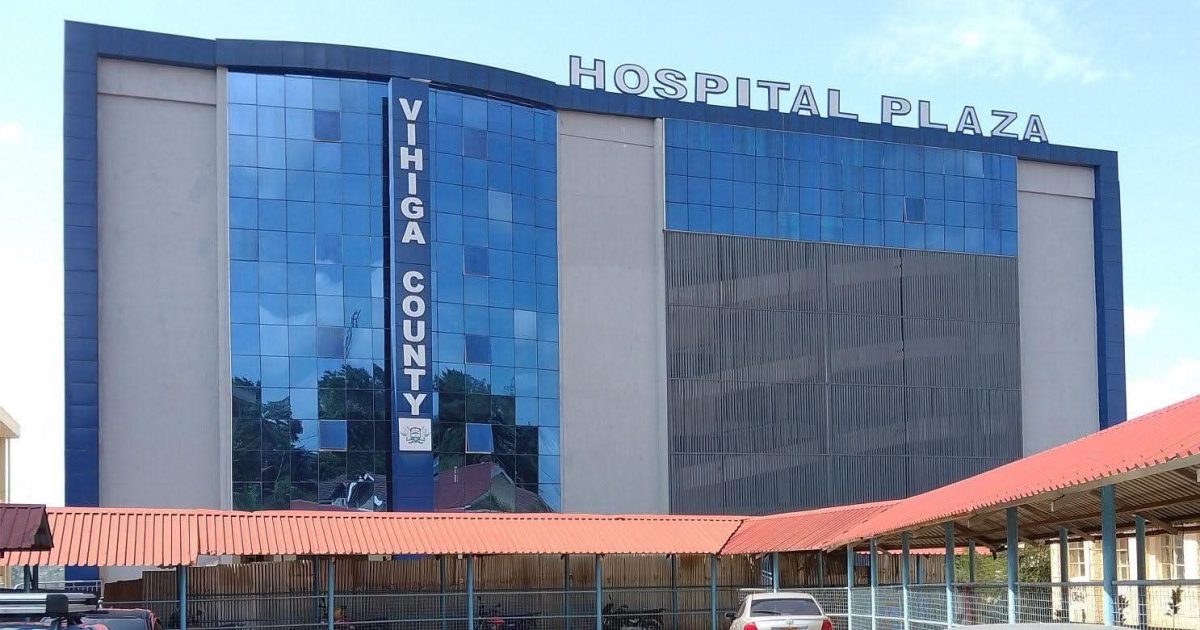
In terms of infrastructure development, the CEO announced that the newly constructed Hospital Plaza is expected to be launched in May this year. The facility will significantly expand the hospital’s capacity and service offering.
The plaza will include an additional 200-bed capacity, modern medical equipment, a larger laboratory, and expanded theatre spaces to cater for increasing patient demand.
“The Hospital Plaza will be a game changer for us. It will enhance our ability to deliver quality healthcare and accommodate more patients,” said Mumia.
On the impact of reduced external funding, particularly from USAID on HIV programmes, Mumia said the hospital has introduced an integrated service delivery model. Under this approach, medical practitioners rotate across departments, including HIV care, to ensure continuity of services even in the event of funding cuts.
“This integration ensures that all our doctors are equipped to handle HIV treatment. It prepares us to sustain services even if donor funding is reduced or withdrawn,” he explained.
Looking ahead, Mumia said his vision is to transform the facility into a fully-fledged teaching and referral hospital within the next year. He emphasized the need to expand specialized services and increase the number of medical specialists.
He called on the County Assembly to support the hospital through adequate budgetary allocations to enable the realization of these goals.
“Improving service delivery remains my main objective. With the right support, we can achieve our vision of becoming a leading teaching and referral hospital,” he concluded.
By Yvonne Misango and Maureen Imbayi