A 28-year-old man has been fined Sh20,000 or faces two months’ imprisonment after pleading guilty to charges related to possession of illicit goods and alcoholic drinks in Kisumu County.
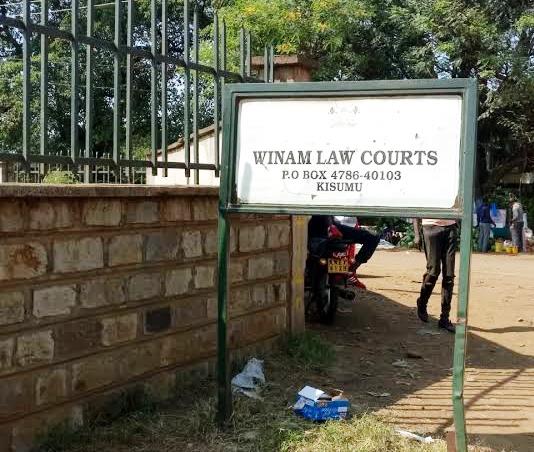
Franklin Willis was arrested on Tuesday, February 17, at the Car Wash area in Migosi, Kisumu Central, following a security operation prompted by a tip-off. He was later arraigned before the Winam Law Courts facing multiple counts linked to illegal possession of unaccustomed goods and alcoholic beverages.
Appearing before Winam Court Principal Magistrate Mr. Dennis Ogal, Willis pleaded guilty to two counts of being in possession of unaccustomed goods contrary to Section 200(d) as read together with Sections 210(c) and 213 of the East African Customs Management Act, 2004. The court fined him Sh15,000 or, in default, one month imprisonment.
He also admitted to a second charge of being in illegal possession of assorted brands of alcoholic drinks contrary to Section 27(1)(b) as read with Section 27(4) of the Alcoholic Drinks Control Act (Cap. 121). For this offence, he was fined Sh5,000 or serve one month imprisonment.
However, Willis denied a third charge of being in illegal possession of bhang contrary to Section 3(1) as read with Section 3(2)(a) of the Narcotic Drugs and Psychotropic Substances Control (Amendment) Act, 2022. The case will proceed to hearing on June 16, 2026.
The court heard that security officers who raided the suspect’s residence recovered large quantities of assorted illegal alcoholic brews, including chang’aa, Export Supermatch cigarette brands and 31 rolls of cannabis sativa.
The conviction comes amid an intensified crackdown on illicit alcohol and narcotic substances in Kisumu County and across the country.
Earlier this week, security personnel laid siege to a house in Nyalenda and arrested a 42-year-old woman believed to be a key suspect in a syndicate accused of masterminding the distribution of illicit brews and drugs in the county. Police described her arrest as a major breakthrough in dismantling illegal networks operating within the region.
A search conducted after the daylong operation led to the recovery of 143 sachets of a clear liquid packed in plastic polythene bags, each containing approximately two litres of liquid suspected to be chang’aa.
In recent weeks, hundreds of litres of illicit brew have been seized in the county, while significant quantities of bhang have been intercepted along transit routes linking western Kenya to other parts of the country.
The ongoing campaign is being spearheaded by a multi-agency team targeting urban and rural hotspots, including bars, informal trading centres and suspected storage facilities.
Interior and National Administration Cabinet Secretary Onesmus Kipchumba Murkomen previously stated that Kisumu ranks among the top counties in illicit alcohol consumption, distribution and trafficking.
In January this year, Murkomen announced that the government would intensify efforts to curb the illegal production and trafficking of alcohol and narcotics nationwide. The move followed President William Ruto’s declaration of drug abuse as a national security threat.
Consequently, a multi-agency task team was formed to coordinate enforcement operations aimed not only at distributors and traffickers but also at dismantling financial networks that sustain the illegal trade.
“This operation will include the seizure of assets and property acquired from the proceeds of illicit alcohol and drug trafficking, in accordance with the law,” Murkomen stated at the time.
To disrupt supply chains, the government has intensified surveillance and policing along ungazetted border points and major transit corridors commonly used to transport illicit substances.
According to the National Authority for the Campaign Against Alcohol and Drug Abuse (NACADA), drug and alcohol abuse remains prevalent in many parts of the country, with youth being the most affected demographic. Reports indicate that the economic and social costs associated with alcohol abuse are substantial.
Illicit brews have previously resulted in tragic incidents nationwide. In 2015, former President Uhuru Kenyatta declared war on illicit alcohol following numerous deaths linked to consumption of toxic brews.
In August 2021, ten people, including a pregnant woman, died in Bahati area of Nakuru County after consuming suspected illicit liquor, prompting the interdiction of six government officials.
Globally, the World Health Organization estimates that approximately 2.5 million people die annually from alcohol-related illnesses and injuries.
Stakeholders continue to call for strict enforcement of liquor laws, including compliance with packaging regulations that require alcoholic beverages to be packaged in glass bottles rather than plastic containers.
by Mabel Keya–Shikuku and Dorothy Pamela