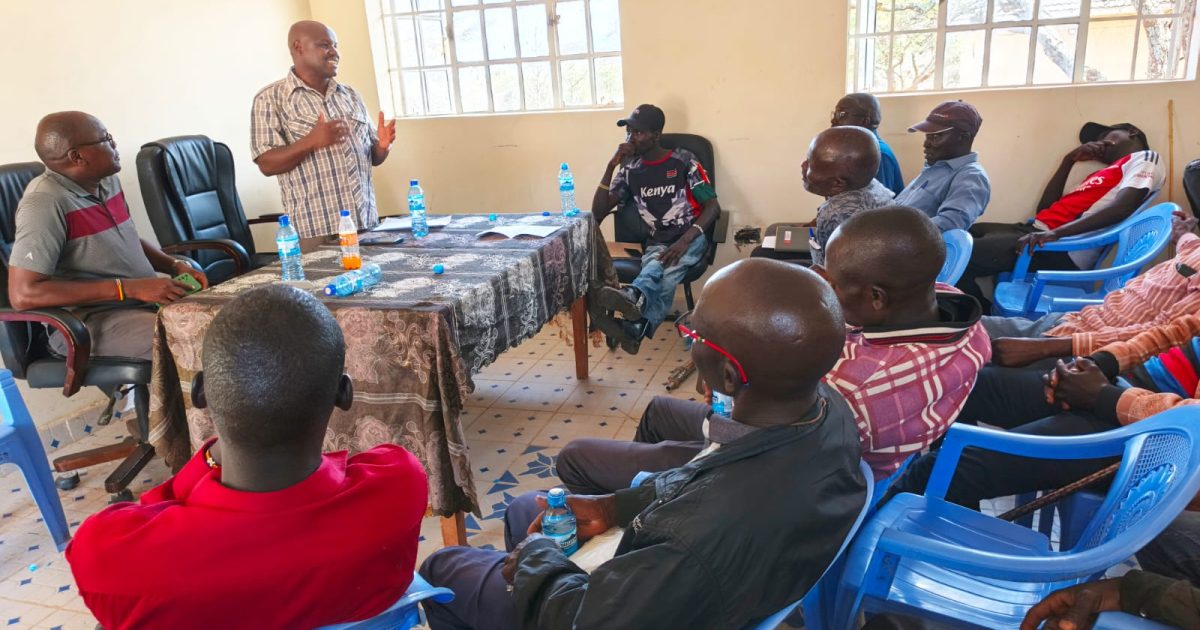
Residents across West Pokot County turned up in impressive numbers for the two-day budget public participation exercise, underscoring growing public interest in influencing the county’s development priorities and strengthening accountability in the use of public resources.
The forums, held in various stations across all wards, brought together members of the public and county officials to deliberate on priority projects, equitable resource allocation, and service delivery concerns.
The exercise is anchored in Articles 196 and 201 of the Constitution of Kenya, which require county governments to facilitate public involvement in financial decision-making processes.
Leading the civic engagement session in Alale Ward was County Executive Committee Member (CECM) for Public Service Management Martin Lotee, who took time to explain key funding streams and the overall budget-making framework.
A major focus of his address was the County Integrated Development Plan (CIDP), the five-year blueprint that guides all county planning and budgeting.
Lotee noted that every annual budget must be anchored in the CIDP, meaning funds can only be allocated to projects included in the plan unless it is formally revised.
The budgeting process flows from the CIDP to the Annual Development Plan (ADP), which identifies projects for a specific financial year, and then to the budget estimates that allocate funds before approval by the County Assembly.
The county executive also talked about the equalization Fund, which he described as financial support allocated by the national government to marginalized counties to help bridge development gaps and enable them attain standards comparable to more developed regions.
Lotee noted that current allocations are now directed to specific locations, rather than being distributed broadly across entire counties, as was previously the case, a move aimed at enhancing targeted development impact.
The county executive clarified that the funds are channeled through Members of Parliament and are intended to support critical sectors such as infrastructure, water, health, and other essential services.
Lotee called on residents to remain vigilant and actively monitor projects implemented under the fund to curb misappropriation and ensure value for money.
“Public participation does not end at the forum. Oversight by wananchi is essential to ensure that projects are implemented as agreed and resources benefit the intended communities,” he said.
Lotee also addressed long-standing confusion regarding the management of roads, explaining the distinction between those under the national government and those managed by the county.
During the discussions, residents raised concerns over poor road networks and lack of mobile connectivity in some areas, noting that the challenges not only hinder economic activities, but also increase insecurity.
Participants used the opportunity to directly question officials and propose solutions aligned with local priorities.
Lotee further outlined the formal budget approval process, saying views collected from the public participation forums are compiled by the county’s finance department into a comprehensive report.
The report is then submitted to the County Assembly, where Members of County Assembly (MCAs) scrutinise the proposals, seek clarifications and debate the estimates before tabling a bill.
Once approved and assented to into law, implementation of the projects can commence.
He also clarified that the Ward Fund is administered through the offices of MCAs, who have the authority to determine how funds are allocated within their respective wards based on identified community needs.
However, despite the strong turnout and active engagement, several concerns emerged from participants.
For instance, the Chief of Akoret Location, Emmanuel Lorengei, cited the limited time allocated for discussions, which they said restricted deeper engagement on key issues.
Lorengei further questioned whether certain projects may have already been predetermined, raising concerns about the extent to which public input ultimately influences the final budget.
Another notable issue raised was the alleged alteration of budget allocations after the supplementary budget process.
Some participants claimed that certain MCAs shifted funds away from previously agreed priority projects, sparking debate over transparency and consistency in the budgeting cycle.
Residents emphasised that while public participation remains a critical pillar of accountable governance, its credibility depends on the genuine incorporation of citizens’ views and clear communication regarding any subsequent changes to approved allocations.
They concluded that there is strong optimism that sustained engagement, transparency and adherence to agreed priorities will ensure the final budget reflects the aspirations of the people and enhances effective service delivery throughout West Pokot County.
By Parklea Ivor