The remote Kapchelal village in the Tinderet location, Tinderet Sub County, had for a long time been characterised by deprivation, but currently a quiet but impactful transformation is taking shape, driven by a group of determined young people who chose to bet on themselves.
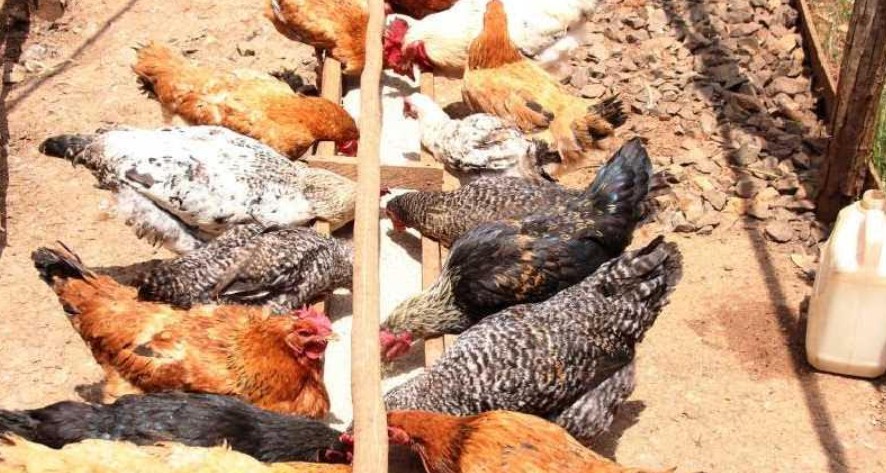
The Kapchelal Youth Group’s poultry project, set up in 2022 with a Sh100,000 boost from the Youth Enterprise Development Fund, has steadily evolved into a model of grassroots enterprise and resilience.
At its inception, the group, comprising 18 members, was united by a shared challenge: limited employment opportunities and a growing need for financial independence.
Rather than wait for formal jobs, they opted to create one. Poultry farming emerged as the most viable idea, given its relatively low startup costs and quick turnover potential.
Their Chairperson, Eric Kipruto, reflects on those early days as a period defined by uncertainty, learning, and persistence. The group pooled their loan to construct a simple chicken coop, purchase their first batch of day-old chicks, and secure basic inputs such as feed and vaccines. While the plan looked straightforward on paper, reality quickly presented its own hurdles.
The first few months tested their resolve. High feed prices strained their limited resources, while occasional disease outbreaks threatened their flock. With little prior experience in poultry farming, the group had to quickly adapt—seeking guidance from agricultural extension officers and relying on peer learning to improve their practices.
Despite the setbacks, they refused to give up. Gradually, their efforts began to pay off. Improved feeding, better hygiene, and timely vaccination helped reduce losses and increased productivity. What started as a small flock slowly grew into a more stable and productive unit.
Today, the project stands as a testament to that perseverance. The group has expanded its poultry house, increased its bird population, and established a reliable system for production and sales.
Egg production has become the backbone of the enterprise, with trays supplied regularly to nearby trading centres, shops, and individual households.
Kipruto explains that the returns, though modest at first, have become more consistent over time. Weekly income from egg sales now provides members with a steady cash flow, enabling them to meet basic needs and contribute to their households. Periodic sales of mature birds have further supplemented their earnings, especially during festive seasons when demand peaks.
Beyond income, the project has instilled financial discipline and a culture of saving among members. A portion of the proceeds is reinvested into the business to purchase feeds in bulk, upgrade infrastructure, and cushion the group against unforeseen challenges. This reinvestment strategy has been key to sustaining growth.
The success of the initial phase has also opened doors for expansion. Having demonstrated commitment and the ability to manage funds responsibly, the group has since secured a larger loan worth Sh200,000 from the Youth Enterprise Development Fund.
The new financing is earmarked for scaling up operations, including the construction of a modern poultry unit, acquisition of improved breeds, and expansion into larger markets.
Kipruto notes that the group is now thinking beyond subsistence. He said plans are underway to formalise their operations further, explore value addition such as packaging and branding of eggs, and establish direct supply links with schools, hotels, and local institutions.
Equally significant has been the social impact of the initiative. Members who once depended entirely on their families now have a sense of financial independence and purpose. Some have been able to pay school fees for siblings, support farming activities at home, and invest in small personal projects.
The group has also become a point of reference within the community, inspiring other young people to consider agribusiness as a viable path.
Local leaders and development stakeholders have occasionally pointed to the project as evidence that youth empowerment programmes, when effectively utilised, can yield tangible results.
Challenges, however, still remain. Rising input costs, market fluctuations, and the constant threat of diseases require vigilance and adaptability. However, the group’s experience over the past three years has equipped them with the knowledge and confidence to navigate these obstacles.
By Sammy Mwibanda