Kerio Valley Development Authority (KVDA) has completed and commissioned 14 water projects at an estimated cost of Sh 300 million in Baringo County to mitigate water scarcity.
The water projects implemented in the past three years across six subcounties include three dams, four water pans and seven boreholes.
According to a status report prepared by the authority this month, the water projects cumulatively irrigate over 140 acres of land under food crops, supplying clean and safe water to 3,800 households and 111,000 livestock as well as several schools.
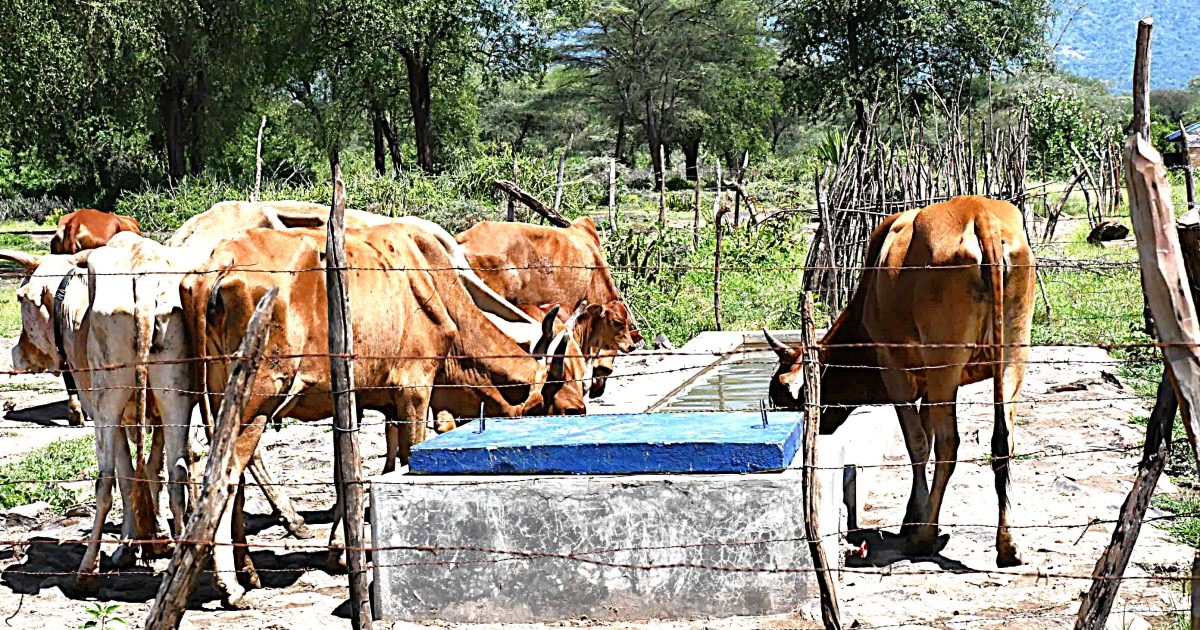
“As a result of the improved water access, over 30,000 people now enjoy clean water for domestic use, the land under irrigation increased by 410 acres, and over 120,000 livestock need not travel long distances in search of water since troughs have been built alongside the 14 projects,” the report indicates.
Some of the dams, water pans and boreholes sited in the sub counties of Baringo Central, Baringo North, Mogotio, Marigat and Tiaty are at various stages of implementation while others await commissioning and operationalization.
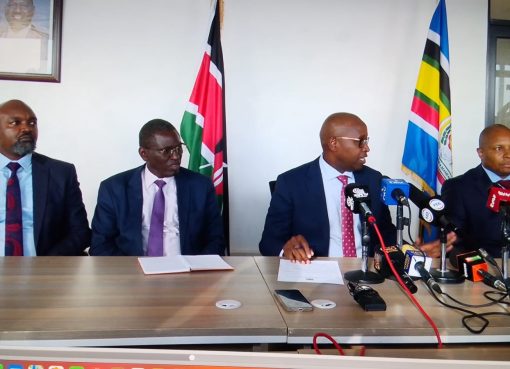
KVDA Chairman Mark Chesergon who spoke during commissioning of Chemura and Cheploch boreholes said their main aim is to provide sustainable development in the region which in the past has faced insecurity challenges.
“Chemura yielding 7.2 m3 per hour and Cheploch giving 4.5m3 per hour boreholes being commissioned will benefit 3,000 people and 4,000 people respectively besides supplying water to the neighbouring learning institutions. Previously, the community including the schools relied on River Kerio for water which is far and the learners waste a lot of time in search of water,” Chesergon pointed out.
The authority chair added that the two projects will also support 30,000 livestock as well as five acres of kitchen gardens.
Chesergon said they are engaging locals by providing them with clean and safe water for smallholder irrigation because the area has fertile soil for agriculture.
“We will continue with the projects and even do more because Kerio Valley is in need of such development initiatives,” he said.
His sentiments were echoed by Dr Wanjiku Manyatta, director for regional development who urged the Baringo County government as well as other partners to support the extension of water up to the neighbouring communities.
Dr Manyatta stated that the water projects in the region are crucial hence residents should use them efficiently for their domestic and agricultural use.
“We need to be self-sufficient at the household level so that we can feed our county then the nation at large and with that we would have achieved Vision 2030,” she said.
Reuben Chepsongol, one of the directors, said they are keen to ensure that every corner of the Kerio Valley region benefits from the government’s projects because it is their right.
Apart from the construction of the water projects KVDA is also engaged in the conservation of river basins in the semi-arid region by rehabilitating degraded watersheds and through the supply of assorted tree and fruit seedlings for environmental conservation.
The director added the fruit seedlings, particularly avocados and mangoes, are distributed to schools and communities for livelihood improvement and climate smart conservation where they have established nurseries at Kimaoa, Kipkaren and Kimgorom.
Baringo North Member of Parliament Joseph Makilap who attended the event lauded KVDA for initiating water projects which will benefit institutions as well as the surrounding communities.
Makilap mentioned the Chemura borehole which will serve the neighbouring health centre which is also lacking the commodity.
He called on President William Ruto to reconsider dissolution of the agency saying it is a channel through which peace and development can be achieved in the six counties of North Rift it serves.
Priscah Kirui, a resident of Barwessa welcomed the water project in their area noting that it is a relief to women who used to trek for more than five kilometers in search of water up to Kerio River.
She stated that through the initiative of KVDA, they are now going for a distance of about 700 meters, the furthest, for tapped water and they have embarked on extensive agriculture like planting vegetables and tomatoes for sale and in turn improving their livelihoods.
During the event, KVDA also distributed 20,000 mango seedlings to two schools within the region in a bid to promote climate smart farming.
The fruit seedlings being distributed besides conserving the environment have economic value to the community which result in economically empowered households and subsequently protected environment and forests.
Among other notable successfully implemented water infrastructural facilities include Sh 31.5 million Kabuswa dam, Mogotio water pan, Kapkechir dam and Barkitiew water pan among others.
By Joshua Kibet