Scholars and agricultural experts have emphasised the urgent need for Technical Vocational Education Training (TVET) Institutions and Vocational Training Centres (VTCs) to integrate digital and technological tools into their agricultural training programmes.
They argue that doing so will not only enhance students’ learning experiences but also equip them with the practical skills required in today’s technologically driven agricultural sector.
The experts argued that by TVETS and VTCs modernising their training modules and bridging the digital skills gap, Kenya would be firmly on the path of equipping its youth with the skills needed to thrive in the evolving global agricultural landscape and contribute to the country’s economic growth.
Acting Chairperson of the Department of Agricultural Education and Extension at the Faculty of Education and Community Studies at Egerton University, Dr Miriam Kyule, said it was time the vocational institutions leveraged technologies like digital twins, virtual commissioning and smart automation to prepare students for the modern workforce and enhance their learning experiences.
A digital twin is a virtual representation of a real-world object, system, or process. It’s essentially a digital replica that mirrors its physical counterpart, allowing for simulation, monitoring, and analysis of the real-world entity.
On the other hand, Virtual commissioning is the process of using digital simulations to plan, test, and validate manufacturing systems before they are physically built.
Dr Kyule explained that digital and technological integration should involve utilising technology to transform teaching and learning processes, manage educational institutions more effectively and foster stronger connections with industries and communities.
Integrating digital and technological tools in TVET and VTCs is not just about adopting new technologies; it’s about transforming the entire learning ecosystem to prepare students for the future, the don elaborated.
She said by harnessing the potential of digital technologies, TVET institutions could empower students with the skills and knowledge they needed to succeed in the 21st-century workforce and contribute to economic and social development in the country.
The Don, who is also a scholar under the 5th cohort of the Alliance for African Partnership (AAP), pointed out that use of digital tools in agricultural training programmes could simulate real-world scenarios, personalise learning experiences, and create engaging, practical-oriented environments.
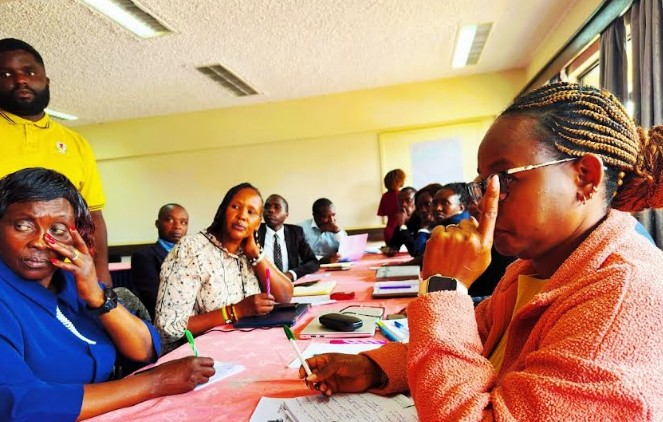
Dr Kyule made the remarks in her presentation during a stakeholder engagement forum on the agricultural training and education sector in Kenya held at Egerton University’s Njoro Main Campus.
The forum explored several themes, including the relevance of current TVET and VTC training programmes to the job market, the integration of digital and technological tools in teaching and learning within the institutions, the degree of gender inclusion in TVET training programmes and ways to align the training with industry demands.
The event themed “Enhancing Agriculture Training in TVETs and VTCs: Gender and Technology Inclusion in Kenya” brought on board over 30 participants representing the Kenya National Examination Council (KNEC), the Technical and Vocational Education and Training Authority (TVETA) and Agricultural lecturers and experts from various universities and research institutions.
Also present were officials from the Ministry of Agriculture, County Governments, TVETs and VTC trainers, agricultural students from various tertiary institutions and farmers who host students for practical attachments.
While noting that immersive technologies such as ‘Virtual and Augmented Reality’ could allow students to interact with complex machinery, explore virtual environments, and practise skills in a safe simulated setting, Dr Kyule said the conference had documented and reflected on key issues affecting agricultural training in Technical and Vocational Education and Training (TVET) institutions and Vocational Training Colleges (VTCs).
The scholar elaborated that the forum sought to generate concrete strategies to strengthen pedagogy and institutional support systems within TVETS and VTCs in agricultural training programmes.
She said there was a need for TVET and VTC institutions to actively review their training modules to incorporate digital skills relevant to the agricultural sector, adding that strong partnerships between vocational institutions, universities and industries should be fostered to ensure training aligns with industry demands and to facilitate the adoption of new technologies.
Dr Kyule pointed out that expertise in blockchain technologies will enable TVETs and VTCs to explore their full potential and unlock new opportunities in the agricultural sector.
Provision of vocational education in Kenya takes place in different technical training institutions, including Youth Polytechnics (YPs), the National Youth Service (NYS), The Kenya Technical Teachers College (KTTC), Institutes of Technology (IT), Technical Training Institutes (TTIs) and some universities.
It was noted that use of interactive simulations in vocational training could replicate real-life situations, enabling students to develop problem-solving skills and gain practical experience and that digital tools could facilitate partnerships between TVET institutions, industries, and communities.
Various experts who made presentations were in agreement that digital tools could connect students with potential employers and provide access to internship and apprenticeship opportunities, while Virtual Collaboration Platforms (VPCs) would allow students to collaborate with industry professionals on projects and gain practical insights.
Dr Kyule, however, noted that TVET teachers and trainers needed to be equipped with the necessary digital skills and pedagogical approaches to effectively integrate technology into their teaching and create engaging online learning experiences.
As the world moves to the industrial and technological revolution, the don noted that there was a need to retool the curriculum to align with the current and future industrial needs.
These reforms, she stated, should aim to align training with industry demands, integrate technology, and improve the overall quality of training.
Key areas of focus she added should include reviewing curricula, strengthening industry linkages, and ensuring graduates possess the necessary skills for employment.
She said reengineering training would provide trainers and trainees with the in-demand skills needed by employers to thrive in their businesses.
Dr Kyule noted that aligning training with industrial needs could have a ripple effect on the economy because businesses are likely to expand and create new jobs if they are able to find the talents they need.
“Skills that are acquired through TVET can provide solutions to society, improve national development, food security and other spheres of life,“ she added.
There were calls for curriculum reforms that incorporate emerging themes like climate change adaptation, precision agriculture, entrepreneurship, and digital literacy.
Further, Dr Kyule mentioned that equipping trainers and training with current knowledge on the effects of industrialisation on climate change would promote the creation of ‘green’ jobs to reduce pollution in the environment.
She said sustainable development involved working with available resources, having in mind the future generations, adding that training should ensure that our curriculum, institutions and culture are re-engineered towards attaining Sustainable development.
During the deliberations, gender inclusion in TVET and VTC agricultural training programmes emerged as a key concern, with suggestions to review institutional policies and actively support female students in navigating traditionally male-dominated agricultural fields.
Dr Kyule proposed the development of a policy brief to be shared with educational policymakers and training institutions by conducting follow-up workshops, particularly focusing on digital pedagogy and inclusive training models that empower both male and female learners equally.
Various experts and participants pointed out that despite the progress made over the last decade in enhancing access, equity, retention, quality, completion rates and gender parity in education and training in Kenya, the TVET subsector continues to experience low female enrolment in Science, Technology, Engineering and Mathematics (STEM)-based courses.
The experts recommended that encouraging and supporting fair and equal opportunities for girls and boys to perform in TVET -related subjects at school would translate to more girls and women in TVET fields of study and even to the world of work.
They noted that there was a need for the educators to use more gender-responsive approaches at all levels of education, increase role models such as more female teachers and attach young female scholars to practising women engineers in the country.
At the policy level, gender-responsive strategies such as having a certain percentage of girls being admitted and encouraged to do technical-based subjects in secondary school are some of the interventions floated at the forum that may help shield this vulnerable group from persistent exclusion from TVET education.
By Esther Mwangi and Mary Ochieng