The High Court has allowed the Githunguri Affordable Housing Project in Kiambu County to proceed after dismissing an application seeking to halt its implementation.
In a ruling delivered in Petition No. HCCHRPET/EO15/2026, Lady Justice Dorah Chepkwony found that the petitioners had failed to present sufficient evidence to justify conservatory orders stopping the project.
The court noted a lack of proof of encroachment or large-scale construction on the disputed 58-acre parcel, historically referred to as the Githunguri Kia Wairera gallows.
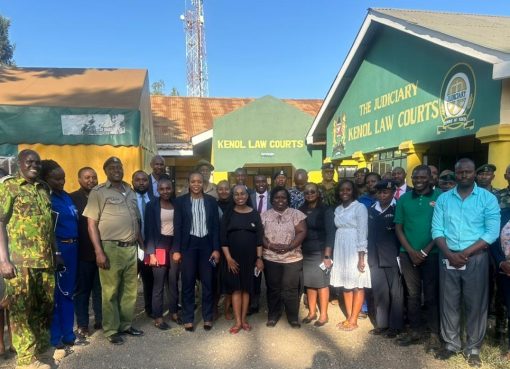
The case had been filed by the Kenya Unity for Memorial Peace Heritage and Culture Organization (KUMPHCO), led by Chairperson George Gitau Mbugua, on February 16, 2026 at the Kiambu Law Courts.
The organisation is seeking to have the land declared a protected Mau Mau heritage site, arguing that it served as an execution ground during the 1950s colonial Emergency, where 54 freedom fighters were allegedly hanged.
KUMPHCO maintains that the site holds deep historical and national significance and should be preserved as public land for memorial purposes.
On February 25, Justice Chepkwony certified the matter as urgent and directed that respondents, including the State Law Office, the Kiambu County Government, the National Land Commission, and the project developers, be served within seven days ahead of an inter partes hearing scheduled for March 19, 2026.
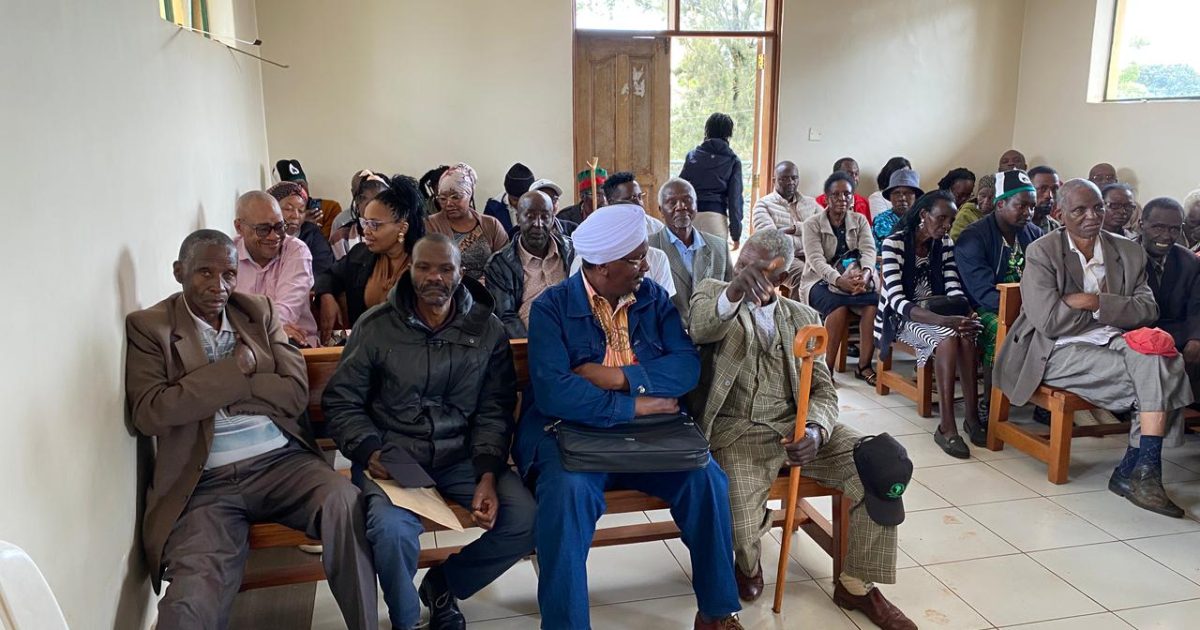
During the hearing, respondents raised concerns over delayed service and sought additional time to file their submissions. The court briefly adjourned to consider the arguments.
Addressing both the court and the media, KUMPHCO Githunguri branch chair John Ndegwa emphasised the emotional and historical weight of the site, claiming that his father was among those executed there.
“This is Kenyan soil, not for sale,” he said, adding that 54 Mau Mau fighters were killed at the location.
The organisation has also appealed to the National Museums of Kenya and relevant Cabinet secretaries to intervene and protect the site from development.
In her ruling, Justice Chepkwony declined to issue conservatory orders, stating that there was no concrete evidence of irreparable harm or ongoing destruction of the site.
However, she directed all parties to maintain the status quo, barring any alterations to the land until the case is fully heard and determined. The petition will now proceed to a substantive hearing scheduled for April 15, 2026.
By Felix Kipkorir and Rose Muthoni