Women are vital actors in food systems. They serve as producers, farm workers, processors, distributors, traders, and consumers, playing an essential role in maintaining household food and nutrition security.
However, gender inequality and discriminatory social norms continue to restrict their potential and opportunities. Despite growing recognition of their contributions, women’s roles in agrifood systems are still widely undervalued.
Many women work under difficult conditions that are often informal, irregular, part-time, labor-intensive, and poorly paid.
At the same time, they face numerous challenges, including limited access to land, financial services, modern technologies, education, agricultural extension services, and opportunities to participate in decision-making at household, community, and national levels.
International Women’s Day 2026 to be observed on March 8 under the United Nations theme “Rights. Justice. Action. For All Women and Girls,” highlights the need to remove structural barriers that prevent women and girls from fully enjoying their rights.
These barriers include discriminatory laws, weak legal protections, harmful cultural practices, and social norms that undermine gender equality.
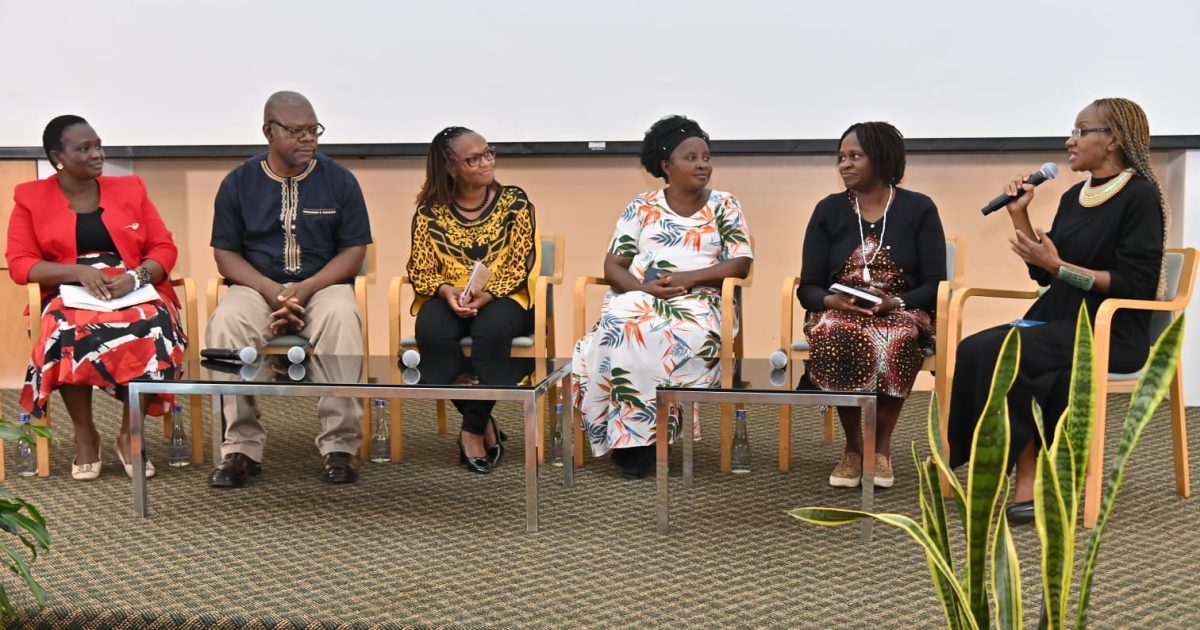
In recognition of this day, African Women in Agricultural Research and Development (AWARD), the CGIAR Gender Equality and Inclusion Accelerator, the International Centre of Insect Physiology and Ecology (icipe), and CIFOR-ICRAF organized a high-level event at the ICRAF campus in Nairobi.
The event sought to promote concrete actions that will strengthen women’s participation and leadership in agrifood systems.
The gathering brought together researchers, policymakers, investors, development partners, and women farmers from different parts of Kenya. Participants discussed ways to address systemic challenges that limit women’s contributions and benefits in agrifood systems.
The event also highlighted women who are leading agricultural innovations and explored the factors that can improve women’s experiences and opportunities in the sector.
The program included interactive discussions between women farmers and researchers, aimed at identifying practical strategies for developing solutions that effectively support women smallholder farmers.
Framed within the International Year of the Woman Farmer, the event intentionally focused on the real-life experiences of women in agriculture. It showcased women farmers from ten counties across Kenya and highlighted several women-led agricultural innovations.
Director of the CGIAR Gender Equality and Inclusion Accelerator Nicoline de Haan, noted that the organization is working to ensure that equality and inclusion are integrated into food systems research and development.
She said that the International Year of the Woman Farmer offers an important opportunity to renew and strengthen commitments to make food systems more inclusive and responsive to the needs of women farmers. She emphasized that scientific research must generate solutions that benefit smallholder farmers and their households.
Director AWARD Susan Kaaria pointed out that recent findings on the status of women in agrifood systems in sub-Saharan Africa show that investing in women’s empowerment can drive inclusive economic growth, enhance food security, and build climate resilience.
She explained that more than 90 percent of women working in food systems are employed in informal roles, where their work is often undervalued and lacks adequate protection. According to Kaaria, women should be actively involved as partners in designing and implementing solutions rather than simply being recipients of development programs.
She further noted that AWARD is working to strengthen women’s leadership, equip professionals with the skills needed to integrate gender perspectives in their work, support institutions in adopting gender-responsive policies and practices, and influence systems that create a more supportive environment for gender equality.
The event also focused on discussions on improving working conditions for women in agriculture, increasing the collection and use of gender-disaggregated data, and ensuring that women’s voices and leadership are central in building equitable and resilient agrifood systems.
It highlighted the need for a comprehensive and strategic approach that uses evidence to inform better decisions and develop solutions that benefit both women and men across agrifood systems.
Director General of ICIPE Appolinaire Djikeng emphasized the importance of involving women from the earliest stages of research and development processes.
He noted that women must be at the center of conversations about agricultural innovation and development.
He also stressed that efforts to address gender gaps should begin early from encouraging girls and young women to pursue careers in science and leadership to supporting them at the highest professional levels.
Aligned with the International Year of the Woman Farmer, the event also highlighted the realities and leadership of women farmers. Participants shared innovations that are helping them increase farm productivity and discussed the changes needed to ensure agrifood systems better respond to their needs.
Mwihaki Njehu, a farmer from Kiambu County, emphasized that smallholder farmers play a crucial role in feeding Kenya. She noted that agricultural technologies can only benefit farmers when they are accessible, easy to use, and relevant to their daily farming practices.
As the world reflects on progress toward gender equality, the event partners reaffirmed their commitment to ensuring that women especially women farmers are not only acknowledged as key contributors to agrifood systems, but are also supported as leaders, innovators, and decision-makers
By Anita Omwenga