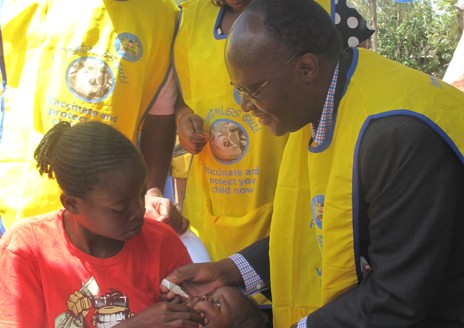
Kenya will commence trials of the country’s first locally manufactured vaccines within the next two years, targeting the immunisation of over three million children with affordable and critical vaccines.
The Kenya BioVax Institute, a state-backed pharmaceutical manufacturing facility, is spearheading the project with the backing of Sh8 billion in funding from the World Bank.
The institute committed itself to the ongoing preparations for equipping the Embakasi-based facility in line with global manufacturing standards that will guarantee the safety and efficacy of all vaccines produced.
The move is a strategic response to vaccine procurement challenges experienced during the COVID-19 pandemic, when African countries, including Kenya, struggled to access timely and sufficient vaccine supplies.
The institute says it will roll out the first three locally manufactured products for typhoid and pneumonia that will benefit millions of children needing critical doses by 2027.
In addition, when fully operationalised, the institute will produce key vaccines for tetanus, Hepatitis B, polio, outbreak vaccines for Cholera and Ebola, biotherapeutics such as insulin and anti-venoms and children’s immunisations such as chicken pox and measles, among others.
Speaking at a stakeholder meeting in Naivasha, the Institute’s chair Dr. Charles Githinji said the initiative would reduce Kenya’s heavy reliance on donor-funded vaccine programmes, which currently support over 80 per cent of the country’s vaccine needs, amounting to Sh15 billion annually.
“The Kenya BioVax Institute is on course to manufacture locally made vaccines by 2027, thanks to the World Bank’s Sh8 billion support and will place Kenya on the world map for health security,” said Dr. Githinji.
He noted that the institute, established in 2021, seeks to address global supply chain gaps of critical vaccines to ensure health sovereignty and vaccine efficacy for the Kenyan population.
He added that the institute would receive key production equipment to fast-track assembling from next month for commercial production in line with international pharmaceutical manufacturing standards.
Dr. Githinji said the shift towards local vaccine production comes amid its reclassification as a middle-income country, which is expected to reduce its eligibility for support from the Global Alliance for Vaccines and Immunisation (GAVI).
Consequently, the chair said Kenya is set to benefit economically as it eyes the huge African vaccines market, adding that the institute plans to enlist on the Nairobi Securities Exchange (NSE) in the future as part of its broader strategy to raise capital and expand its operations.
Vision 2030 Board Chair Emmanuel Nzai lauded the noble initiative, saying it would accelerate the country’s move to achieving Universal Health Coverage (UHC).
“The local production of essential vaccines will not only bring down healthcare costs but also make immunisation services more accessible, especially for vulnerable communities,” said Nzai.
He added that the move would see Kenya become a regional hub for vaccine manufacturing, enhancing health security across Africa, as the continent continues to face public health threats such as MPOX and Ebola.
According to the Africa Centre for Disease Control and Prevention (Africa CDC), up to 98 per cent of vaccines used on the continent are imported, which indicates a major gap in local production capacity.
The organisation noted that the African vaccine market is projected to grow to between USD 2.4 billion and USD 5.6 billion by 2030, offering opportunities for countries like Kenya to position themselves as key suppliers.
According to the African Union framework on local production in Africa, the continent should manufacture approximately 60 per cent of routine and outbreak immunisation vaccines by 2040.
The plan will see the continent produce more than 1.7 billion doses that will benefit an increasing population while reducing over-reliance on donors.
By Erastus Gichohi