The Centre for Mathematics, Science and Technology Education in Africa (CEMASTEA) has stepped up efforts to equip young learners with future-ready skills through a STEM boot camp programme designed to foster innovation, enhance technical literacy, and strengthen problem-solving among students nationwide.
The institution, a leading advocate for STEM education, emphasises that technical literacy is essential in today’s fast-evolving global economy and that every Kenyan child, regardless of background, should have the opportunity to become a creator, not just a consumer, of technology.
The 5-day programme, which kicked off Tuesday, targets students from Grade 4 to Form 4 and aims to equip them with skills in coding, robotics, mobile app development, and 3D design.
Through the programme, the institution aims to nurture a new generation of innovators capable of addressing real-world challenges by developing applications and projects that solve technological problems.
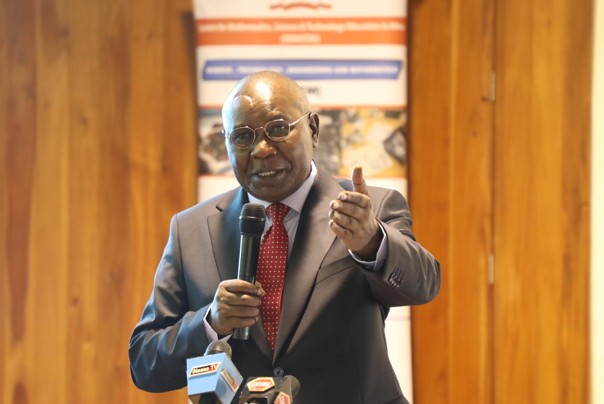
Speaking during the opening ceremony, Chair, Board of Governors at CEMASTEA, Dr. Pius Mutisya, said early exposure of youngsters to science and technology is critical in shaping their careers.
He said the Science and Technology Boot Camp is valuable for young people as it offers practical skills relevant to the job market, urging them to seize the opportunities provided by CEMASTEA.
“If some of us had access to programmes like this earlier, our career paths would likely have been different,” he said, adding that today’s learners have a significant advantage due to advancements in digital technology and the rise of Artificial Intelligence (AI).
He commended the institution for helping learners develop a strong interest in STEM, saying such efforts go a long way in preparing them for future careers such as engineers, doctors, scientists, and other professionals.
He urged learners to be creative, share ideas, and work together as a team to develop the best projects that will be used to solve real-world problems.
“Learners to experiment, make mistakes, and learn collaboratively in an environment that promotes innovation,” he further explained.
The Chair encouraged learners to embrace Artificial Intelligence (AI), noting that it makes many tasks easier, especially in the workplace.
He added that the institution is ready to support them in achieving their goals of developing practical solutions.
He encouraged learners to utilise the institution’s facilities, noting, “We have artificial intelligence and the internet. Therefore, learning is really enjoyable and very easy.” He appreciated parents for supporting and guiding learners in STEM courses, noting that their moral and financial support will enable them to achieve their dreams.
Acting Chief Executive Officer of CEMASTEA, Gladys Masai, said the institution was working on mechanisms to decentralise the STEM boot camp to the counties to ensure more learners, especially those in remote areas, access the programme.
Ms. Masai noted that this will help reduce travel expenses to Nairobi during school holidays and allow more learners to participate in the programme.
She added that the institution’s aim is to ensure more learners get the opportunity to participate and that deserving learners benefit from the programme.
She stated that the institution was developing a structured curriculum that will allow parents to track learners’ progress from beginner to advanced levels.
“We want to build a progressive learning pathway where children develop and improve their skills over time. Our goal is to nurture innovators and prepare them for future careers,” she said.
To expand outreach and increase the number of learners, the Acting CEO said CEMASTEA is developing a plan to collaborate with stakeholders, including the Kenya Institute of Curriculum Development, on curriculum matters to develop content for learners.
She added that the institution will also work with teachers in the counties to support learner training.
“To help these children in the regions and ensure they have their holidays filled with good memories,” Masai explained.
The National Trainer and Coordinator of the Boot Camp at the CEMASTEA, Mr. Martin Mungai, said the initiative is designed to inspire, innovate, and empower learners by exposing them to emerging fields such as cybersecurity, cloud computing, and artificial intelligence (AI).
“We are equipping young minds with skills for the future. Through hands-on experiences, they gain the confidence to develop their own projects and even compete in national science and engineering fairs,” he said.
Mungai noted that some past participants have gone on to showcase innovations in robotics and smart technologies at national competitions, demonstrating the impact of early exposure to STEM.
CEMASTEA is a premier institution that offers quality training in STEM and supports the teaching of STEM-related subjects to enhance learning.
Stakeholders and organisers emphasised that beyond technical skills, the programme fosters critical thinking, creativity, and problem-solving competencies essential in today’s digital economy.
As the government continues to invest in education, particularly science, technology, engineering, and mathematics, initiatives such as the CEMASTEA STEM Boot Camp are expected to play a key role in addressing future challenges and shaping the careers of young learners.
By Ian Chepkuto