Kericho County Government has presented a Sh 1.2 billion development Budget framework for the Financial Years 2025/2026 and 2026/2027 with Roads, Education, MSME, Health and Industrial development receiving substantial allocation.
The estimate outlines major investments aimed at strengthening service delivery, boosting economic growth and improving the welfare of the residents across all wards.
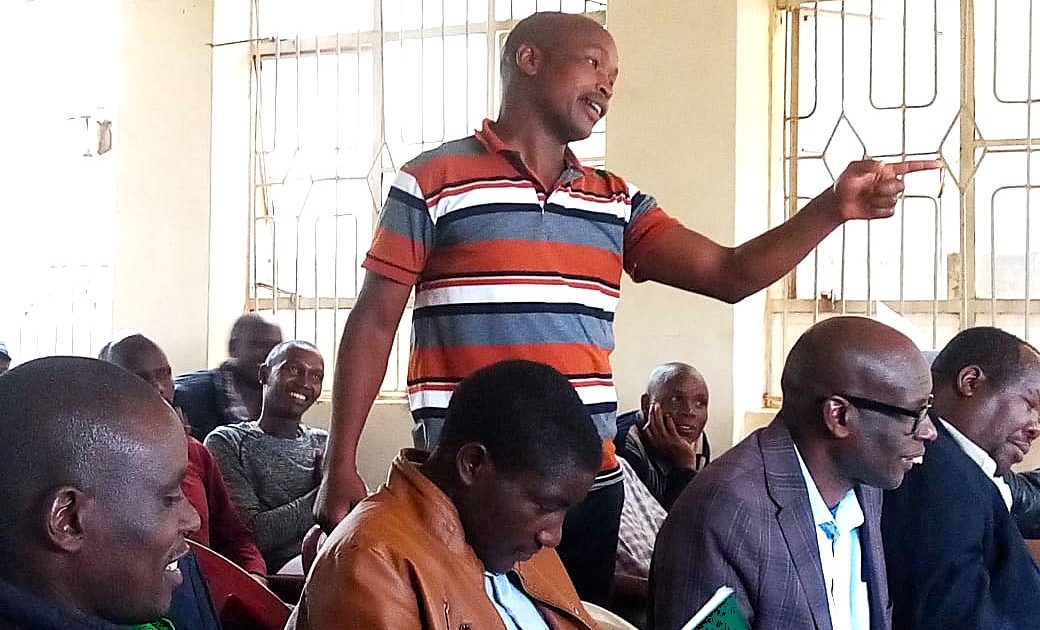
The proposals were presented during Public Participation forums held across various Sub-counties, where residents were taken through detailed budget estimates and given an opportunity to share their views on priority projects.
The development plan reflects a clear focus on infrastructure-led growth, with emphasis on roads, health services, education, industrial development and environmental sustainability.
County officials said the Budget is designed to open-up the economy, reduce the cost of doing business and improve access to essential services, while ensuring balanced development across rural and urban areas.
In the health sector, the County allocated substantial resources to improve both primary and referral health services. A total of Sh 68 million has been set aside for maintenance and completion of Level II and Level III health facilities across the County.
This aims at improving access to basic healthcare services and reducing pressure on referral hospitals.
An additional Sh 127.6 million has been allocated for upgrades in Sub-county hospitals. The funds will go into construction of key facilities such as sluice rooms, laundry units, isolation units, incinerators, walkways, modern kitchens, oxygen systems and sanitation improvements.
Hospitals benefiting include Sosiot, Roret, Kapkatet, Londiani, Kipkelion, Fort Ternan, Sigowet and Kericho County Referral Hospital.
These upgrades are expected to improve service delivery, enhance hygiene standards and strengthen patient care.
Further investments in the sector include Sh5 million for consultancy and design of new health projects, and Sh 98 million for purchase and installation of medical equipment such as digital radiography machines, ICU and theatre equipment, dialysis machines, laboratory systems, and mortuary and laundry equipment. An additional Sh15 million, supported by development partners, will strengthen lower-level health facilities.
The roads and infrastructure sector has received one of the largest allocations, totaling Sh 544.3 million. Of this, Sh 476 million will go into construction and maintenance of rural roads across all wards, with the aim of improving connectivity and easing movement of goods and people. A further Sh 68 million has been allocated for drainage systems, bridges and culverts to protect roads from damage and improve durability.
Other planned works include gravelling of market center roads, installation of solar street lighting, construction of boda boda sheds and routine maintenance under the Road Maintenance Levy Fund. These projects are expected to improve access to markets, enhance security in trading centers and support small businesses.
Litein Municipality has been allocated Sh 24.3 million for urban development projects. The funds will support cabro paving, drainage systems, street lighting, boda boda sheds, shoe shiner stalls, road grading and refurbishment of municipal offices. The aim is to improve urban order, support small traders and strengthen the town’s business environment.
In the education sector, Sh49.29 million has been allocated for construction and completion of ECDE classrooms and ablution blocks, along with renovation of existing facilities. A further Sh 32 million will support vocational training centres across the county, while Sh 15 million has been set aside for additional technical training infrastructure. The county will also spend Sh 25 million on learning materials including desks, chairs, textbooks and stationery to improve learning conditions.
The County has also maintained strong support for education through bursaries and scholarships, with Sh73.22 million allocated annually across all 30 wards. This is aimed at supporting learners from vulnerable households. Additional allocations include Sh 8 million for disability support programmes, Sh20.07 million for youth empowerment and mentorship, Sh 4.2 million for social halls, and Sh5 million each for public libraries, cultural centres and ECDE rehabilitation works.
In the trade and industrial sector, the County Aggregation and Industrial Park remains a key flagship project, with Sh250 million allocated in FY 2025/2026 and Sh80 million in FY 2026/2027. The project is expected to boost value addition and agro-processing within the county. Market development and management has also been allocated over Sh119 million to improve trading facilities across wards.
Additional support includes Sh14.1 million for construction of boda boda sheds and shoe shiner stalls, MSME training programmes, trade fairs and investment promotion activities. The County Enterprise Fund has been allocated Sh 10 million across the two financial years to support small businesses through access to credit.
In tourism and conservation, Sh6.5 million has been allocated for tourism development and promotion, alongside Sh2 million for tourism events and branding. Further funding will support museums, conservation programmes, wildlife compensation and environmental initiatives, aimed at gradually expanding tourism as a supplementary economic sector.
The water, energy, environment, forestry and natural resources sector has been allocated Sh 169,810,245 for FY 2025/2026 and Sh 125,737,622 for FY 2026/2027. The funds will support expansion of Kewasco Rural Water Schemes, water and sewerage systems, settlement of pending water bills and acquisition of land for water infrastructure development. These interventions are expected to improve access to clean water and reduce household spending on water services, particularly in rural and peri-urban areas.
In addition, projects under the Financing Locally-Led Climate Action (FLoCCA) programme have been allocated Sh 303,142,898 for FY 2025/2026 and Sh 432,142,898 for FY 2026/2027.
The funds will support climate resilience programmes, environmental protection, water resource management and conservation of natural resources. These initiatives are expected to help communities cope with climate change impacts such as drought and flooding, which continue to affect agriculture and livelihoods.
Overall, the Budget presents a clear development direction focused on improving infrastructure, strengthening service delivery and supporting economic transformation.
Roads, health and industrial development take a significant share of the resources, while education and social programmes aim to build long-term human capital. Investments in water, environment and climate resilience further strengthen the county’s sustainability agenda.
For residents, the planned projects are expected to lower the cost of living, improve access to services and open- up new economic opportunities. Better roads will ease transport of farm produce, improved health facilities will reduce medical expenses, and expanded education programmes will enhance future employment prospects.
At the same time, investments in water and environmental systems are expected to improve living standards and strengthen resilience against climate-related challenges.
By Gilbert Mutai