Kericho Governor Dr. Erick Mutai has directed a comprehensive forensic audit and the immediate revocation of irregularly acquired title deeds in the long-running Chelimo land dispute.
This signals a decisive intervention aimed at restoring integrity to the resettlement programme and addressing grievances raised by a section of squatters excluded from the allocation process.
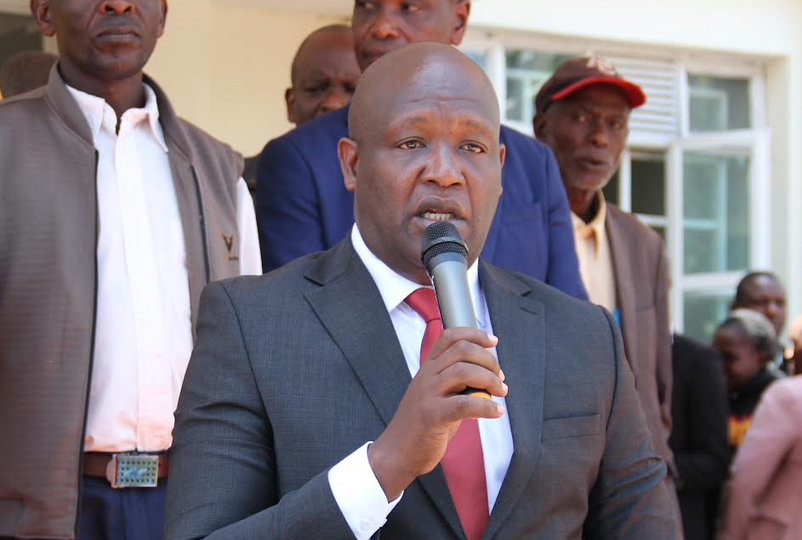
While addressing the media at the county headquarters after an extended high-level consultative session with members of the Chelimo land Task force, the governor outlined a multi-pronged approach being jointly implemented by the county and national governments to safeguard the interests of legitimate beneficiaries.
He emphasized that the ongoing intervention seeks to correct administrative and procedural lapses that may have compromised equity in the allocation process, while reinforcing public confidence in land governance systems.
Mutai noted that the session brought together key stakeholders from both levels of government to undertake a comprehensive review of the exercise, including progress achieved, emerging complaints from affected residents, and administrative gaps that may have affected the integrity of the allocation process.
According to the governor, the deliberations also focused on strengthening verification mechanisms, enhancing inter-agency coordination, and instituting corrective measures aimed at safeguarding transparency, accountability, and fairness in the ongoing settlement of genuine squatters.
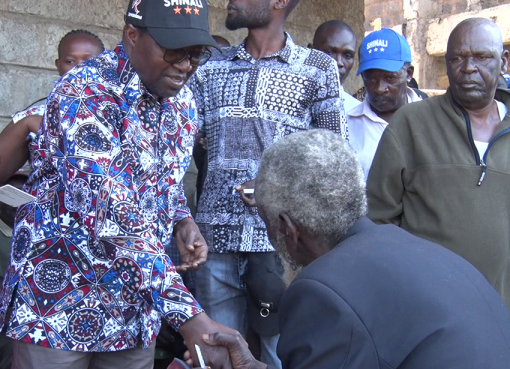
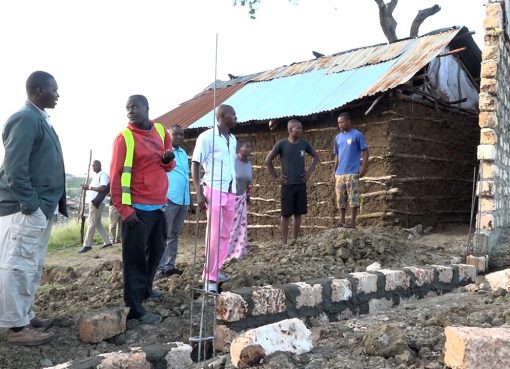
Providing historical context, the governor observed that the Chelimo land question has persisted for over a decade, with hundreds of families living as squatters under precarious conditions.
Upon assuming office, he said, his administration was confronted with a standing court order directing the eviction of all occupants after the land was legally affirmed as property of the County Government of Kericho. However, he noted that consultations at the highest level of government informed a policy shift towards a more humane and sustainable resolution.
“We were faced with a clear legal directive to evict all occupants, but we chose a path that balances the rule of law with social responsibility. These are families who have lived on this land for years, raised children, and established their lives there. In consultation with the national government, we agreed to set aside 200 acres out of the 864 acres specifically to settle genuine squatters in a structured and dignified manner,” Mutai said.
He further explained that the resettlement programme required a reconfiguration of historical land allocations dating back to the era of former President Daniel arap Moi, during which parcels ranging between 10 and 20 acres had been issued to various allottees.
Through negotiated consensus, these holdings were rationalized, with each allottee retaining no more than half an acre to create space for equitable redistribution to landless households.
To ensure credibility and accuracy, the county undertook an extensive verification exercise anchored on both administrative and technological frameworks.
The process brought together local administrators, village elders, and community representatives, and was complemented by satellite-based Geographic Information Systems (GIS) mapping to establish the physical location and legitimacy of each household. The exercise, which spanned over a month, generated a comprehensive database of verified squatters.
The resultant beneficiary list underwent further institutional validation through the Kericho County Assembly, which constituted its own committee to independently verify the submissions.
The Assembly subsequently forwarded the harmonized list to the State Department for Lands, paving the way for issuance of title deeds to approximately 95 per cent of the identified beneficiaries.
Despite this progress, the governor acknowledged the existence of residual gaps affecting about five per cent of genuine squatters who are yet to receive title deeds.
Governor Mutai told KNA that the outstanding cases are being handled as a matter of priority to ensure inclusivity and fairness in the programme.
“We have made significant progress, but we are equally aware that a small percentage of genuine beneficiaries have not yet been captured. To address this, I have extended the mandate of the task force by one month to undertake fresh ground verification, using both physical identification and GIS mapping, to ensure that no deserving household is left out of this programme,” he stated.
The governor issued a strong warning against fraudulent practices, disclosing that preliminary findings indicate interference by certain political actors who allegedly inserted names of relatives, proxies, and associates into the beneficiaries’ register. He termed the actions a serious breach of public trust and an exploitation of vulnerable populations.
He confirmed that all irregular allocations linked to such malpractice would be nullified, and that investigative agencies, including the Ethics and Anti-Corruption Commission and the Directorate of Criminal Investigations, have been formally engaged to undertake a forensic audit of the entire allocation process.
Individuals found culpable, he said, will face legal sanctions in accordance with the law.
“Any title deed that was acquired through irregular means will be revoked without exception. We have already engaged investigative agencies to conduct a forensic audit, and those found culpable, whether they used proxies, relatives, or any other means will face the full force of the law. Public office must never be used to exploit the vulnerable,” Mutai emphasized.
Mutai underscored that elected leaders will be categorically excluded from benefiting from the resettlement programme, reiterating that public office should not be used as an avenue for personal enrichment at the expense of disadvantaged communities.
In a further effort to enhance transparency and restore public confidence, the governor announced the reconstitution of the task force to exclude politicians and instead incorporate independent and credible actors, including respected religious leaders, who will provide oversight and moral authority to the verification process.
He also addressed concerns around multiple claims within single households, warning that attempts to register more than one beneficiary per household would not be entertained. The policy, he clarified, restricts allocation to one individual per household, either the head or spouse, in order to maximize the reach of the programme within available land resources.
In a related development, Mutai directed that 32 members of the Talai community who were previously displaced during the development of affordable housing in Kericho town be integrated into the Chelimo resettlement framework, as part of broader efforts to address historical land injustices affecting marginalized groups.
In a broader policy direction, Governor Mutai reaffirmed his administration’s commitment to far-reaching land reforms aimed at restoring order, accountability, and equitable access to public resources across Kericho County.
He announced that all irregular leases on county land, particularly in areas such as Londiani allegedly held by affluent individuals without proper compliance, will be immediately revoked and the affected parcels repossessed.
The governor also emphasized that the recovered land will be systematically reallocated to deserving residents for productive use, describing the initiative as a key pillar in promoting inclusive development, correcting historical injustices, and ensuring that public land serves the collective economic interests of the people of Kericho.
By Gilbert Mutai