Over 4000 farmers from Nakuru County have benefited from a training programme on proper agronomical practices to boost production of the cassava crop, in a move aimed at promoting cassava as a climate-resilient crop for food security and commercialisation through value addition.
The farmers, who were trained courtesy of the Transforming African Agricultural Universities to Meaningfully Contribute to Africa’s Growth and Development (TAGDev 2.0) programme, will also access clean and disease-resistant planting materials which are early-maturing varieties, in addition to accessing proper extension services for Cassava crop, which are to be largely consumed as subsistence food in Eastern Africa’s rural households.
According to the project’s Lead Investigator Prof. Richard Mulwa, the 10-year initiative through TAGDev’s Agri-food System and Entrepreneurship Consortium (ASEC) was rolled out in 2023 and is being implemented by Egerton University in partnership with the Regional Universities Forum for Capacity Building in Agriculture (RUFORUM) and the Mastercard Foundation.
Professor Mulwa explained that Kenya produces about one million tonnes of cassava annually, which he said was far below the three million needed to meet the growing demand.
The lead investigator regretted that despite the fact that cassava was well adaptable to marginal soils and drought conditions, which made it an ideal buffer crop against climate change and key in promoting more sustainable food systems, its role in Kenya’s national food basket remained underdeveloped.
He, however, assured that the project was committed to promoting cassava as a climate-resilient crop for food security and commercialisation through value addition, adding that they were establishing cassava demonstration plots to promote improved farming practices and that through Egerton-Hub, the initiative was providing incubation for youth-led startups focusing on cassava commercialisation.
Further, through the venture, Professor Mulwa indicated that students from tertiary institutions; women and youth groups; and farming groups were undergoing training in value chain, production, processing and marketing of cassava-based products as well as its breeding.
The initiative has so far documented 23 different cassava varieties suitable for Nakuru County to support the development of an extension manual while emphasizing capacity building for processors on food safety and quality to ensure better market access.
The Lead Investigator who is a Professor of Horticulture and who specialises in horticultural biotechnology, sustainable agricultural research, and community-based agricultural projects, including leading climate resilience and value chain improvement initiatives, stated that the venture was focused on transforming Kenyans’ attitudes to treat the crop as a high-value enterprise rather than just a subsistence food, with an emphasis on transforming it into commercial products.
“We have skilled and supported individuals and farmer groups in the bulking of cassava planting material to ensure improved production,” stated Professor Mulwa.
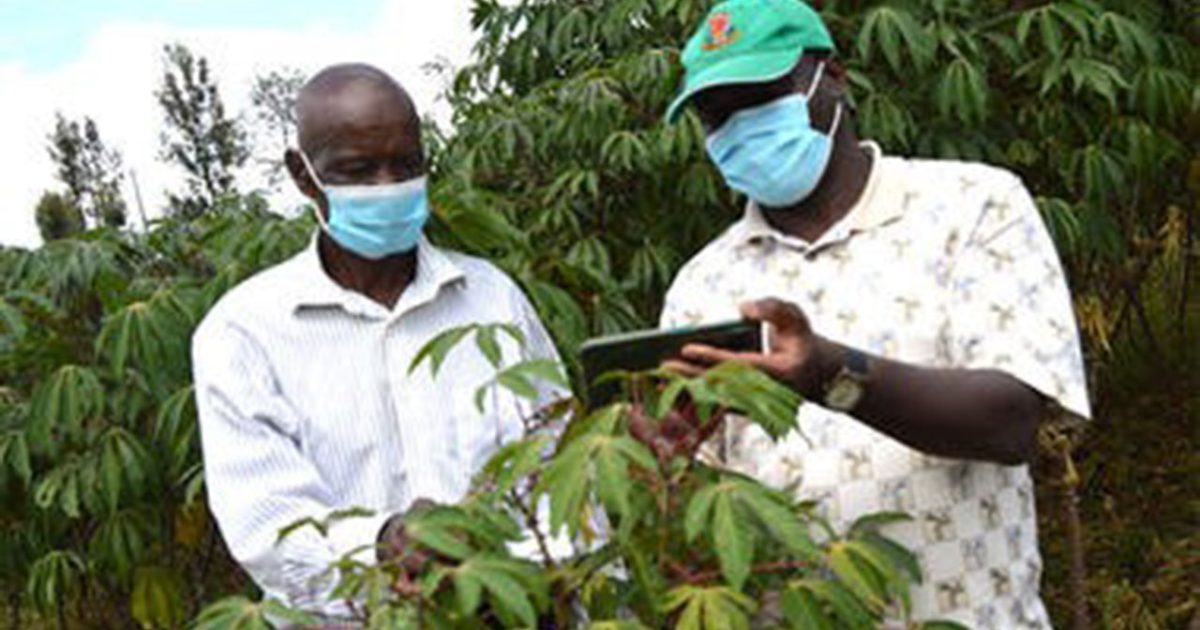
Speaking at a demonstration farm in Njoro, the lead investigator further explained that the project seeks to create jobs, increase food and nutrition security, as well as improve cassava quality, productivity and its marketability both locally and abroad.
Professor Mulwa went on to say that the project had been engaging in market-orientated agriculture, where cassava growers were being linked to potential markets.
It is envisioned that the initiative will eventually spur growth of cottage industries in areas where the food crop is cultivated across the country.
Cassava has a huge unexploited potential as raw material for a wide array of value-added products, from coarse flour to high-tech starch gels. Modified cassava starch can be used in the manufacture of alcohol, animal feeds and baked products. In advanced technologies the crop is an important base in the manufacture of plywood, paper and textiles.
According to the Don, despite cassava’s capacity to withstand climate shocks, its production faces challenges, particularly from the destructive Cassava Brown Streak Disease (CBSD).
He said progress had been made in the fight against CBSD, including the identification of a Tanzanian variety of cassava that is resistant to the disease.
The investigator revealed that five varieties had been identified that were best suited to the targeted regions in terms of yield, fast maturity and low cyanide levels, adding that they were now in the process of transferring the resistance genes of the Tanzanian variety to the locally adapted breeds using molecular marker-assisted techniques.
“These new cassava varieties will be a gem to farmers once certified for bulking and distribution,” the Investigator pointed out.
He said cassava was central in terms of food security and was also in high demand among beer makers because of its starch ingredient, while value addition will ensure farmers put food on the table and make money by selling the products.
He said in the past East Africa Breweries Limited (EABL) had been one of their major industrial partners in cassava projects, adding that jointly with EABL they were exploring possibilities of brewing high-quality beer from cassava.
The official urged Kenyans to embrace cassava production, saying, apart from being consumed as food, the crop was also a much-sought-after raw material for the production of many other industrial products.
Professor Mulwa, who also lectures at Egerton University’s Department of Crops, said the University was breeding cassava varieties that are resistant to cassava mosaic disease and cassava brown streak disease that will soon be distributed to women and youth groups.
The conventional cassava takes 10 years to breed (research and trials before bulk distribution to farmers for planting), but the scientist hopes the new variety will take half the time.
The Don said the project had developed 29 cassava varieties, out of which 7 varieties mature within six months, whereas Egerton University’s Food Science Department had been mainstreamed to work with farmers particularly women and youth groups, in value addition.
The department is said to be working on an animal feed formula that incorporates Acacia pods, the infamous Mathenge (Prosopis Juliflora) weed, with cassava as a base. This skill will later be transferred to farmers.
The University has also established 9 cassava variety sites in the three Sub Counties of Njoro, Lower Subukia and Solai.
Against a background of a ban on plastic bags, the project is rooting for production of biodegradable packaging materials from cassava. Professor Mulwa said research has established that cassava can be transformed into a biodegradable green paper which is not only environment-friendly but also enables food to be stored for a long time.
“Use of cassava to produce biodegradable paper bags will not only ensure environmental protection but also steer agriculture from low-productivity enterprises to high-productivity commercial production. We are in the process of engaging key industrial players towards achieving this objective,” he elaborated.
The technology is being deployed in Indonesia, where sustainable packaging materials are made from cassava. These packaging materials are 100 per cent natural, biodegradable, sustainable, compostable and recyclable, added the don.
Kenya has 200,000 hectares (494,210 acres) under cassava. About 60 per cent of the crop is in Western, 30% in the Coast, including Kwale, Lamu, Kilifi and Tana River, while the rest is in parts of the Rift Valley and Central.
The don said the programme seeks to increase average production for subsistence farmers from 2.5 metric tonnes per acre to 7 metric tonnes and for pre-commercial farmers from 5 metric tonnes to 10 metric tonnes per acre.
Professor Mulwa was happy that Cassava’s higher tolerance threshold to a variety of stresses such as water and heat, water salinity and emergence of new pests holds the key in addressing sustainable food and nutrition security, adding that the crop will strengthen resilience to climate change, create employment opportunities and increase incomes for smallholder farmers.
Through value addition, Prof. Mulwa underscored that smallholder farmers could produce cakes, crisps, fries, gari (breakfast cereal) and flour for making chapati, among other cassava products.
By Esther Mwangi