Coffee farmers in Kirinyaga County are celebrating an unprecedented financial breakthrough after earnings from the 2025/2026 coffee season soared to a historic Sh7.4 billion, marking one of the highest payouts ever recorded in the region.
The milestone is being hailed as a strong indicator of the sector’s revival, driven by sustained reforms, improved management of cooperative societies, and deliberate interventions by the county government.
The latest payments to farmers ranged between Sh104 and Sh157.40 per kilogram of cherry, with an impressive average of Sh139 per kilogram.
This represents a notable increase from the previous season’s average of about Sh134, highlighting steady growth in both productivity and value.
For thousands of smallholder farmers who rely on coffee as their main cash crop, the improved returns have brought renewed optimism and economic relief at the household level.
Leading the pack in performance was Thirikwa Farmers’ Cooperative Society, which recorded the highest average payout at Sh157.15 per kilogram.
It was closely followed by Rung’eto Farmers’ Cooperative Society at Sh155.62 and Rwama Farmers’ Cooperative Society at Sh152.03. These figures reflect not only improved global market prices, but also enhanced quality control, better processing methods, and increased efficiency across the cooperative system.
Out of the total Sh7.4 billion paid to cooperatives for coffee sales, farmers received Sh6.99 billion directly for their deliveries.
The remaining portion was utilized to offset operational costs at factory leve, including processing, labor, maintenance, and logistics. Despite these deductions, farmers still walked away with significantly improved net earnings compared to previous years.
Production levels also registered a considerable increase, rising from 45,717 metric tons in the 2024/2025 season to 49,100 metric tons in 2025/2026.
This growth is attributed to expanded acreage under coffee, adoption of improved farming practices, and increased use of high-quality inputs such as certified seedlings and fertilizers.
The strong performance has firmly positioned Kirinyaga among the top coffee-producing regions in Kenya. Factories affiliated to Baragwi Coffee Cooperative Society and Rung’eto Farmers’ Cooperative Society dominated the list of best payers, underscoring the strength of organized cooperative systems in delivering value to farmers.
Nyanja Factory under Baragwi Cooperative emerged as one of the top performers with a payout of Sh157.40 per kilogram. It was closely followed by Kiangoi Factory at Sh156.30, Kii Factory at Sh155.62, and Karimikui Factory at Sh155.50, all under Rung’eto Cooperative.
Guama Factory also posted an impressive return of Sh151.30 per kilogram, further reinforcing the region’s dominance in high-quality coffee production.
Speaking on the milestone, Kirinyaga Governor Anne Waiguru lauded farmers for their commitment to improving both the quantity and quality of coffee production.
She noted that the county had once again emerged among the top coffee earners in the country, attributing the success to a combination of farmer resilience and strategic government support.
“Kirinyaga has done it again. Our farmers are once more leading the country with the highest coffee payouts, a clear reflection of quality, strong cooperatives, and deliberate support from the county government,” she said.
The governor emphasized that sustained investments and reforms in the sector were beginning to yield tangible results. She pointed out that the county government has rolled out a wide range of interventions aimed at revitalizing coffee farming and ensuring long-term sustainability.
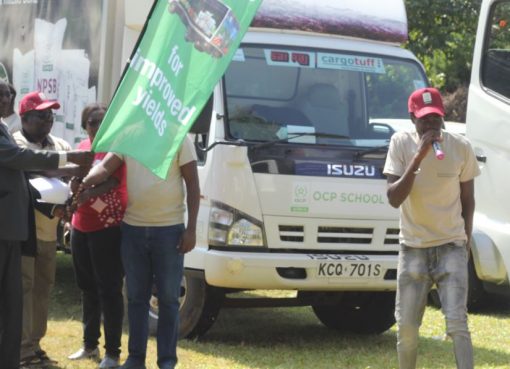
Among the key initiatives is the provision of subsidized high-quality seedlings and fertilizers, which has enabled farmers to improve yields and maintain healthy crops.
The county has also strengthened extension services, ensuring that farmers receive timely technical support and training on modern agronomic practices.
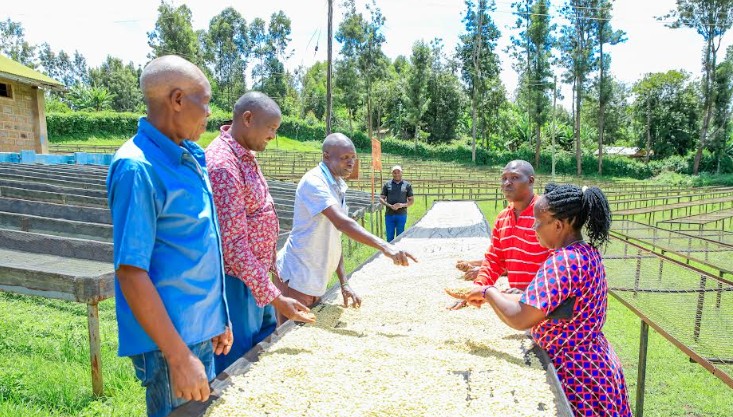
Additionally, the installation of modern solar dryers at factory level has significantly improved post-harvest handling, reducing losses and enhancing bean quality.
The county government has also supported the construction of a coffee warehouse for the union dry mill, aimed at improving storage and preserving quality before export.
Efforts to enhance market access have also played a crucial role, particularly through the establishment of the Kirinyaga Slopes Coffee Brokerage Company. This initiative has enabled farmers to access better markets and competitive prices, reducing reliance on middlemen and increasing transparency in the coffee value chain.
Baragwi Coffee Cooperative Society Chairman Francis Muriithi described the payouts as a steady improvement from previous seasons.
He noted that the average rate had risen by about Sh5 per kilogram compared to last year, terming it a significant gain for farmers.
“This is a clear improvement compared to last year. Our average has increased by about Sh5 per kilogram, which is a meaningful boost for farmers’ incomes,” he said.
Muriithi attributed the remarkable growth in Kirinyaga’s coffee sector to a combination of deliberate interventions and improved practices that have steadily transformed the industry over the past few years.
He noted that a strong emphasis on quality production has seen farmers adopt better harvesting techniques, including selective picking of ripe cherries, which has significantly enhanced the grade and global competitiveness of Kirinyaga coffee.
According to Murithii, improved farm management practices have also played a critical role. Farmers are increasingly embracing modern agronomic methods such as proper pruning, timely application of fertilizers, pest and disease control, and soil management.
These practices, he explained, have not only increased yields per bush, but also ensured consistency in quality, a key factor in securing premium prices in the international market.
Muriithi further highlighted the role of continuous farmer training and extension services, noting that capacity-building initiatives spearheaded by both the county government and cooperative societies have equipped farmers with essential knowledge and skills.
Through field demonstrations, workshops, and cooperative-led mentorship programs, farmers have been empowered to make informed decisions, thereby improving productivity and profitability.
He pointed out that timely access to farm inputs has been another game changer. In the past, many farmers struggled with delayed or inadequate supply of fertilizers and chemicals, often leading to poor yields. However, improved coordination between stakeholders has ensured that inputs are now available when needed, enabling farmers to follow recommended farming calendars without disruption.
Muriithi praised ongoing reforms in the coffee subsector, particularly the streamlining of licensing processes.
He noted that reducing bureaucratic bottlenecks has made it easier for cooperatives and millers to operate efficiently, cutting down on delays and unnecessary costs. This, he said, has contributed to faster processing and marketing of coffee, ultimately benefiting farmers through quicker payments and better returns.
“The county government has played a major role in strengthening the entire value chain, from production to marketing,” he added, emphasizing that investments in infrastructure, institutional support, and policy reforms have created a more enabling environment for coffee farming to thrive.
He cited improved factory management within cooperative societies as another key factor behind the impressive performance.\
Many factories have embraced transparency, better financial management, and adoption of modern processing technologies, which have reduced losses and improved the quality of processed coffee. As a result, Kirinyaga coffee continues to command competitive prices at the global auction.
However, even as farmers celebrate the historic earnings, Muriithi expressed concern over the burden of long-standing debts that continue to weigh down many coffee farmers. He noted that a significant portion of farmers’ earnings is often deducted to service old loans, some of which date back several years. This, he argued, limits the actual income that farmers take home despite the impressive gross payouts.
He therefore called on the national government to consider waiving or restructuring these debts, stating that such a move would provide immediate financial relief to farmers.
“If these debts are addressed, farmers will be able to fully enjoy the fruits of their hard work and reinvest more into their farms,” he said.
Muriithi emphasized that debt relief would not only improve household incomes but also stimulate further growth in the sector. With more disposable income, farmers would be in a better position to purchase quality inputs, expand their coffee acreage, and adopt new technologies, ultimately boosting production and sustaining the upward trajectory of the industry.
He also pointed out that increased earnings have already begun to transform livelihoods in coffee-growing areas, with many farmers investing in education, housing, and other income-generating activities. He expressed optimism that with continued support and strategic interventions, the sector has the potential to uplift even more households out of poverty.
Muriithi revealed that Baragwi Cooperative Society, one of the leading coffee unions in the region, processed approximately 13 million kilograms of cherry this season.
This impressive volume translated to a payout of nearly Sh1.8 billion to farmers, making Baragwi one of the largest contributors to Kirinyaga County’s overall coffee earnings.
He noted that the cooperative’s performance reflects the broader success story unfolding across the county, where improved management, farmer commitment, and supportive policies are driving growth. Baragwi’s achievement, he said, serves as a benchmark and a source of motivation for other cooperative societies striving to improve their performance.
Francis Gachoki, a farmer at Kagongo Factory under Baragwi Cooperative, reported an increase in his earnings from Sh128 to Sh135 per kilogram. He described the improvement as a strong motivation to continue investing in coffee farming.
“The increase may look small, but it makes a big difference to us farmers. It gives us hope and encourages us to put more effort into our farms,” he said.
Gachoki attributed the progress to improved cooperative management and better market access, noting that the changes have helped stabilize the sector. He also highlighted the importance of infrastructure development, particularly improved rural roads, which have eased the transportation of coffee to factories.
At Nyanja Factory, farmer Julius Muriuki pointed to county-led initiatives such as soil testing, timely fertilizer distribution, and farmer education as key drivers of improved productivity. He noted that farmers are now better equipped with knowledge on crop management, leading to higher-quality beans and better returns.
“These trainings and support programs have changed how we farm. We now understand our crops better, and the results are clear in the payouts,” he said.
At Thirikwa Farmers’ Cooperative Society, Chairman David Njomo expressed satisfaction with the strong returns recorded this season. He disclosed that the society produced about 1.566 million kilograms of cherry, translating to over Sh200 million in earnings at an average rate of around Sh157 per kilogram.
“This season has been very rewarding. Our farmers are seeing the benefits of their hard work and the support they have received,” he said.
Njomo credited the performance to sustained support from the county government, including subsidized fertilizer, provision of drying beds, and investments in processing infrastructure. These interventions, he noted, have significantly boosted both productivity and quality.
A farmer at the society, Emily Wanjiku, echoed these sentiments, citing timely access to farm inputs and improved storage facilities as key factors in enhancing farm management. She said the current payouts have renewed farmers’ confidence in coffee farming.
“We are receiving inputs at the right time, and we now have better storage. This has made our work easier and more productive. The payments this year have truly motivated us,” she said.
Across the county, most cooperative societies have now announced their payments, with the lowest rate standing at Sh104 per kilogram. Despite the variation, the general trend points to significant improvement, giving farmers confidence in the future of the sector.
With sustained reforms, improved management, and favorable global market conditions, farmers are optimistic that future payouts could exceed Sh200 per kilogram.
Such growth would further strengthen household incomes, boost rural economies, and cement Kirinyaga’s position as one of Kenya’s leading coffee-producing regions.
By David Wandeto