

Thousands of informal settlement residents are set to benefit from title deeds and upgraded services under the Sh21 billion Kenya Informal Settlements Improvement Project (KISIP 2).
The government has recognised the urgent need to improve living conditions in informal settlements, where residents lack adequate housing, basic services, and secure land tenure.
Efforts are now focused on upgrading infrastructure and improving housing quality to transform these areas into safer, healthier, and more dignified places to live.

A renewed push by the national government through the state department of housing and urban development is to issue title deeds and upgrade essential infrastructure, and this is being implemented through the 38 participating county governments.
The initiative seeks not only to formalize land ownership but also to transform informal settlements through the provision of key amenities such as water, drainage, roads, electricity, and enhanced security.
In Embu County, the government has accelerated the issuance of both block and individual title deeds to residents in informal settlement schemes. At the same time, authorities are mapping settlements to identify critical infrastructure gaps and prioritize development interventions.
Embu County Deputy Director of Physical Planning, Nahashon Mucheru, said the programme is aimed at restoring dignity to residents while aligning with Sustainable Development Goals (SDG) 11 and Kenya Vision 2030, which advocate for inclusive, safe, and sustainable cities.
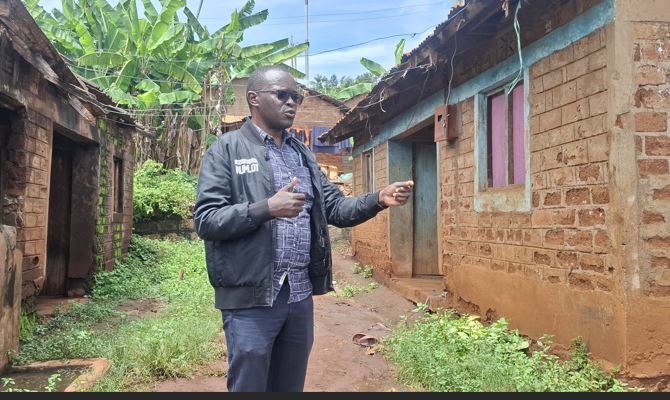
“Residents in informal settlements will benefit from improved infrastructure, including proper drainage, water supply, electricity, and enhanced security,” said Mucheru during a visit to the Majimbo informal settlement in Manyatta Sub-County, which is home to over 300 people.
Majimbo settlement, established in 1993 by Plan International with about 100 pioneer residents, has since grown into a second-generation community. Under KISIP 2, the area is set to receive block title deeds, a move expected to unlock development opportunities and partnerships.
The programme to issue block titles, he said, will open the areas to new development, especially high-rise buildings like the ones being undertaken by the national government for affordable housing. “We will have an engagement with the national government on how they undertake these projects. We are open to all operations,” he added.
He added that they have also engaged residents extensively and presented viable options to address the deplorable conditions, noting that surveying has been completed and issuance of title deeds will be issued soon.
Residents have welcomed the initiative, expressing optimism that it will improve their quality of life.
Stephen Ireri, Chairman of the Settlement Executive Committee in Majimbo, said the community is ready to work with both national and county governments to upgrade the area.
“We are open to partnerships that will bring better services and infrastructure. The title deed process gives us hope for a more secure and improved future,” said Ireri.
He added that formal land ownership could pave the way for modern developments, including high-rise buildings similar to those under the government’s affordable housing programme.
However, residents say the current living conditions remain dire. Veronica Njue lamented the poor state of housing, noting that many homes have leaking roofs, making life especially difficult during the rainy season.
“Most of us rely on casual labour, and when it rains, we spend more time dealing with leaks and mud than working. It is a difficult life, especially for women and children,” she said.
In the midst of these struggles, Njue, however, holds onto hope, looking to the government for support through informal settlement upgrading programmes, believing that one day she and her children and grandchildren might have a safe, solid home where the rain no longer invades their nights.
In Itathaa A and B informal settlements in Kimangaru, which are beneficiaries of the programme, residents are already experiencing positive change following land surveying and demarcation.
Lydiah Wanjiru, Chairperson of the Settlement Executive Committee, said KISIP 2 surveyed the 16.4-acre settlement and installed boundary beacons, helping to resolve long-standing land disputes.
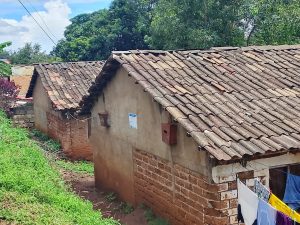
“For years, residents fought over land boundaries, but now everyone knows their exact plot. This has encouraged people to build better houses,” said Wanjiru.
She noted that most residents depend on casual work in miraa farming, dairy, and horticulture, and thus securing land ownership is a major step towards economic stability.
As the government rolls out KISIP 2 across the country, thousands of families in informal settlements now look forward to a future defined by security of tenure, improved infrastructure, and dignified living conditions.
The KISIP 2 is an Investment Project Financing (IPF) 5-year project valued at USD 165 million with USD 150 million in credit provided by the International Development Association (IDA) and the Government contributing counterpart funding of an equivalent of USD 15 million.
It became effective on 17th March 2021 and is scheduled to close in January next year. The objective is to improve access to basic services and land tenure security of residents in participating urban informal settlements and strengthen institutional capacity for slum upgrading in the country.
By Wangari Ndirangu


