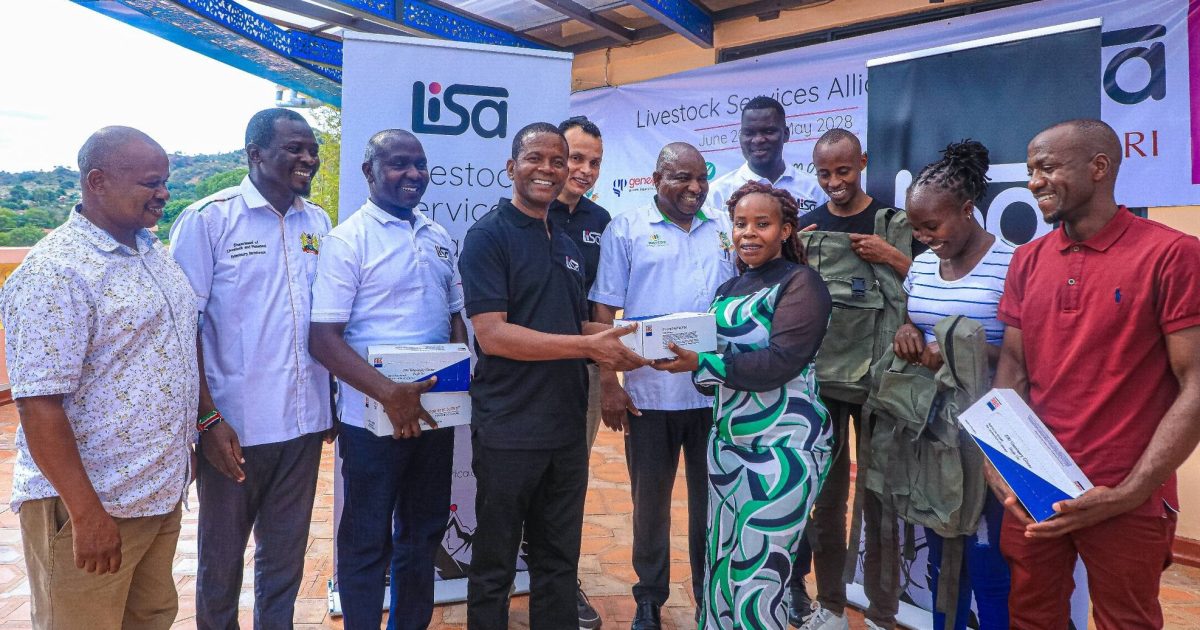
Taita Taveta County has begun operationalizing a digital livestock management system, under the Livestock Services Alliance (LiSA) project, marking a shift from project design to full-scale implementation.
The rollout of the platform, considered the backbone of the LiSA initiative, comes months after the project was launched in August 2025 to strengthen livestock productivity and resilience in the Tsavo landscape.
The system integrates vaccination tracking, livestock movement traceability, breeding support and farm advisory services, enabling real-time data collection and coordination of services that have traditionally been fragmented.
The County Executive Committee Member for Livestock, Katuu Mzenge, said the platform will address long-standing inefficiencies that have hindered planning, disease control and revenue collection.
“This is the point where the project begins to deliver tangible value. With accurate data on livestock and movements, we can improve service delivery and close existing gaps in revenue and disease management,” said Mzenge.
Livestock contributes up to 30 per cent of Taita Taveta’s Gross Domestic Product, with an estimated 70 to 80 per cent of households relying on the sector, underscoring its central role in rural livelihoods and economic activity.
The rollout aligns with the government’s Bottom-Up Economic Transformation Agenda, which identifies livestock as a priority value chain for boosting rural incomes and economic inclusion.
It also reflects ongoing efforts by the Ministry of Agriculture and Livestock Development to digitize agricultural services and strengthen farmer data systems for improved planning and service delivery.
The county Chief Officer for Livestock, Mcharo Mwalugha, said the system will enhance compliance by linking livestock movement to digital records, a move expected to improve cess collection and sector accountability.
“You cannot manage what you cannot track. Once farmers come on board, we will improve accountability while also offering them better services,” he said.
The operationalisation follows a six-month baseline study whose findings revealed gaps in service delivery, limited market access and persistent gender disparities in livestock production.
Under the new system, farmers will have improved access to coordinated services, while county officials will be able to plan interventions based on real-time data, including targeted vaccination and breeding programmes.
The initiative also promotes climate-smart livestock production, supporting Kenya’s adaptation efforts under the National Climate Change Action Plan, particularly in arid and semi-arid areas vulnerable to climate shocks.
Improved traceability and structured data are further expected to enhance market access and position farmers to tap into formal and export markets, in line with national efforts to commercialise the livestock sector.
LiSA is being implemented by the Taita Taveta County Government in partnership with GenePlus Global, CowTribe, MooMe, Taita Taveta Wildlife Conservancies Association (TTWCA) and Villgro Africa, with support from the International Development Research Centre under the RECAF Initiative.
Stakeholders agree that the success of the digital platform will be critical in determining the project’s long-term impact, including its potential to transform livestock farming into a more commercial, data-driven and climate-resilient sector.
By Arnold Linga Masila