Communities in Tinderet Sub-county have resorted to complementing the government’s development agenda by engaging in road rehabilitation ventures for free on a voluntary basis.
The residents said the self-driven initiative was to help restore road infrastructure that might have been rendered impassable during the ongoing rains to facilitate a seamless flow of traffic and produce from farms to marketplaces.
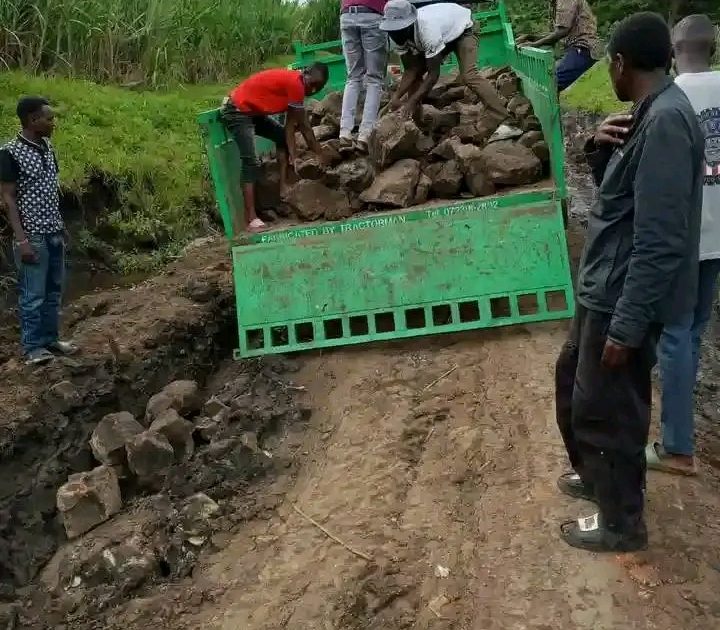
Working through community groupings, the residents have embarked on gravelling roads, clearing drainage systems, filling gullies and constructing temporary water channels to ease movement of people and farm produce.
Among the affected areas where locals have mobilized themselves include Songhor-Soba Ward, Tinderet Ward and Kaplamai area where persistent rainfall has left roads muddy and nearly impossible.
In Meteitei area, residents joined hands with boda boda riders and traders to gravel sections of the Meteitei-Kapsimotwo road after vehicles were getting stuck, disrupting transport of milk and farm produce to nearby markets.
“We could no longer wait because school children, patients and farmers were suffering daily,” said Kiprotich Cheruiyot, a community elder involved in the exercise. “Residents provided murram, wheelbarrows and labour to restore the road.”
Women in groups also participated in clearing blocked culverts and drainage channels along feeder roads linking farms to shopping centres.
According to Jane Chepkemoi, a local farmer, the poor road condition had increased transport costs and caused delays in accessing markets.
“Vehicles could not reach some villages and farmers were forced to carry produce on their backs,” she said. “That is why we resolved to work together and improve the roads ourselves.”
Youth groups were also seen spreading gravel on damaged sections connecting Chepterwai and Kapsengere areas, where deep potholes and flooding had cut off transport.
Area boda boda operators said the situation had affected their income, with many motorcycles frequently breaking down due to the muddy conditions.
“We depend on these roads daily,” said rider Wilson Sang. “If we do not take action ourselves, transport will completely stall because some roads have become dangerous even for motorcycles.”
Residents noted that while road maintenance remains a government responsibility, community participation was necessary during emergencies, especially at a time when rains continue pounding the region.
The community members further appealed to the county government and the national government to speed up rehabilitation of key feeder roads and provide more gravel, culverts and road maintenance equipment to support local efforts.
by Sammy Mwibanda