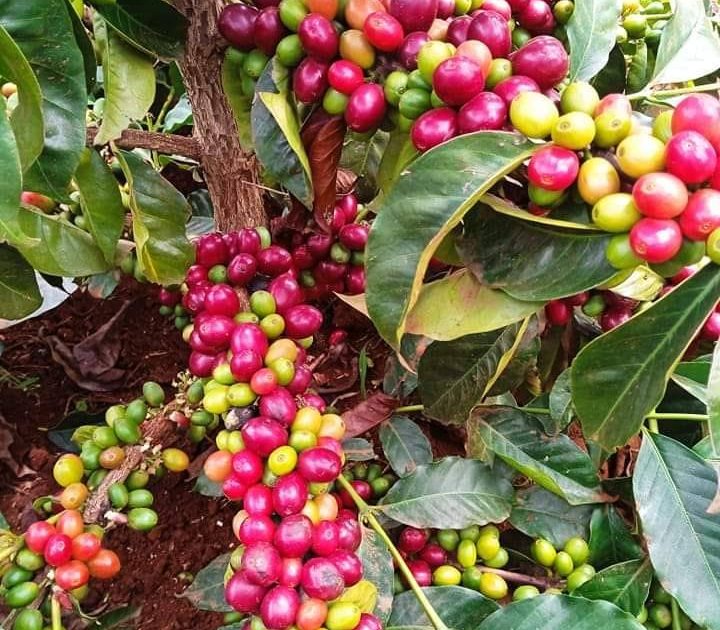
Kenyan coffee farmers and cooperatives reaped higher earnings from direct coffee export sales in March 2026, as international buyers paid premium prices for quality and traceable Kenyan coffee outside the traditional auction system.
A new report by the Agriculture and Food Authority (AFA) shows that growers, estates, cooperatives and exporters sold 1.70 million kilograms of clean coffee through direct sales arrangements, earning about Sh1.75 billion during the month.
The report indicates that the coffees fetched an average price of Sh51,317 per 50-kilogram bag, far above the average price of Sh37,057 recorded at the Nairobi Coffee Exchange (NCE) auction in the same period.
The strong performance reflects the increasing demand for speciality Kenyan coffee in overseas markets, where buyers are willing to pay more for quality, consistency, and traceability.
According to the AFA, Direct Sales Performance and Coffee Market Report for March 2026, some coffees attracted exceptionally high prices, with NH grade coffee from Nandi County recording the highest price of Sh106,265 per 50-kilogram bag.
The report paints a picture of a coffee market where direct relationships between farmers and overseas buyers are increasingly becoming more rewarding than relying solely on the auction system.
Under Kenya’s coffee marketing regulations, direct sales involve contractual agreements between growers or their cooperatives and international buyers or local roasters.
The deals are negotiated directly, allowing sellers to target niche specialty markets that value premium coffee qualities.
The report shows that top quality grades continued dominating the direct export market. AB grade coffee accounted for the largest share, with more than 805,000 kilograms traded, representing nearly half of all volumes sold. AA grade followed closely with over 662,000 kilograms.
Together, AA and AB grades accounted for more than 86 percent of all coffee sold through direct exports, underlining the global demand for Kenya’s high-quality beans.
Kirinyaga County remained the leading supplier in the direct sales market, contributing more than 1.11 million kilograms, equivalent to 65 percent of total exports during the month.
Murang’a emerged second with 356,172 kilograms, while Kiambu ranked third. Other counties participating in direct exports included Nyeri, Embu, Kisii, Kericho, Nandi, Elgeyo Marakwet and Trans Nzoia.
Even though Kirinyaga dominated in export volumes, smaller coffee-growing regions stood out for securing some of the best prices.
Trans Nzoia recorded the highest county average price at Sh77,050 per 50-kilogram bag, followed by Nandi and Elgeyo Marakwet.
The figures suggest that emerging coffee regions are increasingly gaining recognition in the specialty coffee market, especially where farmers focus on quality production and differentiated coffees.
On the international front, Switzerland emerged as the biggest buyer of Kenyan coffee through direct sales, importing more than one million kilograms during the month. The United Kingdom followed closely with over 581,000 kilograms.
Other export destinations included Spain, Germany, Netherlands, China, South Korea, Taiwan, Saudi Arabia, Australia and Ukraine.
Ukraine recorded one of the highest average prices among major buyers at Sh. 77, 050 per 50-kilogram bag, while buyers from Taiwan, China and South Korea also paid premium prices for selected coffees.
The report further confirmed Kenya’s continued reputation for producing premium coffee. About 91 percent of all coffee sold through direct exports fell within premium liquor classes ranging from Class 3 to Class 4+.
Class 4 coffee accounted for the largest share of the market, while the highly rated Class 4++ coffees fetched some of the best returns, averaging Sh73,860 per bag.
The report also highlighted the growing importance of logistics and export facilitation firms helping farmers access international markets.
Cloud Coffee Care Limited emerged as the leading direct sales facilitator, handling nearly half of all export volumes during the month.
Other major facilitators included Maxa Africa Logistics and Westwey Company Limited, alongside cooperatives and farmer-owned export agencies.
AFA notes that despite a slight drop in prices compared to February, direct coffee sales still offered significantly better returns than auction sales and global benchmark prices.
The performance is expected to encourage more cooperatives and farmers to strengthen direct relationships with overseas buyers as they seek better earnings from Kenya’s globally respected coffee.
By Bernard Munyao