A growing concern over online harassment, cyberbullying, and digital abuse has prompted a major awareness campaign in Kwale County, where young people, community leaders, journalists and social media influencers have undergone training on technology-facilitated gender-based violence (TFGBV).
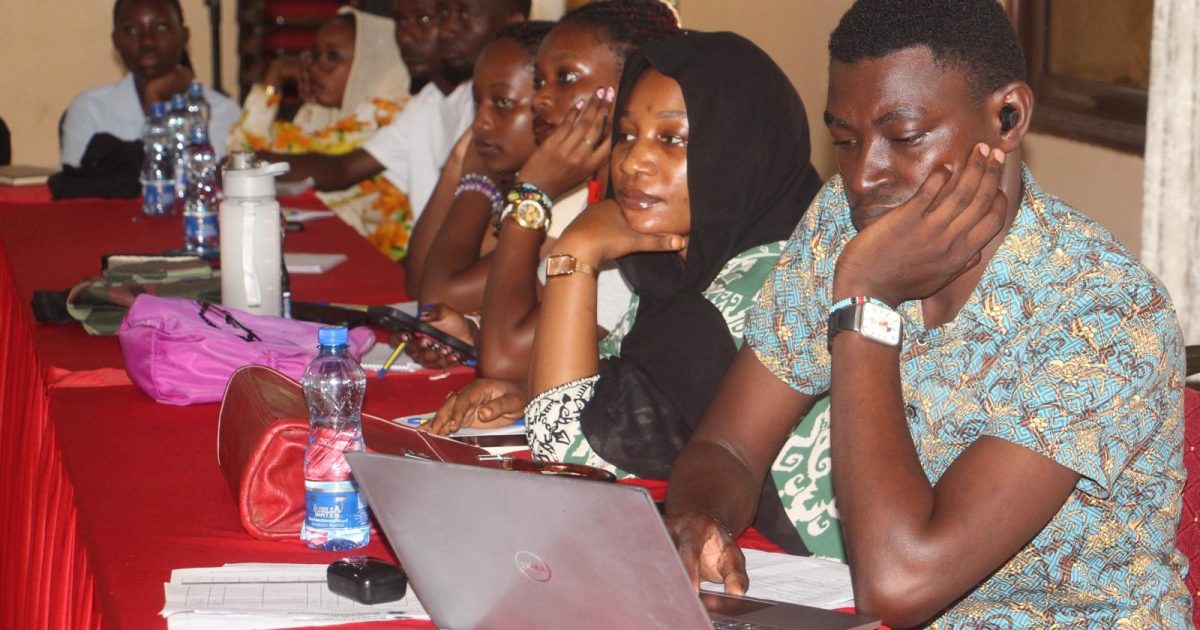
The three-day training, organized by Search for Common Ground under the Catalyst Project, brought together TikTok, Facebook, and YouTube administrators, community-based organizations, journalists, and security stakeholders to discuss the dangers of harmful online behavior and ways to create safer digital spaces.
Speaking during the training in Ukunda, Collins Mureithi, founder of Change Makers Hub and Tech Center in Kinondo, said the sessions helped him understand the importance of responsible technology use among young people.
“I learned how I can position myself as a young person to champion digitally fit skills that can help us use technology in a safer way and avoid violence online,” said Mureithi.
He added that as a community leader, he intends to train fellow youth and volunteers on responsible online behavior to reduce cyber harassment, bullying, and other risky digital practices.
Mureithi said many young people engage in harmful online activities without understanding the long-term consequences.
“As a community leader, I meet many young people involved in online GBV issues, yet they do not fully understand the harm caused by technology-facilitated gender-based violence. Many simply post things online without realizing that one day they could find themselves in serious trouble,” he said.
He noted that the training had empowered him with knowledge on how youth can protect themselves online while also helping others avoid dangerous online conduct.
Another participant, Marion Sidi from Ukunda, said the training opened her eyes to forms of abuse she previously considered normal social media behavior.
“I did not know that things like cyberbullying and hate speech are offenses and that I have a right to report them,” she said.
Marion admitted that before attending the training, she viewed insulting comments and online body shaming as ordinary online interactions.
“I used to think comments mocking someone’s appearance or blaming women for the clothes they wear were normal. I didn’t know there were places where one could report such incidents,” she added.
She praised the role of the National Cohesion and Integration Commission (NCIC) and other organizations in supporting victims of online abuse, urging women and girls not to suffer in silence.
“If you experience such abuse, do not stay silent. There are organizations ready to help, and there are reporting systems available,” she said.
Another participant, Lucy Ndanu, a student from the Technical University of Mombasa Kwale Campus, described TFGBV as an emerging issue that many people still underestimate.
“During the three-day training, I learned that technology-facilitated gender-based violence is something that is on the rise and affecting more people than we can see,” she said.
Ndanu emphasized the need for more public awareness campaigns, especially targeting women who may not recognize that they are victims of online abuse.
“Most people do not even know they are going through gender-based violence until they are taught about it,” she said, warning that unchecked online abuse can contribute to defamation, emotional trauma, and even suicide.
Search for Common Ground representative Hesbon Ndung’u said the Catalyst Project is currently being implemented in five counties across Kenya with support from the Christchurch Foundation in New Zealand.
According to Ndung’u, the initiative seeks to address the growing link between online violence, harmful digital behavior, and violent extremism among youth.
“Our goal is to educate young people about technology-facilitated GBV and its connection to violent extremism,” he said.
He explained that Kwale was identified as one of the focus counties following reports from community monitors indicating rising cases of online harassment, especially targeting women seeking elective positions.
“Women leaders and female candidates are being bullied online, insulted, and exposed to harmful content they did not consent to,” Ndung’u noted.
He added that the county’s tourism-driven economy and increased exposure to digital platforms have created both opportunities and risks for local youth, making digital safety education necessary.
Ndung’u further revealed that the organization has been working closely with agencies such as the Office of the Director of Public Prosecutions (ODPP), the Directorate of Criminal Investigations (DCI) and the National Counter Terrorism Centre (NCTC) to strengthen understanding of TFGBV and improve referral and reporting pathways.
He warned that some harmful online practices, such as sharing private information, exposing individuals during political disagreements, and circulating intimate images, can place victims at serious risk.
“People are sharing private information online and exposing others publicly, which puts lives in danger. Some of these actions amount to digital violence,” he said.
The project, which has been running for 11 months and is expected to continue for another six months, also seeks to build legal awareness among youth regarding Kenya’s cybercrime, child protection, and sexual violence laws.
While Kenya does not yet have standalone legislation specifically addressing TFGBV, Mburu noted that authorities currently rely on existing laws such as the Computer Misuse and Cybercrimes Act and child protection laws to prosecute related offenses.
He said ongoing discussions may determine whether the country eventually needs a dedicated law to address technology-facilitated gender-based violence.
The organizers now hope that participants trained under the program will become digital ambassadors within their communities by promoting responsible online conduct, supporting victims, and helping create safer online spaces for women and youth.
By Chari Suche