Rural Electrification and Renewable Energy Corporation (REREC) has unveiled 19 rural electrification projects in Kericho County for the Financial Year 2025/2026 valued at over Sh226.9 million.
The ambitious project collectively targets 2,527 households in five constituencies within Kericho County including Ainamoi, Belgut, Kipkelion East, Soin/Sigowet and Kipkelion West.
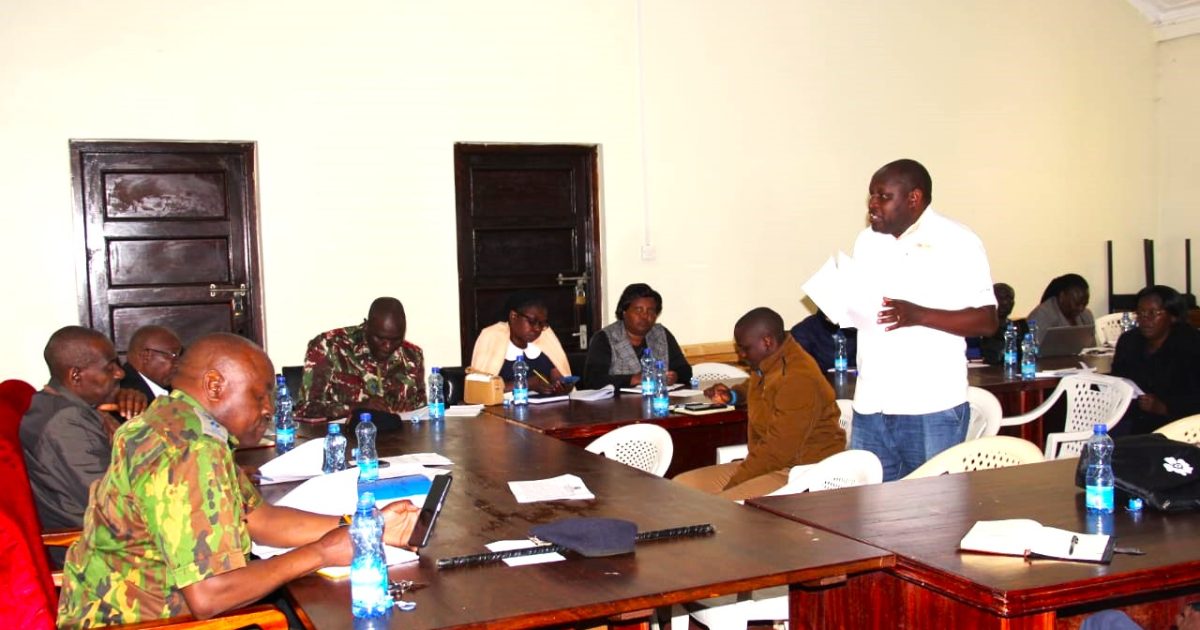
This was revealed during a meeting of the Kericho National Government Development–County Implementation Coordination and Management Committee (NGD-CIMC) meeting chaired by Acting County Commissioner, Dr. Kibe Maguta.
During the meeting the heads of various government departments were briefed on the status of ongoing development projects, including their funding, implementation progress, and completion timelines.
REREC Officer Robert Ruto disclosed that Kipkelion West Constituency leads with eight projects valued at Sh103,763,855 targeting 1,191 households, among them the Kipmologit Primary and Segetet Primary projects worth Sh14,088,357 adding that pole erection has been partially done under Joji Electrical Services Limited.
At the same time, the Lesir Wo Round project valued at Sh9,578,723 is ongoing, with pegging being planned under Revelation Kenya Engineers Group Limited, while the Kaplelit Kaborok project worth Sh13,293,736 implemented by ASCOT Engineering Solutions Limited, is currently awaiting metering and commissioning.
Within Kipkelion West Constituency also, several other last-mile electrification projects are also progressing well at different stages of contracting and mobilisation, among them Kaburenik (Sh11,594,195) being undertaken by Gakemu General Contractors, Kortenden/Tumoek Last Mile (Sh14,230,357) implemented by Jaberia Construction Supplies, Lelu B (Sh16,139,883) handled by Luffaridge Agencies, Mumetet Last Mile (Sh10,905,362) executed by Dae Mbili Enterprises, and Sugut/Timbil Last Mile (Sh13,933,242) carried out by Casaro Construction Company.
Meanwhile, Soin/Sigowet Constituency follows with six projects valued at Sh70,125,249 and targeting 671 households, including Kwandapmosong Primary project (Sh14,636,864), a project carried out by Takona Agencies Limited where stringing has been completed and transformer installation is pending, and Chemogoch Primary project (Sh23,138,681) being implemented by Excel General Contractors Limited where pegging has been completed and pole erection is awaited.
Still in Soin/Sigowet, Kipsamoi Village project (Sh8,819,535) and Nyalilbuch Dispensary and Environs project (Sh8,082,508) are both awaiting inspection and metering, projects implemented by Wamunga Investments Limited, while the Upper Laitigo project (Sh7,902,361) is at the pegging stage being undertaken by Tricious Limited, and Kipkok/Maemba project (Sh7,545,299) is awaiting inspection being handled by Franmar Engineering Limited.
The REREC Officer further disclosed that Belgut constituency has three projects valued at Sh25,353,780 and targeting 366 residents, notably Chepngisiriet project (Sh5,330,130), where pegging is complete and mobilisation under Tricious Limited is ongoing pending pole allocation, while Tendwet Area project (Sh13,586,146), with pegging planned by Takona Agencies Limited to serve 207 beneficiaries, and Cheptigit Project (Sh6,437,504) where pole erection has been completed by Nyati Supply Limited readying 89 households for service cables.
In Ainamoi Constituency the METRO project (Sh10,732,292) implemented by Dae Mbili Enterprises Limited has completed stringing and will commence service cable installation to connect 83 households, while in Kipkelion East the Hon. Bishop Tonui project (Sh16,914,019) by Dmesh Electricals Limited is progressing with pole erection to reach 216 households.
Mr Ruto lauded the contractors for meeting early milestones and appealed to community leaders to support wayleave processes and safeguard installed infrastructure, stressing that close community collaboration will ensure sustainability and minimize vandalism while maximising the public investment.
He explained that REREC’s mandate is to accelerate rural electrification through the extension of the national grid and the development of renewable energy sources, a key intervention aimed at fostering socio-economic transformation in rural areas by promoting access to reliable power for households, schools, health facilities, and small enterprises, thereby improving livelihoods and supporting the government’s Bottom-Up Economic Transformation Agenda.
By Kibe Mburu