An ambitious economic empowerment programme by the Kirinyaga County Government, Wezesha Kirinyaga, is rewriting the story of smallholder farming, turning it into an engine of growth that has improved livelihoods, boosted earnings, and lifted thousands of families out of poverty.
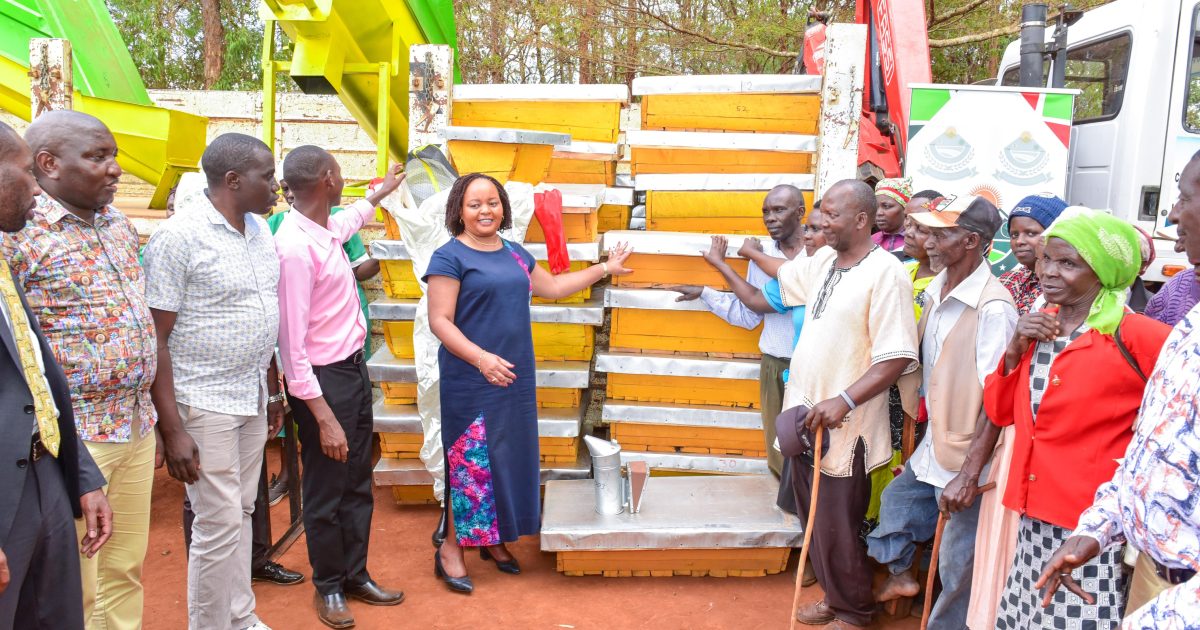
Launched in 2020, the flagship initiative has supported over 100,000 households involved in various agricultural value chains, including tomato, rice, dairy, poultry, coffee, avocado, apiculture, aquaculture, goat, and pig farming with funding exceeding Sh540 million.
Governor Anne Waiguru, speaking during the 2025 State of the County Address at the Kirinyaga County Assembly, said the programme has revolutionised farming in the county by increasing productivity and market access for smallholder farmers.
“When we launched Wezesha Kirinyaga, our goal was simple to make farming profitable again. Today, our farmers are organised, productive, and earning more than ever before. Agriculture has become the heartbeat of our local economy,” Waiguru said.
So far, 804 farmers’ groups have received Sh253 million, while 19 Farmers’ Producer Organisations (FPOs) have benefited from Sh266 million to strengthen production and marketing of farm produce.
To further enhance access to affordable credit, the county government has injected Sh21 million to establish 20 multi-value chain SACCOs, one in each ward, to support farmers with financial services, mobilisation, and cooperative management. Waiguru noted that such initiatives have contributed to a reduction in the county’s poverty index from 23% to 21%, effectively lifting approximately 52,000 households out of poverty.
“Our farmers are no longer farming for survival; they are farming for profit,” she emphasised. “The results are visible in every ward, every cooperative, and every household that has benefited from Wezesha Kirinyaga.”
The governor highlighted the remarkable growth in rice production, which has more than doubled from 90,000 metric tonnes to 210,000 metric tonnes annually, generating over Sh15 billion in revenue.
In the coffee sector, Kirinyaga farmers are now receiving payouts of up to Sh148 per kilo, the highest in the country, an improvement attributed to the county’s support in cooperative management and direct marketing.
The dairy industry has also experienced a boom, with average milk yields per cow rising from 2.5 litres to 7 litres daily, translating to Sh3.1 billion in annual income.
The growth has been fuelled by county-led interventions such as subsidised artificial insemination, animal feeds, fertilisers and milk cooling equipment for cooperatives.
Avocado farming has emerged as another lucrative venture, with current production standing at 15,000 metric tonnes valued at Sh300 million. Waiguru said expansion plans are underway to push output to 21,000 tonnes in the coming year.
“Our farmers have embraced avocado farming as the new green gold,” she said. “We are supporting them with certified seedlings and linking them to export markets so they can fully benefit from global demand.”
The governor reaffirmed her administration’s commitment to continue investing in value addition, post-harvest handling, and market linkages to protect farmers from price fluctuations and middlemen exploitation.
“Our next phase is about sustainability — ensuring every farmer continues to grow their income and every village becomes part of the agricultural success story,” Waiguru concluded.
By Mutai Kipng’etich