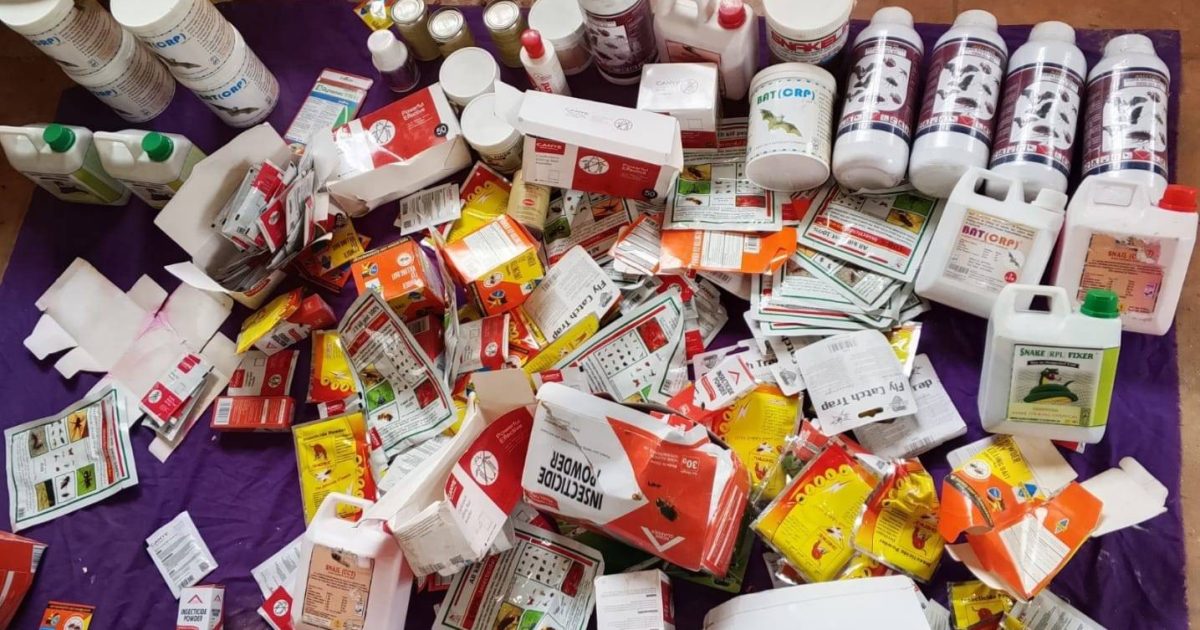
Agrochemical companies and the Pest Control Products Board (PCPB), with other agencies have partnered in running campaigns against illegal pest control products in the country.
The campaign underscores that using illegal pest control products not only harms crops and reduces yields but also endangers human health, soil integrity and the entire environmental system.
The campaign which is a buildup on the progress made in 2023 is focusing on farmers, agrochemical dealers and user awareness and behaviour change with the aim to educate on the dangers of illegal and counterfeit products, promoting purchase of registered agrochemical products from licensed dealers only and also encouraging reporting of suspicious or fake products in the market.
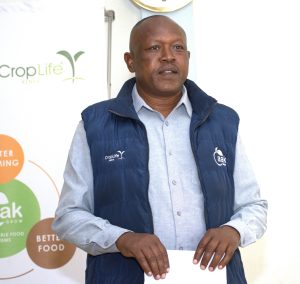
Speaking at a recent aak-GROW / CropLife Kenya Anti-Counterfeit Campaign border sensitization meeting at Malaba/Uganda border, Joel Mutai, Regulatory and Liaison Manager at aak- Grow crop life said the various forums being carried out have been very instrumental in fighting counterfeits essentially along the borders.
“This is a mechanism where we are trying to involve even our regulators and also counterparts across the border in Uganda and involving agro-dealers, the customs authorities, the agencies at the border in a concerted effort of fighting this menace of counterfeits’, he said.
Mutai explained that the agreement with Uganda will also be extended to partners across other borders like Tanzania so that East Africa can be at the forefront in the fight against counterfeits for the sake of farmers who are suffering because of getting products that are not working for them.
Bringing agro-dealers who play an important role is key to avoid stocking of particular products and counterfeits that are dangerous to both farmers and the environment, he said
“We are asking them to deny space for these counterfeits to thrive. The products should be according to the individual country’s needs so that if one pesticide is not registered in their country and registered in the one, it should not find itself on the other side”, he added.
Mutai emphasized that pesticides unlike other consumable products have dangerous residues hence every country evaluates them, approves and provides proper mitigation measures that are necessary for a particular product before it is authorized for use.
Betty Atto, from CropLife Uganda said counterfeit issues have been a real concern in Uganda and that stakeholders have been struggling on how to go about the cross-border transactions.
“We are excited that this meeting from both countries will be able to see more awareness being created across the borders and ensure all the countries are safe from counterfeits that have negative impact onto the environment and human health,” she said.
Atto said there is a need for countries to bring together resources to ensure strong laws are enacted to protect farmers from counterfeit products.
“We should ensure that we clean up the market, we clean up the borders, so that at the
end of the day we have a reduction in counterfeit for the safety of the farmers”.
Collaboration, Atto said is key for the industry and the regulators, by ensuring farmers are sensitized on how to identify counterfeit, and that they are also protected.
“This counterfeit has to be stopped, if it is not stopped, we are going to have a big problem in the future”, Atto quipped.
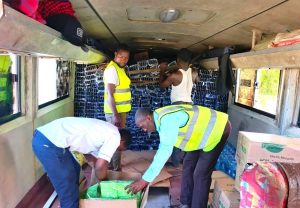
Lawrence Kalawa, General Manager of Compliance and Enforcement at the Pest Control Product Board (PCPB) in Kenya said they have lately faced challenges with interference with unauthorized pesticides.
Despite a robust regulatory process, he added that illegal and counterfeit pest control products continue to infiltrate the market and the products bypass safety assessments, posing serious threats to public health, the environment, and Kenya’s agricultural economy.
Kalawa added that as PCPB, they have put out measures to intervene on the availability and production of unauthorized pesticides in Kenya by conducting a lot of compliance activities all over the country, reaching all stakeholders, including the farming community.
“We have inspectors who have been deployed to One Stop Border Points (OSBPs) at Taveta-Holili, Lunga Lunga, Loitoktok, Namanga, Isebania, and Malaba, complementing existing posts at Mombasa Port and Busia
The stakeholder sensitization forum, he added is for all Border officers at Malaba Border post, both private and public with the message on registration of pesticides, counterfeit pesticides, and unregistered pesticides as part of information sharing from both Uganda and Kenya
“We have been executing compliance measures in the last one year, where we have arrested many traders in shops, in streets, in factories, handling unregistered pesticides and as of today, we have a cumulative of a staggering 70 cases in the courts of law, and others of a similar amount have been processed”, Kalawa said
The PCPB General Manager put out a strong warning to all traders dealing with unregistered and counterfeit pesticides saying, “we are about to get on your doors, we are arriving at your premises and because we have been sharing illegalities, we will arrest them and you will be prosecuted and punished”.
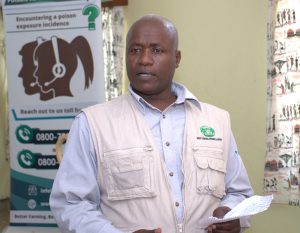
He confirmed that they had shared a catalogue of all images of non-authorized pesticides in Kenya and thus during the inspections at the border posts, both Kenya and Uganda already have signed on to support this assignment of indicating illegal pesticides in the country.
“We have a multi-agency team in all border posts, and the PCPB is representing all of them. Beyond the normal inspection at the official border posts, we have also an arrangement to undertake patrols along the borders of the two countries in a multi-agency approach, andwe are gaining also a lot of success in that”, Kalawa said
John Mwanja, Assistant Commissioner, Agrochemicals working in agriculture and fisheries in Uganda said that the workshop was very key considering verification of counterfeit products mainly takes place at the borders.
Solomon Chazira Kitai, the Deputy County Commissioner (DCC), Teso-North Sub-County, said the meeting was key as it was looking at various ways in which there can be control of propagation of counterfeit pesticides which are now rampant in markets.
Busia County Agro-dealers Association Secretary, Andrew Netia, said the lessons given during the sensitization of the illegal products and the cross-border trade between Kenya and our neighbouring country, Uganda, was helpful.
“We experience a lot of challenges in this business because there’s a lot of counterfeit goods coming from across the border, as a result of which it leads to poor economy, affecting farmers crops and having negative impact on the climate”, he added
As agro-dealers, Netia said they have been carrying out demonstrations at the local levels on pesticide use and talking to them during field days on the importance of strictly adhering to Kenyan products rather than those from abroad.
By Wangari Ndirangu