The Government has spent Sh1 trillion in the Infrastructure, Energy and ICT sectors driving development across the country for the period 2022-2025.
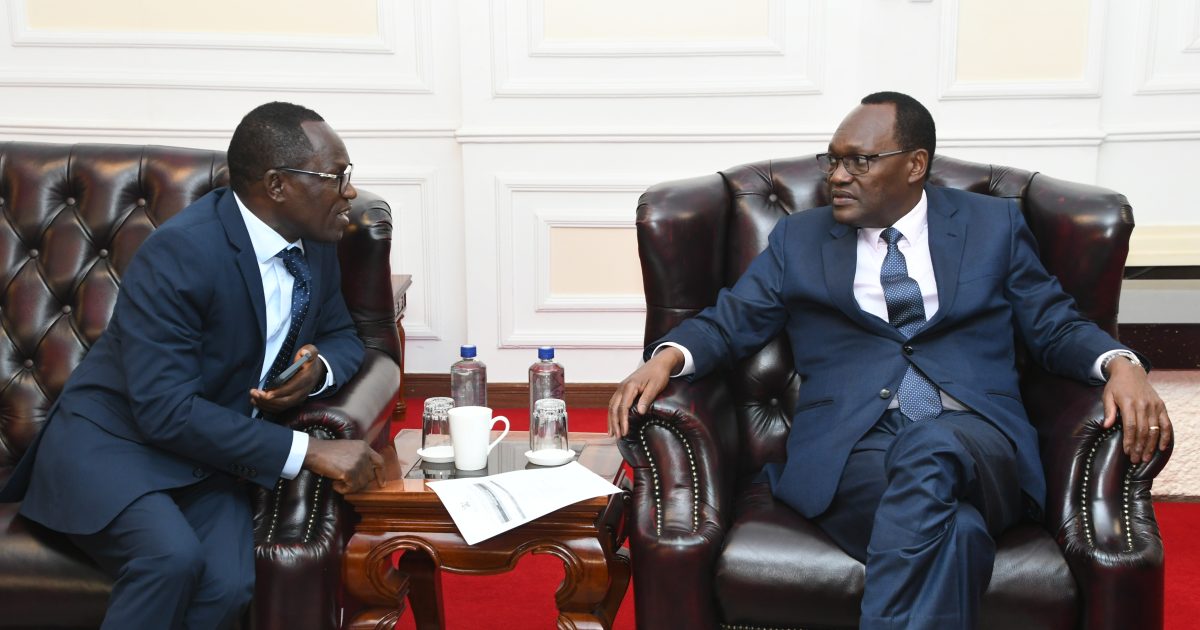
State Department for Broadcasting and Telecommunications Principal Secretary Stephen Isaboke said that the sector utilized Sh1 trillion against an approved Sh1.24 trillion, achieving an 85.7 percent absorption rate.
Speaking at the KICC on Wednesday while presenting the sector’s report for the Medium-Term Expenditure Framework Budget for the Financial Year 2026/27 – 2028/29, Isaboke highlighted the constraints posed by fiscal limitations and emerging challenges such as increased cybercrime as he emphasised the need for prioritization to ensure maximum public impact.
“We want to move Kenya to a higher level in terms of infrastructure development, the Infrastructure, Energy and ICT sectors play a critical role in the quest for Kenya to become a First World Nation and we want to ensure that the sectors play the enabler role in helping Kenyans and the regions achieve ease in doing business and life in general,” said Isaboke.
Presenting the sector’s performance from 2022-2025, Principal Secretary for ICT and the Digital Economy Eng John Tanui noted that there has been significant progress across 10 sub-sectors comprising transport, roads, public works, housing, shipping and maritime, energy, petroleum, aviation, ICT, and broadcasting and telecommunications.
Eng Tanui said that the sector encompasses 12 autonomous agencies and 35 State corporations working collaboratively to strengthen national infrastructure and service delivery.
The PS highlighted that over the period, the government constructed 1,798 kilometers of new roads, rehabilitated 305 kilometers and maintained 102,561 kilometers under routine maintenance.
“The government also undertook 2,111 kilometers of periodic maintenance and 28,844 kilometers under performance-based contracts,” said Eng Tanui.
He disclosed that the government also constructed the Miritini Meter Gauge Railway (MGR) Station, modernised the Mombasa Port terminals, developed the Shimoni Fish Port, and refurbished JKIA Terminals 1B and 1C.
Under the ICT and Digital Economy, the PS said that they have deployed 7,000 kilometers of fibre under the National Optic Fibre Backbone and connected 82 hospitals and 1,114 public institutions to high-speed internet.
“We have digitized 17,668 government services on e-Citizen, trained 1.5 million youth and linked 182,568 to online jobs through various initiatives like the Ajira Digital Programme and the Presidential DigiTalent Programme,” said the PS.
In the Broadcasting and Telecommunications sector, Eng Tanui said that they managed to produce 17,521 TV news items, 73,323 print stories, and 150 MyGov editions, trained 11,000 media practitioners, accredited 28,000 journalists, and constructed seven digital content production centres.
Over the same period the PS highlighted that under housing and urban development, the government has completed 2,185 affordable housing units in Bondeni, Mukuru, Homabay and institutional sites.
“We have also progressed in the construction of 83,000 affordable housing units at an average of 32 percent completion. We have also completed 44 markets and advanced construction of 239 additional markets, installed 2,176 security lights, 82 floodlights, and issued 2,029 title deeds,” said Eng Tanui.
The PS said that in the energy sector, the government increased installed generation capacity by 160 mega Watt (MW) to the national grid from 3,076 MW to 3,236 MW, constructed 405 kilometers of transmission lines, 1,321 kilometers of distribution lines, and five hybrid mini-grids.
“We have also installed 169,494 solar home systems and connected 1.18 million new customers to electricity, installed 27,027 street lights and developed domestic and institutional biogas systems,” said the PS.
Dr James Gachanja from the Kenya Institute for Public Policy Research and Analysis (KIPPRA) noted that strong governance and development partner support contributed to the achievements.
Dr Gachanja said that persistent constraints such as funding gaps, land-related challenges, procurement delays and design changes affected project delivery.
“Improved intergovernmental coordination is essential, especially for land acquisition and planning,” he said.
Eng Tanui said that the government priorities for 2026–2029 include constructing 1,891 kilometers of new roads, rehabilitating 515 kilometers, maintaining 78,320 kilometers routinely and 10,153 km under performance-based contracts.
“We have also prioritized developing the 50-Year Transport Master Plan, the National Urban Transport Policy, Railway Bill, and Nairobi Urban Mobility Plan,” said Eng Tanui.
The PS added that the government will also complete the Ruiru–Githunguri–Mitake Railway Line and infrastructure for the Dogo Kundu Special Economic Zone.
Isaboke said that the Government invites Kenyans to provide feedback assuring that they will continue with public participation to ensure that planned investments reflect public priorities and deliver maximum socio-economic benefit.
By Joseph Ng’ang’a