By E, KNA
Integrating climate education in the school curriculum is helping young learners in Kenya build critical problem-solving skills essential for tackling environmental challenges.
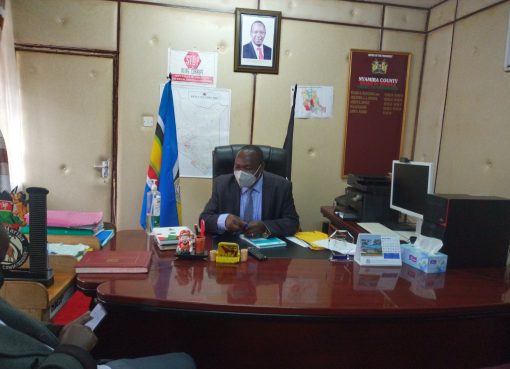
While indicating that one of the pillars of the Kenyan curriculum is when learners are able to solve pertinent and contemporary problems, Nakuru County Director of Education, Veronica Muli, said engaging students early, nurtures generation understanding, sustainable living and environmental stewardship.
Muli pointed out that since the impacts of climate change were already being felt, environmental education was critical in imparting relevant knowledge, skills and competences to address the climate change crisis.
The Director observed that understanding climate change causes and its impacts by the younger generation was the first step towards shifting mindsets, exploring new ways of mitigating its effects and adapting to its unavoidable consequences.
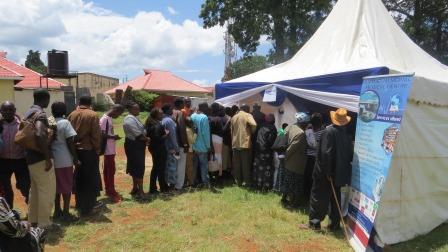
Speaking during celebrations to mark International Environment Education Day at the Railways Grounds in Nakuru, Muli said in the fight against climate change, education was a tremendously critical tool, adding that at an early age, children have the capacity to grasp and internalize the implications of global warming and contribute to climate action.
She explained that the government developed the Climate Change Act of 2016, which provides guidance and priority actions on addressing climate change, taking into consideration Kenya Vision 2030 and the Global Goals.
Muli said there was growing interest amongst companies in establishing and supporting environmental clubs across schools, saying through these clubs, students have the opportunity to gain knowledge and skills needed to support climate adaptation projects and innovations necessary for the Kenyan ecosystem.
“We must teach our learners at all levels of education that we only have One Earth, and that nature is at the core of development and a powerful enabler of achieving the 2030 Agenda for Sustainable Development.
“It is time for all stakeholders to invest more efforts towards creating a sustainable society for the future generations,” she added.
The Director emphasized that in a rapidly changing global climate, the role of education in nurturing environmentally conscious citizens could not be overstated.
She affirmed that Kenya, with its rich biodiversity and commitment to sustainable development, serves as a compelling case study for the impact schools can have on shaping the environmental mindset of future generations.
She said Kenya, like many other nations, faces a myriad of environmental challenges, from deforestation and pollution to climate change, adding that the issues not only threatened the nation’s natural resources, but also jeopardized the well-being of its citizens.
Recognizing this, she said the Ministries of Environment and Education have joined forces to integrate environmental education into the national curriculum.
Muli noted that students across Kenya were now exposed to comprehensive teachings on the importance of biodiversity, sustainable practices and the consequences of environmental degradation, adding that this ensures that environmental literacy becomes an integral part of students’ overall education.
Conservation Program Manager at Wildlife Clubs of Kenya, Dr. George Njagi indicated that they were supporting ‘Green School’ programmes, where institutions commit to environmentally friendly practices.
Dr. Njagi said they were promoting campaigns to incorporate sustainable measures such as rainwater harvesting, waste recycling and tree planting initiatives in learning institutions.
“These initiatives will not only reduce the carbon footprint of educational institutions, but also serve as practical examples for students, fostering a sense of responsibility towards the environment,” he added.
The program manager observed that beyond the school walls, schools should be encouraged to involve local communities in environmental initiatives.
Tree planting campaigns, clean-up drives, and awareness programmes, he said, should engage not only students, but also parents and community members to ensure the principles of environmental sustainability permeate beyond the classroom, creating a broader impact on society.
Dr. Njagi emphasized that the global community must recognize the role that schools can play in nurturing environmentally-conscious citizens worldwide, adding that investing in education, is investing in the future stewards of planet earth, ensuring a harmonious coexistence between humanity and the environment.
Wilson Kamau, a teacher noted that though Africa is on the frontlines of climate change, education remains an underdeveloped critical piece of the climate response puzzle.
Education, he said, is a much-needed intersection as the continent confronts the twin crises of climate change and youth unemployment.
Currently, climate change literacy in Africa averages about 37 per cent, much lower than in many other continents, and shows significant gender and regional disparities.
Kamau stated that integrating climate change into Africa’s education systems is a necessity.
He said without embedding environmental literacy into formal curricula, Africa risked raising generations unprepared to withstand the continent’s mounting climate challenges, adding that climate impacts ware already being felt in the sector.
He gave the example of the United Nations Children’s Fund (Unicef) which documented that at least 2 million learners in Kenya faced school closures in 2024 due to flooding and rain.
Kamau said informed citizens were more likely to adopt sustainable behaviours, engage in local solutions, and push for stronger policies.
The teacher said Climate literacy significantly impacted community decision-making by equipping individuals with the knowledge and skills to understand climate change and its implications and that it encompasses a range of competencies including assessing credible climate information, communicating effectively about climate issues, and making responsible decisions that consider both immediate and long-term impacts.
In Kenya, the Competency-Based Curriculum (CBC) includes elements of environmental stewardship from early primary levels.
Students learn about clean energy, conservation, and climate justice through project-based learning.
In Rwanda, the Ministry of Education has partnered with UNEP and UNESCO to produce teacher training guides focused on green skills and climate literacy.
A 12-year-old student, Rebecca Wangare from Kiboko Comprehensive School said climate literacy was essential in addressing the pressing challenges posed by the climate crisis, as it encompassed an understanding of how the climate system operates, the influence of human actions on climate and the reciprocal effects of climate on society.
Wangare said as climate change continues to escalate, fostering a populace well-versed in climate, science becomes crucial for informed decision-making and effective action.
She stated that Integrating climate literacy into school curricula is vital for preparing students to understand and address the complexities surrounding climate change and that this enhances students’ understanding and encourages actionable steps toward creating a more sustainable future.
“It is important for young people to play a key role in fighting climate change. The future lies in the hands of the youth, and the youth have a role to play to either destroy it or to keep it. I believe that change begins with an individual, and I personally believe that I should be empowered through education to protect the environment,” said Wangare.