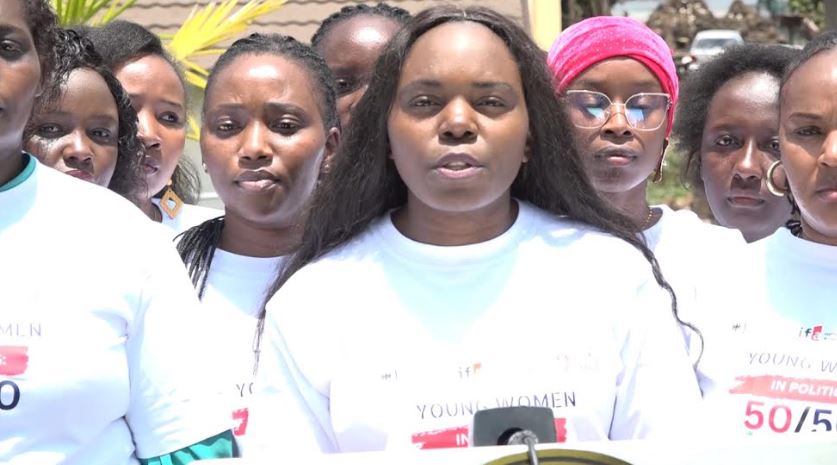
Women aspiring for elective positions in the Mt Kenya region have called for a political environment that gives them equal opportunities to compete, warning that violence, costly party processes and intimidation could undermine efforts to increase women’s representation in leadership.
The women said political participation should not only be about encouraging women to seek office, but also ensuring they have a fair opportunity to compete, campaign and engage voters without fear.
The Social Justice League Vice Chairperson Judith Juma expressed concern over the increasing use of goons to cause violence during political meetings, saying such practices threaten peaceful participation and could discourage women from entering elective politics.
Speaking in Kirinyaga County on Friday, August 21, 2026, during a training session for young women aspirants under the Young Women in Politics 50/50 Campaign, Juma said the programme had brought together women from Nyeri, Nakuru, Murang’a, Kirinyaga and Embu to equip them with knowledge and skills to participate effectively in the 2027 elections.
“We have seen sparks of violence in different parts of the country. We are calling on everyone to respect the electoral process and allow both voters and candidates to participate in a peaceful environment,” Juma said. She said women should not be encouraged to enter politics only to face intimidation, harassment and unfair treatment once they declare their interest in elective positions.
Juma challenged political parties to move beyond statements supporting women’s participation and create practical opportunities for female candidates through transparent nominations, equal access to party platforms and affordable nomination processes.
She also called for stronger implementation of the constitutional two-thirds gender principle, saying women should have a meaningful role in political decision-making and leadership.
Juma also urged the Government to strengthen mechanisms for reporting, referring and responding to cases of political violence, harassment and intimidation targeting women candidates. She said women themselves have a role to play in creating a healthier political culture by rejecting violence and supporting candidates who engage voters on issues affecting their communities.“Women should come out strongly and condemn all forms of violence. If we want more women in leadership, we must create a political environment where women can compete without fear,” she said.
Emily Mwaniki, an aspirant for the Wamumu Ward MCA seat, said the high cost of electoral processes including party nominations and campaigns was among the biggest barriers preventing capable women from seeking elective positions.
She regretted many women with strong community leadership records struggle to compete against candidates with greater financial resources and appealed to political parties to review nomination charges and make their processes more accessible.
Mwaniki called for nomination systems that assess candidates on their leadership capacity, ideas and ability to serve residents rather than their financial strength.
She also condemned the use of goons and intimidation during political campaigns, saying voters should be given an opportunity to hear different candidates and make independent decisions.
Mwaniki said political campaigns should also move away from personal attacks and the use of family matters to discredit opponents.“Women must be given an equal chance to compete. We cannot continue telling women to come into politics only to subject them to intimidation and unfair treatment,” she said.
Asunta Kiobe, an MCA aspirant for Njukini Ward, challenged women seeking leadership to reject political violence and refuse to participate in organizing or financing acts of intimidation.
She said women should instead become champions of peaceful elections and use their influence within communities to encourage dialogue and issue-based politics.
Kiobe warned that violence and harassment could discourage qualified women from seeking office, reducing the diversity of candidates available to voters. She called for accessible systems where women can report cases of intimidation and receive timely support and protection.
Kiobe also encouraged women aspirants to build cross-party networks and support one another, saying collective action would strengthen their ability to participate in political decision-making.
“We have a responsibility as women to change the political culture. We should not wait for others to create space for us; we must organize, support each other and reject violence,” she said.
On her part, Ms Wangu Muthoni echoed the concerns raised by Mwaniki and Kiobe, urging young women not to be intimidated by the prospect of competing against male candidates.
Muthoni said women should use their experience in community development and leadership to demonstrate that they can compete effectively and deliver for their constituents.
She urged aspiring female leaders to remain focused on issues affecting residents, including access to services, economic opportunities and community development, rather than allow political hostility to define their campaigns.
By David Wandeto