Faith-based leaders drawn from the Christian and Muslim religions have called on politicians to abandon politics of hatred, saying divisive rhetoric threatens the peace and cohesion of the coastal region ahead of the upcoming electioneering period.
The appeal was made during a special interfaith reception at Our Mother of Africa Hall, Tudor Pastoral Center, held to welcome the new Catholic Coadjutor Archbishop of Mombasa, Dominic Kimengich. The event, hosted by St Joseph Catholic Parish in Tudor, brought together clerics and worshippers from both faiths in a rare show of solidarity.
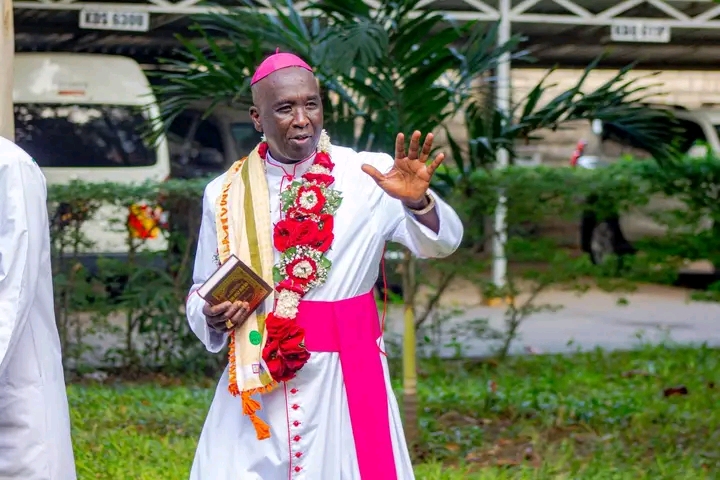
Archbishop Kimengich, formerly Bishop of the Catholic Diocese of Eldoret, was appointed Coadjutor Archbishop of Mombasa by Pope Leo XIV on January 28, 2026, and holds the canonical right of succession to Archbishop Martin Kivuva Musonde of the coastal region.
He was formally installed on April 25, 2026, before thousands of faithful at Loreto Convent School Grounds, Likoni, in a Mass presided over by the then Apostolic Nuncio Hubertus van Megen, who praised him for his homily on humility, drawing on the life of St Peter.
Addressing the congregation for the first time as Coadjutor Archbishop, Kimengich said, “I have accepted, I have come, and now Mombasa is home. By God’s grace, I will work here until I retire,” he reiterated.
Kimengich said the presence of Muslim leaders and worshippers made the occasion feel complete.
“I feel our ceremony today is complete because of the presence of our brothers and sisters from the Muslim community, the clerics who are here, who also come to welcome me. It’s a wonderful gesture of friendship and togetherness,” he said.
The Archbishop called for dialogue and cooperation in addressing challenges facing the community. Muslim leaders in attendance pledged to work with him to promote peace, unity and stronger relations between Muslims and Christians and presented him with a copy of the Qur’an as a gesture of mutual respect.
Kimengich welcomed the gesture, saying he plans to revisit the Qur’an, which he had studied during his seminary years, to deepen his understanding of the two faiths.
“Our unity is our strength,” Kimengich said.
Other faith leaders at the event urged politicians to set aside religious and tribal divisions and steer clear of hate-driven campaigns, calling instead for leadership contests to be fought on merit.
“We are all human beings, and we all come from one God. Let us set aside our religions, let us set aside our tribes, and our country will have peace,” said Eric Ochieng, a Catholic faithful.
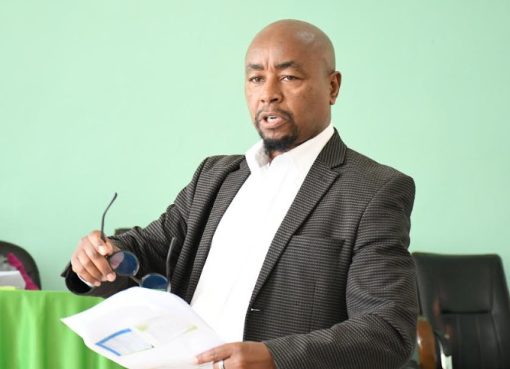
Also speaking at the event, Munira Faraj of the Coast Interfaith Council of Clerics (CICC) emphasised the need for peace, noting that women and children are always the first to suffer whenever conflict breaks out.
Turning to the youth, Ochieng urged them to stay firm and know their rights as the country heads towards another electoral cycle.
“As we approach the election period, our youth face many challenges. Let us set those challenges aside, stand firm as young people, and know what our rights are,” he said, adding that leaders should be chosen “not along religious lines, nor tribal lines, but on their ability to bring peace and development.”
The interfaith gathering comes at a time when religious leaders in the coastal region have increasingly emphasised cohesion among the area’s diverse Christian and Muslim communities.
By Joan Kinuthia