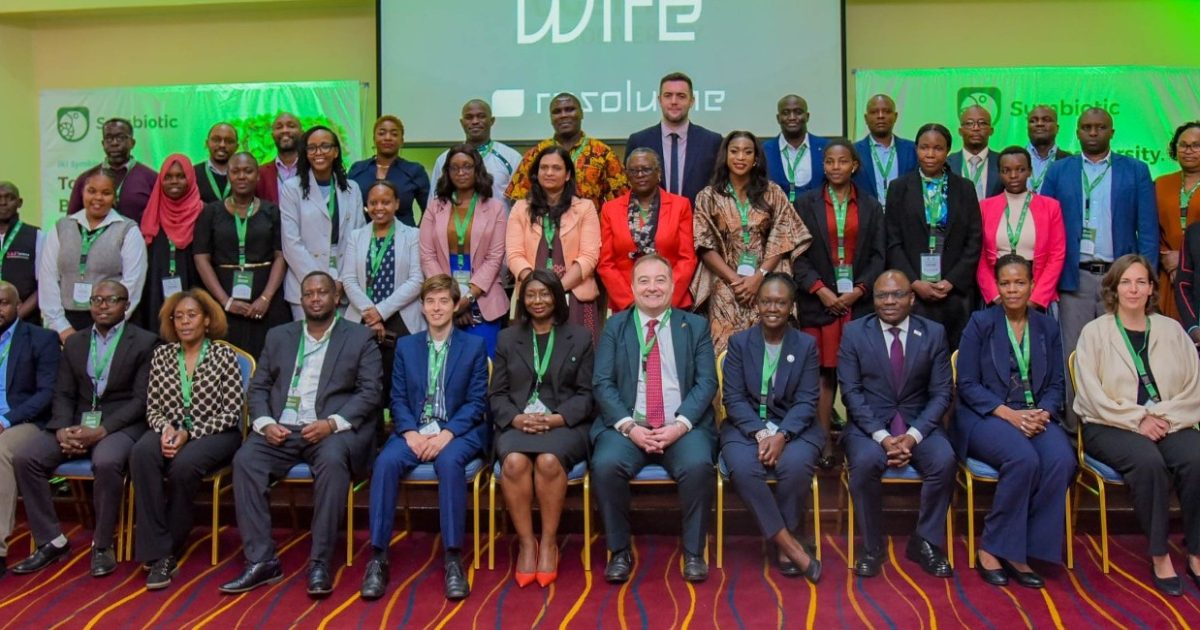
Kenya has today launched the Systemic Learning and Mainstreaming of Biodiversity Targets for Innovative Transformation and Behavioral Change (SYMBIOTIC) project to support biodiversity planning, financing, private-sector investment, and restoration.
The country will be seeking to mobilize more resources and strengthen capacity to implement its biodiversity commitments, with the government, warning that inadequate financing and weak coordination could undermine progress.
Deputy Director at the State Department for Climate Change and Forestry, Mayiani Saino, said Kenya had translated the 23 global targets under the Kunming-Montreal Global Biodiversity Framework into 25 national targets, but faced challenges in implementing them, particularly at the county level.
“When the commitments get to the counties, two key issues arise: the capacity to unpack those commitments and embed them into everyday operations, and the financing required to implement them,” Saino said during the launch of the Systemic Learning and Mainstreaming of Biodiversity Targets for Innovative Transformation and Behavioural Change (SYMBIOTIC) project.
She said the Government was working to mainstream biodiversity into national and county planning, public finance, and business and investment decisions, noting that biodiversity often competes for funding with other development priorities.
“Biodiversity hardly makes it to the top five in the list of investments in the country. Yet a country that is 48 percent dependent on nature for its GDP does not invest enough back into its natural capital,” she said.
The five-year SYMBIOTIC project will support the Government to translate biodiversity commitments into practical action by strengthening policy and coordination, integrating biodiversity into public finance, and promoting private-sector investment.
The project will assess existing legislation, incentives, and subsidies to determine whether they support biodiversity investments, while engaging businesses and financial institutions to promote biodiversity-positive practices.
Global Green Growth Institute (GGGI) Africa Strategy and Partnerships Manager, Nagnouma Kone, said the project would also explore innovative financing instruments, including green and sustainability-linked bonds, carbon finance, and debt-for-nature swaps, to help bridge the biodiversity financing gap.
“We need to innovatively think beyond the box and use effective instruments that are now new and plug and play those into biodiversity in order to accelerate that uptake,” Kone said.
Nature Kenya Executive Director, Dr. Paul Matiku, said Kenya was yet to establish its actual biodiversity financing gap, but warned that the shortfall was substantial.
He said the global financing requirement for implementing the biodiversity framework had been estimated at about USD 200 billion annually, underscoring the need for greater domestic and private-sector investment.
GGGI Kenya Project Manager, Lavenda Ondere, said the initiative would also support dialogue between the government and businesses to accelerate implementation of Kenya’s National Biodiversity Strategy and Action Plan (NBSAP).
“We want to accelerate NBSAP implementation, but we also want to bring business into the conversation,” Ondere said.
The project, led by the Nature and Biodiversity Conservation Union (NABU) and implemented by GGGI, is being rolled-out in Kenya, Ethiopia, Madagascar, Indonesia, and Kyrgyzstan from February 2026 to January 2031 with funding from the German Government through the International Climate Initiative.
In Kenya, the initiative will also support natural capital accounting, biodiversity-friendly investments, and ecosystem restoration, while strengthening the participation of communities and other stakeholders in conservation and decision-making.
This work comes at a particularly timely juncture for Kenya, as several national and international commitments on biodiversity frameworks converging around biodiversity, natural capital, and sustainable investment have been made.
Kenya’s updated NBSAP, aligned with the Kunming-Montreal Global Biodiversity Framework, is being complemented by the recently launched National Bioeconomy Strategy 2026-2036, the National Plan for Advancing Environmental-Economic Accounting 2025–2028, and the Kenya Green Finance Taxonomy.
By Wangari Ndirangu