Kenya and the Republic of Korea are seeking to deepen their more than six-decade partnership by shifting emphasis towards technology, innovation, investment, skills development and knowledge exchange as Kenya charts its development path beyond Vision 2030.
Prime Cabinet Secretary and Cabinet Secretary for Foreign and Diaspora Affairs Dr Musalia Mudavadi said the evolving relationship should move beyond traditional development assistance towards a more equal partnership capable of delivering jobs, investment, technology and opportunities for Kenya’s youthful population.
“Kenya and Korea share a relationship that has evolved with the times, and today, technology, innovation, investment and knowledge exchange are defining an exciting new chapter in our partnership,” Mudavadi said.
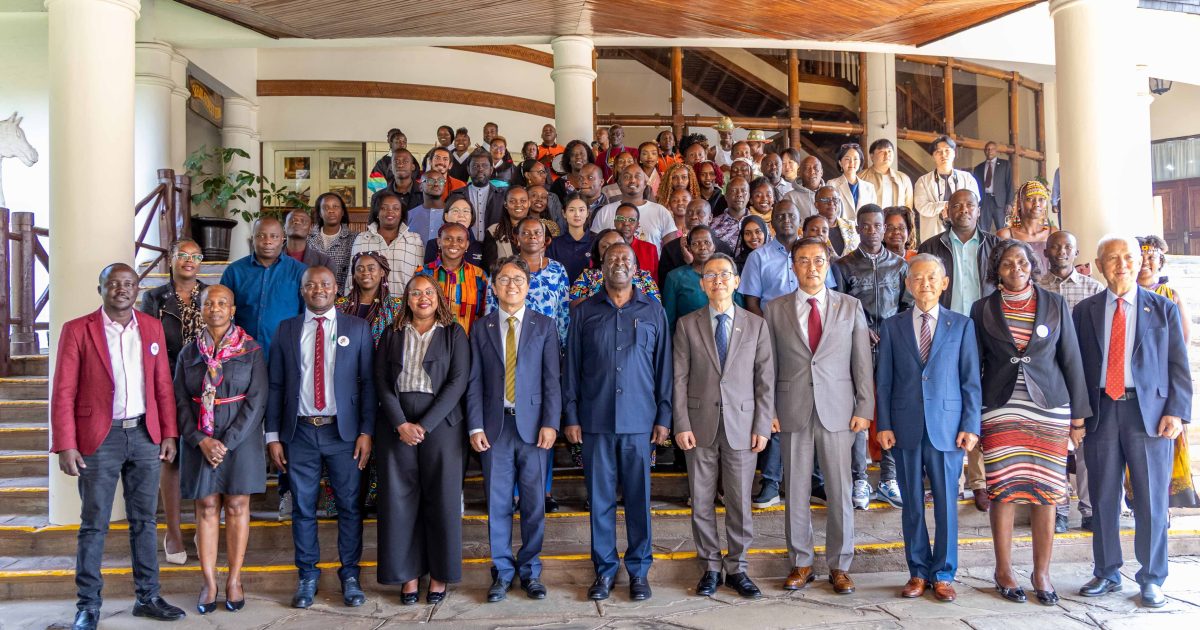
He spoke during the Kenya–Korea Cultural and Networking Forum 2026 in Nairobi, where government officials, diplomats, development partners, business representatives and professionals discussed ways of strengthening bilateral ties.
Mudavadi said Korea’s development experience offered valuable lessons as Kenya engages citizens through the National Conversation on the country’s future beyond Vision 2030 and explores new pathways for economic transformation.
He called for stronger collaboration among government, universities and industry to ensure that skills and knowledge gained through training programmes translate into innovation, technology transfer and economic opportunities.
Kenya’s engagement with Korea has gained momentum through high-level political and institutional exchanges. Nairobi participated in the inaugural Korea–Africa Foreign Ministers’ Meeting in Seoul in June 2026, while engagements with Korean counterparts and institutions have continued to broaden cooperation in strategic sectors.
The Host Country Agreement involving Kenya, the Korea International Cooperation Agency (KOICA) and the Korea Export-Import Bank provides an additional framework for strengthening development cooperation, investment and institutional partnerships.
Human capital development remains a key pillar of the relationship. More than 2,400 Kenyan public-sector leaders, policy experts, technical specialists and corporate leaders have benefited from KOICA training programmes.
Mudavadi also highlighted growing cooperation in science and technology, including the Kenya Advanced Institute of Science and Technology (KAIST), whose chartering in May 2026 underscored the country’s focus on building capacity in science, technology and innovation.
Kenya and Korea established diplomatic relations in 1964. Korean Ambassador to Kenya Kang Hyung-Shik said Kenya was the first country in sub-Saharan Africa to host a Korean embassy, describing the country as an increasingly important partner.
“Korea increasingly views Kenya as an equal partner, with enormous potential for us to exchange knowledge, develop innovative solutions and work together to address shared global challenges,” Kang said.
He identified artificial intelligence, clean energy, climate action, smart agriculture, healthcare, technical and vocational education and training, and youth development as areas with significant potential for deeper cooperation.
Korea’s technological capabilities, manufacturing base and experience in industrialisation and human capital development complement Kenya’s youthful population, entrepreneurial ecosystem, growing digital economy and strategic position as a gateway to the wider African market.
KOICA has supported development programmes in Kenya since 2008 in sectors including water, health, education, agriculture and vocational training.
Among the initiatives is the Bungoma Water Project, which has benefited about 200,000 people, with expansion expected to extend services to another 200,000. In Kajiado, Korean support has contributed to maternal and child healthcare since 2008, including the development of the Kitengela specialised centre.
KOICA Kenya Country Director Wankyu Park said the agency was working to strengthen links between Korean businesses and Kenyan institutions and enterprises, with the aim of creating investment opportunities and long-term commercial partnerships.
“Our ambition is to connect Korean businesses with Kenyan institutions and enterprises in ways that create lasting value, investment opportunities and stronger commercial partnerships,” Park said.
Korean companies engaging in Kenya include K-ELEC, which manufactures consumer electronics such as smart televisions and refrigerators locally; Neutrion, which operates in beauty and health products; and Youngtun, which focuses on creative content, including graphic design, webtoons, animation and digital media, and employs Kenyan designers.
The partnership also extends to multilateral and humanitarian cooperation. Korea has worked with UNDP, WFP, UNICEF and IOM on initiatives addressing refugee support, climate change, food security and the prevention of violent extremism.
Korean-supported initiatives have also contributed to Nairobi’s intelligent transport and bus rapid transit development, as well as digital media components associated with Konza Technopolis.
People-to-people ties provide another important dimension of the relationship. The KOICA Alumni Kenya Chapter, established in 2008 under the patronage of KOICA and the Embassy of the Republic of Korea, brings together Kenyan professionals who have undertaken training in Korea.
Mudavadi urged the alumni, led by President Angela Mukiri, to use their professional networks strategically as potential special envoys for Kenya–Korea relations, particularly in advancing knowledge exchange, technology transfer, cultural diplomacy, trade and investment.
He said cultural diplomacy remained an important foundation of Kenya’s foreign policy, with exchanges around Korean heritage and Kenyan artistic and culinary traditions helping to deepen understanding between the two peoples.
The Prime Cabinet Secretary said the next phase of the relationship should focus on converting established diplomatic ties into practical outcomes for citizens, particularly young people seeking skills, employment and opportunities in a changing global economy.
“For Kenya, the next chapter is about turning global partnerships into skills, technology, investment, jobs and new opportunities for our young people,” Mudavadi said.
He said Kenya’s youthful population, entrepreneurial ecosystem, expanding digital economy and strategic location provided opportunities for Korean investors, while Korea’s experience in industrialisation, technological advancement and human capital development offered lessons relevant to Kenya’s development ambitions.
The Nairobi forum underscored a shared ambition to transform the established diplomatic relationship into a stronger platform for investment, innovation, technology transfer, skills development and sustainable economic growth.
The partnership is also expected to benefit from continued engagement among government agencies, universities, private-sector actors, development institutions and professional networks, creating channels through which ideas and expertise can be translated into practical projects.
Mudavadi said sustained cooperation would be important as Kenya defines its priorities beyond Vision 2030, particularly in areas that can strengthen economic resilience, create employment and improve opportunities for the country’s young population.
The two countries’ longstanding relationship, he said, provided a strong foundation on which to build a more reciprocal partnership based on shared interests, mutual learning and practical economic cooperation.
As Kenya seeks to expand its international partnerships, the Korea relationship offers opportunities to combine Korean expertise in technology, manufacturing and innovation with Kenya’s growing market, entrepreneurial capacity and access to the wider African economy.
The forum brought together stakeholders from both countries to reinforce people-to-people connections and identify areas where bilateral cooperation can deliver measurable benefits. It also provided an opportunity to celebrate the historical ties between Kenya and Korea while focusing on the future direction of the partnership.
With technology and innovation increasingly shaping global economic competitiveness, the two countries are expected to strengthen collaboration in emerging sectors while maintaining cooperation in established areas such as health, education, agriculture, water and vocational training.
By Hassan Adan Ali (PCO)