Residents of Nandi County are set to benefit from Sh270 million worth of irrigation and dam projects, aimed at improving food security, increasing agricultural productivity and strengthening resilience to climate change.
The investment undertaken by the State Department for Irrigation covers four projects spread across Nandi Hills, Tinderet and Mosop constituencies, with the interventions expected to improve water availability for farming and, depending on each facility’s design, other community needs.
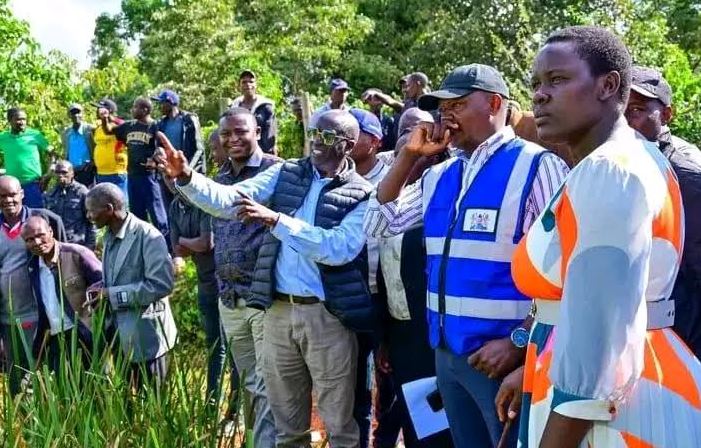
Secretary, Land Reclamation and Climate Resilience at the State Department for Irrigation Joel Tanui and other government officials toured the project sites last month to assess the planned interventions ahead of implementation, which is expected to begin this month.
Tanui said the Bombo-Chemelil irrigation project, with an allocation of Sh100 million, is expected to support farmers in Tinderet Sub-County through improved access to irrigation water.
“The investment will help farming households reduce their dependence on rainfall, diversify crop production and improve the consistency of their harvests,” he stated.
For residents of Tinderet, the Bombo-Chemelil project is particularly important because agriculture remains a major source of household income and food.
Unpredictable rainfall can disrupt planting schedules, reduce yields and expose farmers to losses, making dependable water supplies an important component of climate adaptation.
A resident, John Chumo from Songhor-soba ward, said improved access to irrigation water would help farmers plan their activities more effectively and reduce uncertainty associated with changing weather patterns.
“Reliable water would make it easier for us to plan our planting seasons and produce food even when the rains are inadequate,” Chumo said.
Another resident, Belinda Jeruto from the Meteitei location, said the projects will enable households to improve their incomes if farmers receive the necessary technical support and access to markets.
“Beyond providing water, we hope the projects will help farmers increase their harvests and earn better returns from what they produce,” she stated.
The residents’ views reflect the expectations that often accompany major agricultural investments, where infrastructure is expected to result in tangible improvements in food production, household incomes and the ability of communities to withstand adverse weather conditions.
However, the long-term success of the programme will depend on timely implementation, proper maintenance of the infrastructure and transparent arrangements for managing water resources.
Farmers will also need extension services to help them adopt efficient irrigation methods, conserve soil and select crops suited to local conditions.
Tanui observed that protecting water catchment areas, controlling soil erosion and preventing the degradation of agricultural land can help ensure that the facilities continue serving communities over the long term.
“This multimillion programme therefore presents an opportunity to connect water infrastructure with wider agricultural development objectives,” he asserted.
By Sammy Mwibanda