Marsabit County has hosted the launch of the RANGE (Resilient Approaches in Natural Rangelands Ecosystems) Crisis Modifier, an anticipatory action mechanism aimed at strengthening preparedness and protecting communities, livestock, infrastructure and livelihoods from the potential impacts of the forecast October-December 2026 EL Nino rains.
The initiative covers Marsabit, Isiolo and Samburu counties and promotes anticipatory, market-led and locally led action before, during and after climate-related shocks.
RANGE is a five-year programme running from 2024 to 2028, funded by the embassy of the Kingdom of the Netherlands in Kenya, with a set aside of 4% of the total investment of €15 million.
The programme seeks to strengthen the resilience of pastoral and agro-pastoral communities while promoting sustainable livelihoods, improving livestock productivity and better management of natural resources.
Speaking during the launch, Marsabit County Commissioner Stanley Kamande, who was the chief guest, commended the RANGE consortium comprising Mercy Corps, the Frontier Counties Development Council (FCDC), and the University of Twente’s Faculty of Geo-Information Science and Earth Observation (ITC), the county governments, development partners, and other implementing partners, including SND, PACIDA, IMPACT, and MID-P, among other stakeholders, for taking action ahead of the expected rains.
He said Marsabit’s economy and livelihoods depend heavily on livestock, natural resources, water and transport infrastructure, all of which could be affected by excessive rainfall.
“Preparedness saves lives, protects the environment and reduces the cost of responding to disasters after they occur,” Kamande said.
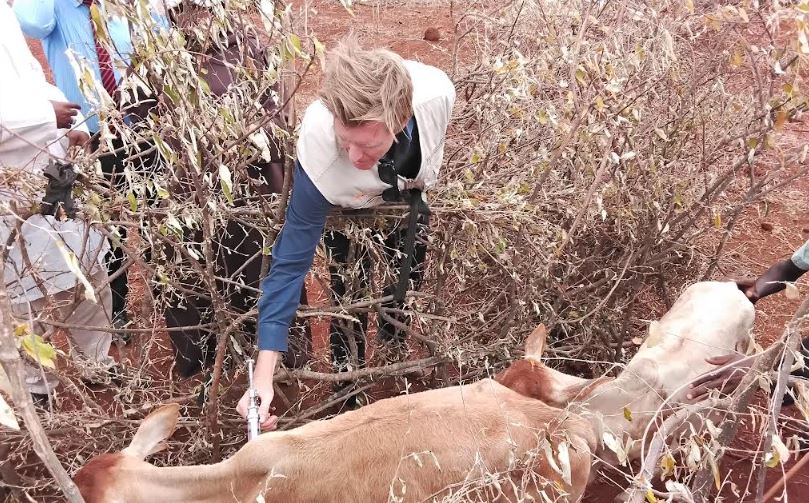
He called for planned rangeland reseeding, protection of reseeded areas, mass livestock vaccination, disease surveillance and clearance of drainage systems before the rains intensify.
He outlined several priority interventions, including rangeland reseeding, livestock vaccination and disease surveillance, drainage clearance and stronger coordination among government, communities and development partners.
The County Commissioner urged the communities to support grazing-management arrangements that will protect reseeded areas from premature and uncontrolled grazing.
He called for the provision of appropriate pasture seeds, technical guidance, tools and extension services while emphasising the importance of community ownership.
Livestock keepers were urged to cooperate with veterinary officers, present their animals for vaccination and report unusual deaths or signs of disease immediately.
He cautioned the public against consuming or selling meat from animals that have died under suspicious circumstances, stressing that suspected cases should be reported to veterinary and public health authorities.
The county commissioner emphasised that flood preparedness requires joint action by county departments, municipalities, national government agencies, communities, private-sector actors and development partners.
The highlights of Marsabit Governor Mohamud Ali’s speech were delivered by County Chief of Staff Abdo Alla, who outlined a series of measures being undertaken by the county government ahead of the forecast rains.
Governor Ali noted that while the expected rains could provide significant benefits through replenishing water sources, restoring pasture and supporting agricultural production, excessive or poorly managed rainfall could result in flooding, destruction of homes and roads, disruption of businesses, contamination of water sources, crop losses and increased livestock diseases.
The governor emphasised that preparedness must begin before disaster occurs, noting that early action is more effective, humane and less costly than waiting to respond after a disaster has struck.
The county will prioritise the clearing and rehabilitation of drainage systems in urban centres and flood-prone settlements.
The exercise will involve removing solid waste and silt, opening blocked culverts, improving stormwater flow and identifying areas requiring additional drainage infrastructure.
Governor Ali urged residents, businesses and institutions to stop dumping waste in drainage channels and called on communities to take responsibility for maintaining drainage systems around their homes and premises.
He also highlighted rangeland restoration and reseeding as key interventions, given the importance of livestock to the livelihoods and economy of Marsabit.
The county will support the identification of suitable reseeding areas, distribution of appropriate and climate-resilient pasture and fodder seeds, community-led reseeding and sustainable rangeland management.
Communities will be encouraged to protect reseeded areas from uncontrolled and premature grazing until pasture is adequately established. The county will also promote fodder conservation, including hay and other locally appropriate livestock feed reserves.
Governor Ali further emphasised the need to strengthen livestock disease prevention ahead of the rains.
The anticipated increase in water and vegetation could create favourable conditions for disease vectors and increase the risk of Rift Valley Fever, lumpy skin disease, sheep and goat pox, contagious caprine pleuropneumonia and foot and mouth disease.
He called for intensified disease surveillance, mass vaccination in high-risk areas, community sensitisation, appropriate livestock movement and timely reporting of suspended cases.
Livestock keepers were urged to present their animals for vaccination, cooperate with veterinary officers and immediately report unusual deaths or signs of disease.
The governor also cautioned residents against selling or consuming meat from animals that have died under suspicious circumstances, urging the public to report such cases to veterinary and public health officers.
Mercy Corps Country Kenya officer Director William Barron said the Crisis Modifier demonstrated the commitment of the Netherland Government to strengthening long-term community resilience while enabling partners to respond quickly when a crisis arises.
He emphasised the importance of strong partnership involving county governments, communities, local civil society, private-sector actors and development partners.
Barron said government and local communities should remain at the forefront of implementation, with development organisations supporting locally led solutions.
He called on all stakeholders to embrace and actively participate in the RANGE programme, emphasising that the initiative would bring together government institutions, private sector partners, community organisations and other stakeholders to deliver timely and coordinated interventions during the emergencies.

RANGE Programme Director Dr Bonface Kaberia said the RANGE programme is a five-year programme running from 2024 to 2028 with an allocation of €15 million for current anticipatory action across Marsabit, Isiolo and Samburu counties.
The funds will support drainage clearance, rangeland rehabilitation, water rehabilitation, livestock vaccination and cash-for-work activities.
The cash-for-work component will provide temporary income to vulnerable households while enabling communities to undertake activities such as drainage clearance and rangeland.
The programme will also support livestock offtake in areas that may become inaccessible during heavy rains, enabling pastoralists to sell animals before they lose value or become difficult to access.
The launch also featured the introduction of an e-voucher livestock vaccination system, aimed at improving access to veterinary services, particularly for livestock keepers in remote pastoral areas.
The initiative brings together the County Government of Marsabit, the Mercy Corps, the Food and Agriculture Organization and other veterinary and development partners.
The system is expected to improve vaccination planning, beneficiary identification, service verification, reporting and accountability while expanding the participation of private veterinary practitioners.
Marsabit County Veterinary Director Dr. James Dokhe said the initiative would strengthen livestock disease prevention and improve access to vaccination services in hard-to-reach areas.
He said the e-voucher vaccination approach will enable eligible livestock keepers to access vaccination services through accredited and participating private veterinary service providers.
Frontier Counties Development Council (FCDC) RANGE Programme Officer Halima Ibrahim urged pastoral communities in Marsabit, Isiolo and Samburu to take early-warning information seriously.
She said timely information enables communities to take precautionary measures before a crisis occurs, particularly given the potential risks associated with heavy rains, flooding and livestock diseases.
She also called for special measures to protect vulnerable groups, including women, children, older persons and persons with disabilities.
Sagante/Jaldesa Ward Development Committee Chairperson Abdub Dido welcomed the preparedness measures, saying communities had experienced the effects of climate change, including prolonged drought and livestock diseases.
He said improved collaboration between communities, government officers and development partners has strengthened local preparedness efforts.
Dido lauded the launch of the RANGE Crisis Modifier, noting it marks a shift from traditional emergency response towards anticipatory action-acting before a crisis occurs to reduce its potential impact.
He said early warning action will help protect lives, livestock and livelihoods and build a safer and more resilient region.
By Anthony Melly